Dimensions · Space · Buying guides
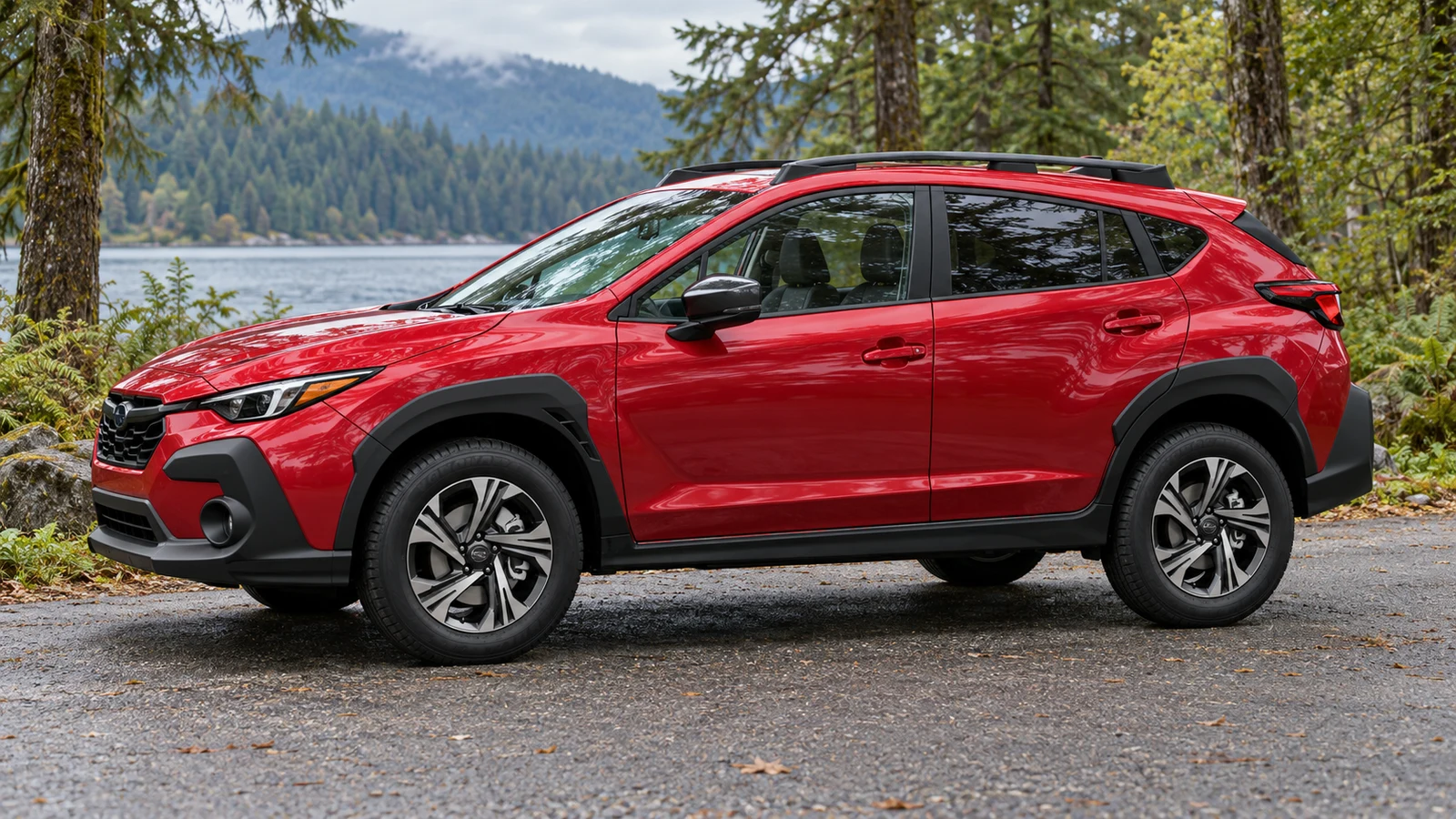
For the 2026 U.S. Subaru Crosstrek, cargo capacity depends on the version: conventional trims have 19.9 cubic feet behind the rear seat and 54.7 with it lowered, Hybrid trims have 18.6 and 50.6, and Wilderness has 20.0 and 54.9. Those are the figures in Subaru's 2026 trim specifications, not one shared capacity for every Crosstrek.
If you are choosing between gas and Hybrid, test your normal load in both. A difference in total volume does not tell you which particular stroller, crate or cooler becomes difficult to carry.
This guide covers the U.S. 2026 lineup, with sources reviewed October 24, 2026. We have not measured a Crosstrek or conducted a luggage test. Older model years, overseas models and earlier hybrid systems need their own specifications.
Cargo space by 2026 powertrain and trim
| U.S. 2026 version | Rear seat up | Rear seat lowered |
|---|---|---|
| Base, Premium, Sport and Limited | 19.9 cu. ft. | 54.7 cu. ft. |
| Sport Hybrid and Limited Hybrid | 18.6 cu. ft. | 50.6 cu. ft. |
| Wilderness | 20.0 cu. ft. | 54.9 cu. ft. |
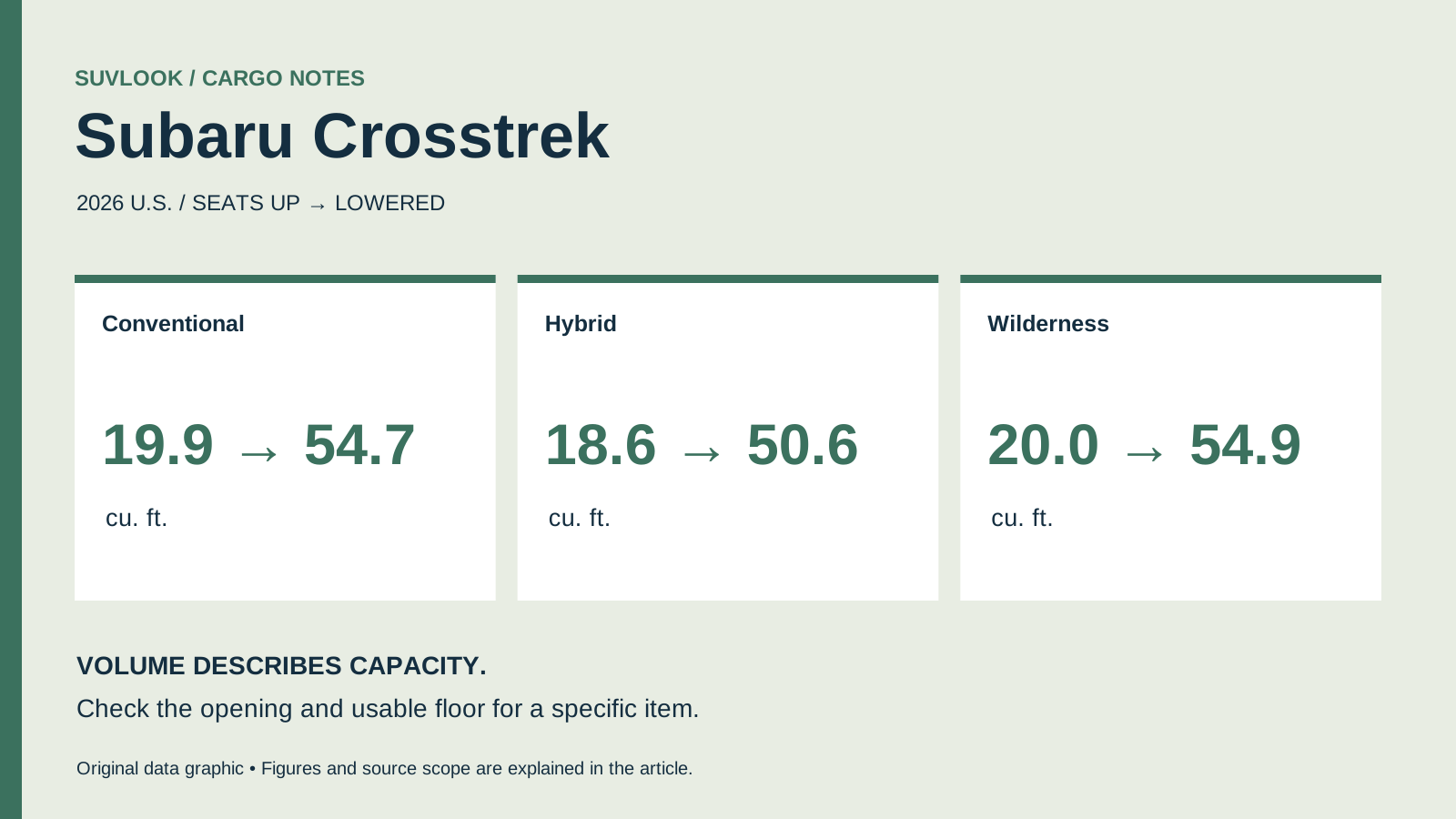 |
Summary graphic of the 2026 Crosstrek cargo volumes by version in the table above; figures come from the sources cited in this guide.
Compare the columns that match your passenger use. A rear-seat-up figure matters when rear occupants are coming with you; the larger column matters when that seating area can be used for luggage or equipment. Do not compare the conventional model's maximum with the Hybrid's seats-up space.
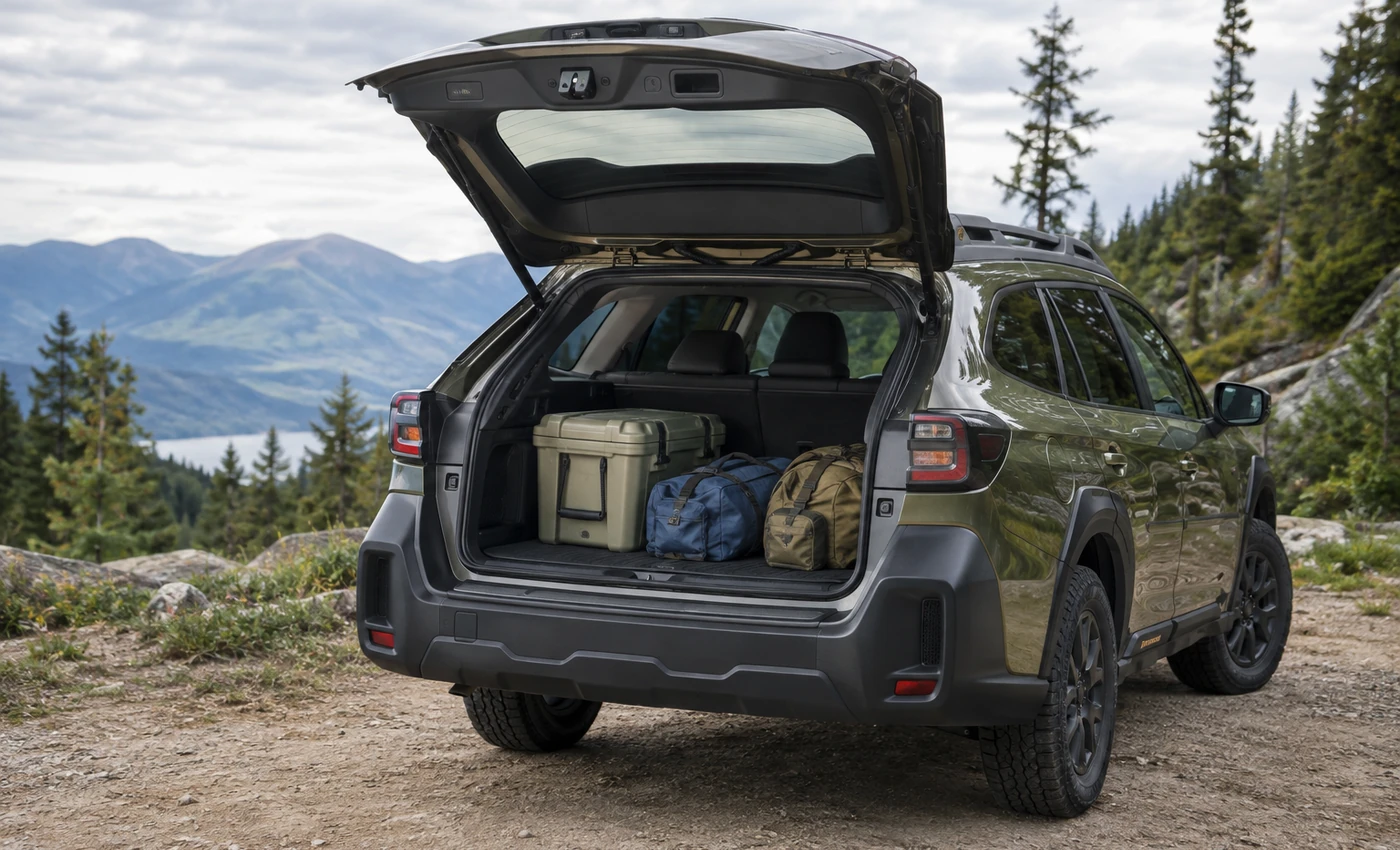
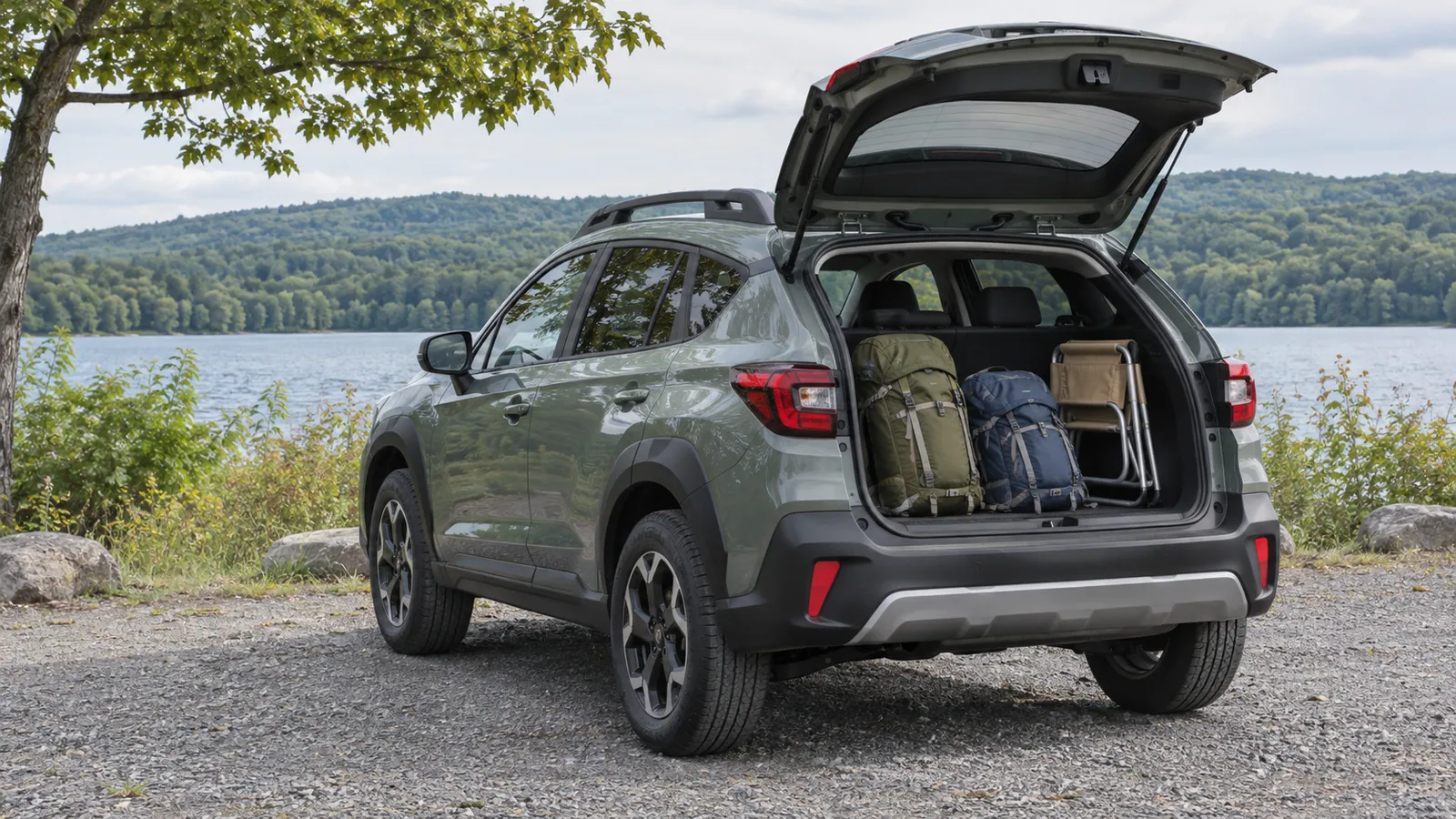 AI-generated illustration of the cargo area of a Crosstrek-style small crossover for visual reference; not an official Subaru photo or evidence of measurements.
The Wilderness figures are slightly different from the other gas trims. That does not make it the automatic cargo recommendation. The practical question is whether the particular object that matters to you is easier to load, support and retrieve in the actual vehicle you would buy.
Choosing gas or Hybrid when your gear is already a tight fit
Make two lists: equipment you carry every week and equipment you carry occasionally. The first list should drive your cargo test. If a large cooler comes along twice a year, you may have more flexibility than if a folded stroller must fit after every school run.
For each rigid object, note the external dimensions and its required travel orientation. Include wheels, handles and anything that stays attached. For soft bags, pack them as you actually travel rather than measuring an empty bag that collapses into a misleadingly small shape.
Try the same items, with the same passenger seating, in the gas and Hybrid candidates. Look for differences in the resting surface and how tall items meet the hatch. Do not assume that a smaller total volume must come entirely out of floor length, or that equal exterior size guarantees equal storage geometry.
A good result is more specific than “everything fit.” Record whether the rear seat stayed available, whether the cargo cover could be used if fitted, and whether you could reach the bag you need first. Those observations can tell you more than a small change in a specification table.
The cargo dimensions you should measure in inches
The manufacturer sources cited here establish cargo volume and its trim differences. They do not supply a complete, verified set of U.S. opening and floor measurements for each of these versions in this guide. We do not substitute Canadian-market data, an earlier Crosstrek's measurements or calculations from cubic feet.
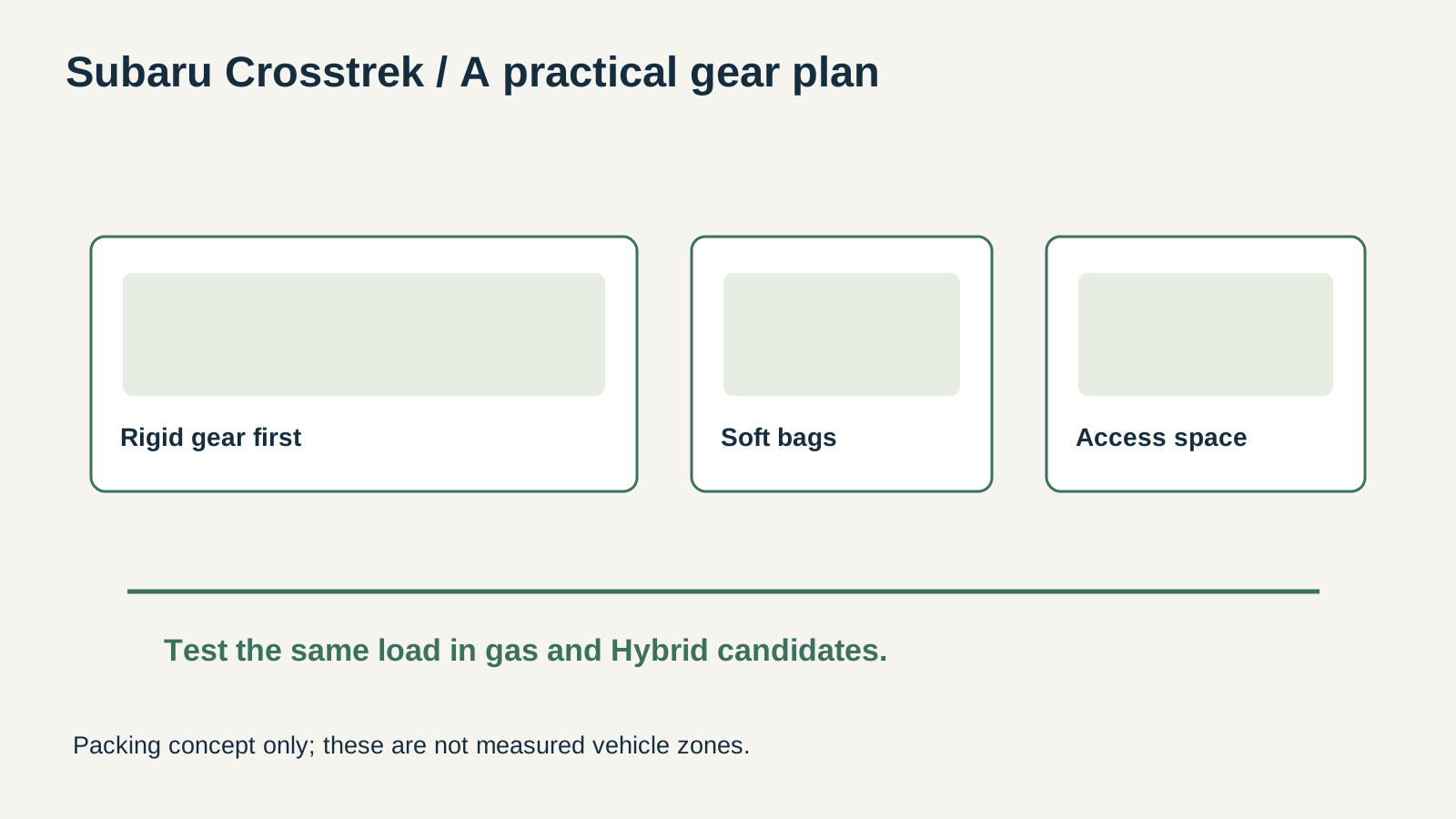
Original measuring diagram, not to scale. The illustrated load is a planning example, not a documented fit test.
Use this short worksheet when checking the vehicle:
| Check | What to record |
|---|---|
| Hatch opening | Narrow width and height at the object's loading position |
| Floor width | Space between the fixed trim that limits the load |
| Floor length | Available distance with the required seats in their normal positions |
| Height inside | Clearance where the object's tallest section will sit |
| Closed hatch | Whether glass and interior trim clear the positioned object |
Photograph the endpoints of each measurement with the seller's permission. A note saying “cargo width” is ambiguous unless you remember whether it describes the wheel wells, the opening or a wider section higher in the bay.
If a box can only fit diagonally, check the whole loading path and its final resting position. The diagonal of a rectangular measurement does not describe every obstruction in a real opening. A cardboard template can help investigate a close fit, but an actual loading check is more useful when available.
Rear seats lowered: check the driving position first
Before measuring a long load, set the driver's seat as you would use it on the road. Moving it forward to make an item appear to fit can undermine the point of the test. The front passenger should also have a usable position if someone will sit there.
Follow the exact vehicle's owner's manual for lowering the rear seatbacks. Check how the folded surface meets the rear cargo floor rather than assuming the usable area is perfectly flat. If a load must remain level, its support and transport instructions matter as much as the available length.
When part of the rear seat remains occupied, evaluate that configuration on its own. The object must not require the remaining passenger's space or interfere with their belt or access. A partial-fold setup is not established by taking a fraction of the maximum cargo volume.
Also plan how you will secure the load. A long object that stays put while the car is parked may move during a journey. Use the vehicle's loading guidance and the object's instructions; this article does not establish the strength rating of an attachment point.
Camping gear, a stroller or a dog crate?
For camping gear, group rigid items first: cooler, cooking box and any equipment that cannot be compressed. Then check where soft items can go without creating a tall, unstable pile. Think about the order of unloading if the first stop is a picnic rather than the campsite.
For a stroller, try the everyday folded configuration. Removing a wheel or detaching an accessory may change fit, but it also changes the routine. Make sure there is a sensible place for those parts and for the other bags that accompany the stroller.
For a dog crate, measure the outside of the crate, including handles and latches, and check whether its door can open once positioned. A successful geometric fit does not establish a suitable crash-protection or restraint installation. Follow the crate manufacturer's and vehicle manufacturer's instructions.
For sports equipment, check both the entry path and the space left for people. If dismantling a bike is part of your plan, account for the removed parts and the time involved. We have not tested a particular bike, stroller or crate in this vehicle and do not claim a universal item fit.
Comparing the Crosstrek with another Subaru
Use the same passenger arrangement and the same set of objects when comparing models. Switching to smaller luggage during one demonstration can overwhelm a modest difference in published volume and make the comparison unhelpful.
Our Forester cargo guide and Outback cargo guide cover their own stated years and configurations. Use them to identify the measurements that need checking, not to transfer a floor length or hatch width from one Subaru to another.
If the Crosstrek's space works for your normal load, there is little value in treating a larger manufacturer's maximum as the only buying criterion. If a rigid item is consistently difficult to handle, however, a larger opening or a different floor shape may matter more than another trim's comfort equipment.
Before choosing a particular vehicle
Write the full model year and trim beside your measurements. Note whether it is Hybrid, conventional gas or Wilderness, and record any mat, tray or accessories present during the test. Repeat a critical measurement if you later inspect a different example with a different load-floor setup.
Inspect the condition of the trim and folding surfaces on a used vehicle. Check that the equipment you intend to use is present and operates according to its instructions. Finally, review the vehicle's loading limits with the people and equipment that will actually travel aboard. Space and allowable weight are separate constraints.
Related SUVLook research
- 2026 Subaru Crosstrek research profile: specs, trims and dimensions kept by model year
- Ford Edge Cargo Space: A Practical Guide for Used-SUV Buyers
- Cargo Fit Check: test a rigid item against published cargo measurements
Frequently asked questions
Does the 2026 Crosstrek Hybrid have less cargo space?
Yes. Subaru's U.S. specifications list lower seats-up and seats-lowered volumes for the Hybrid than for the conventional trims. Compare the exact trim rows above and test any equipment that is already a close fit.
Does Wilderness have the same cargo capacity as the other gas trims?
Subaru lists slightly different figures: 20.0 cubic feet with the rear seat up and 54.9 with it lowered. That small volume difference does not establish a specific object's fit.
Are these figures valid for a 2024 Crosstrek?
This table is for the 2026 U.S. lineup. Do not assume it establishes a 2024 model's trim-specific volume, opening dimensions or hybrid configuration. Check the appropriate model-year documentation.
How long is the Crosstrek cargo floor with the seats down?
This guide has not established a verified U.S. floor-length measurement for each 2026 version. Measure the actual vehicle with the front seats in usable positions rather than deriving length from cargo volume.