Dimensions · Space · Buying guides
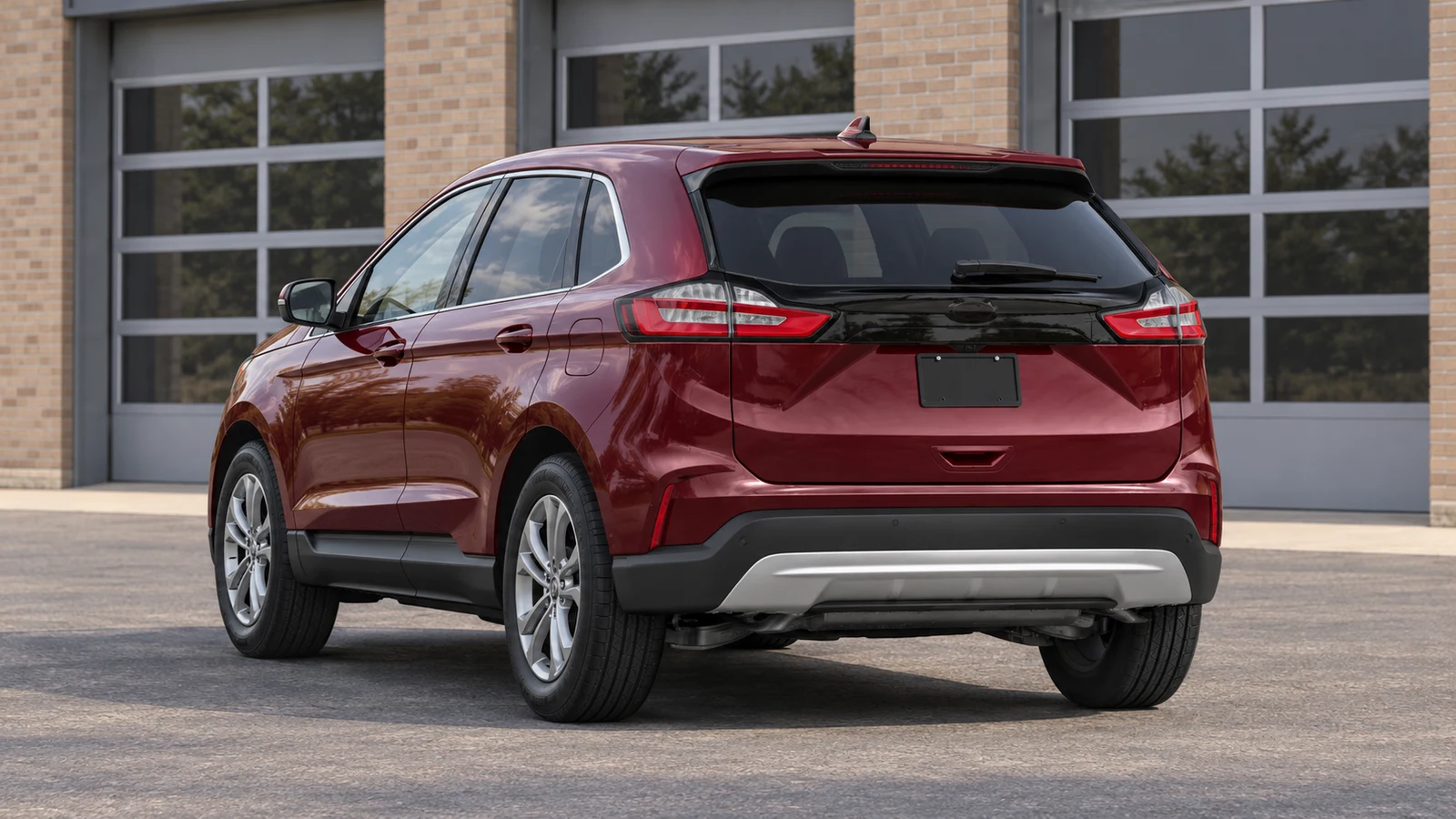
For the 2024 Ford Edge SEL AWD, Edmunds lists 39.2 cubic feet with all seats in place and 73.4 cubic feet maximum. Those are volume figures for that stated configuration, not proof that a particular furniture carton, crate or stroller will fit through its hatch.
This is a used-SUV buying guide. Ford's current U.S. Edge page confirms that production has ended; a search for a “new 2026 Edge” should not lead you to assume a current U.S. version with the same specifications.
The sources here were reviewed October 24, 2026. SUVLook has not measured or load-tested an Edge. The cargo figures below are explicitly attributed to a secondary specification source because the original U.S. Ford capacity document was not available from the manufacturer links checked for this guide.
Seats up versus the maximum cargo figure
| Stated vehicle and configuration | Published cargo volume | Use in your comparison |
|---|---|---|
| 2024 Edge SEL AWD, all seats in place | 39.2 cu. ft. | Passenger trip with the rear seat available |
| Same configuration, maximum cargo | 73.4 cu. ft. | Larger load using the rear seating area |
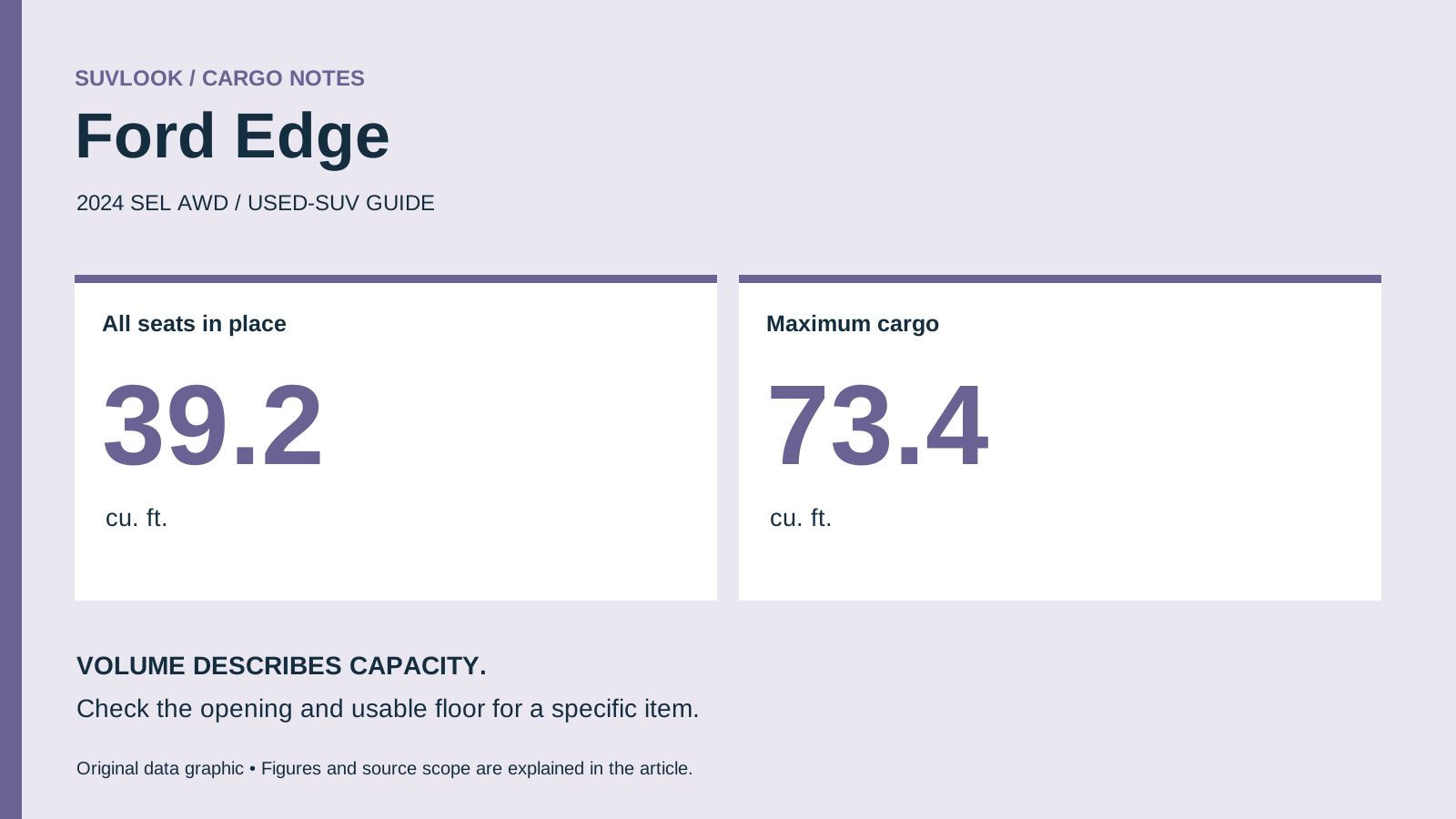 |
Summary graphic of the 2024 Edge SEL AWD cargo volumes in the table above; figures come from the sources cited in this guide.
Start with the column that matches the trip you need to make. A larger maximum may have little relevance if you regularly need the rear seat for passengers. Conversely, a two-person equipment trip can be evaluated in its own cargo configuration rather than limited to the everyday passenger setup.
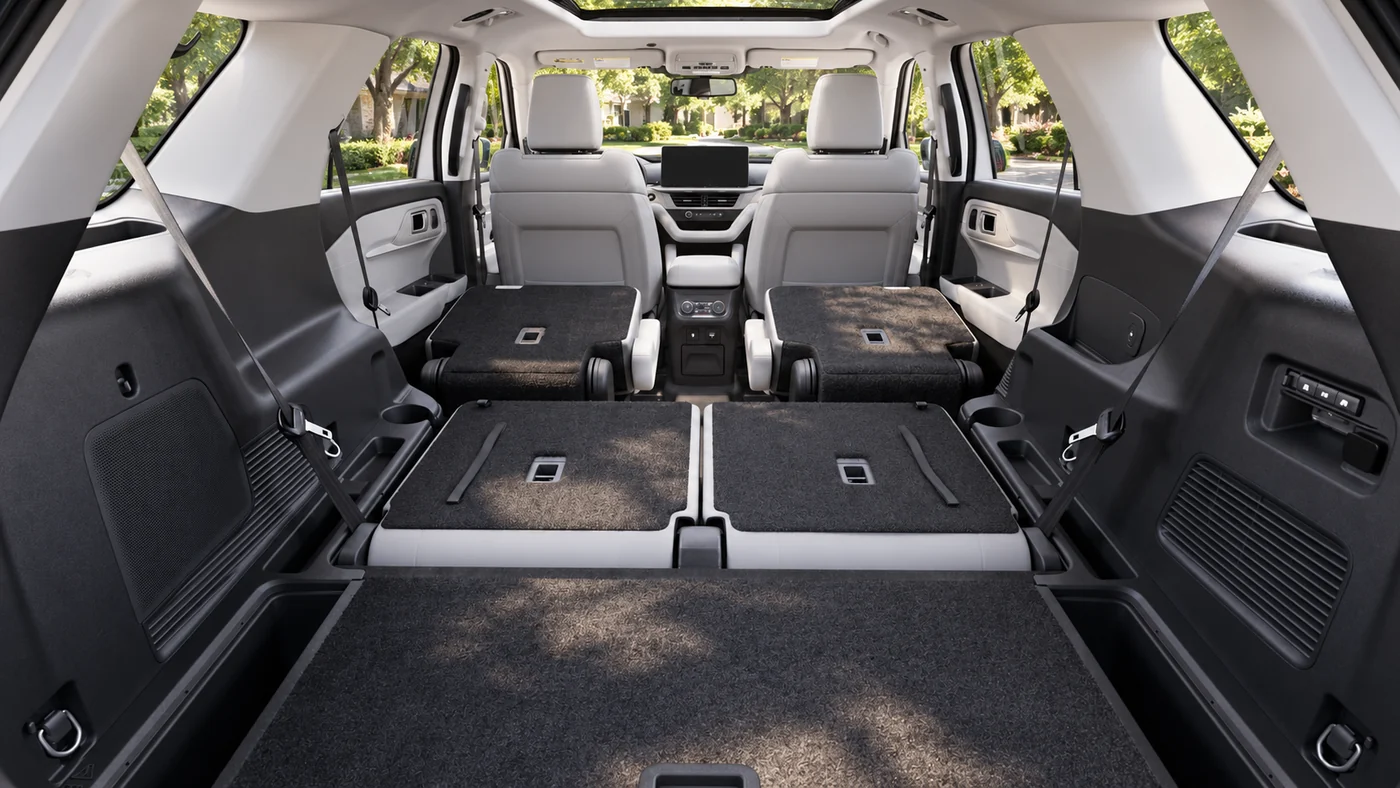
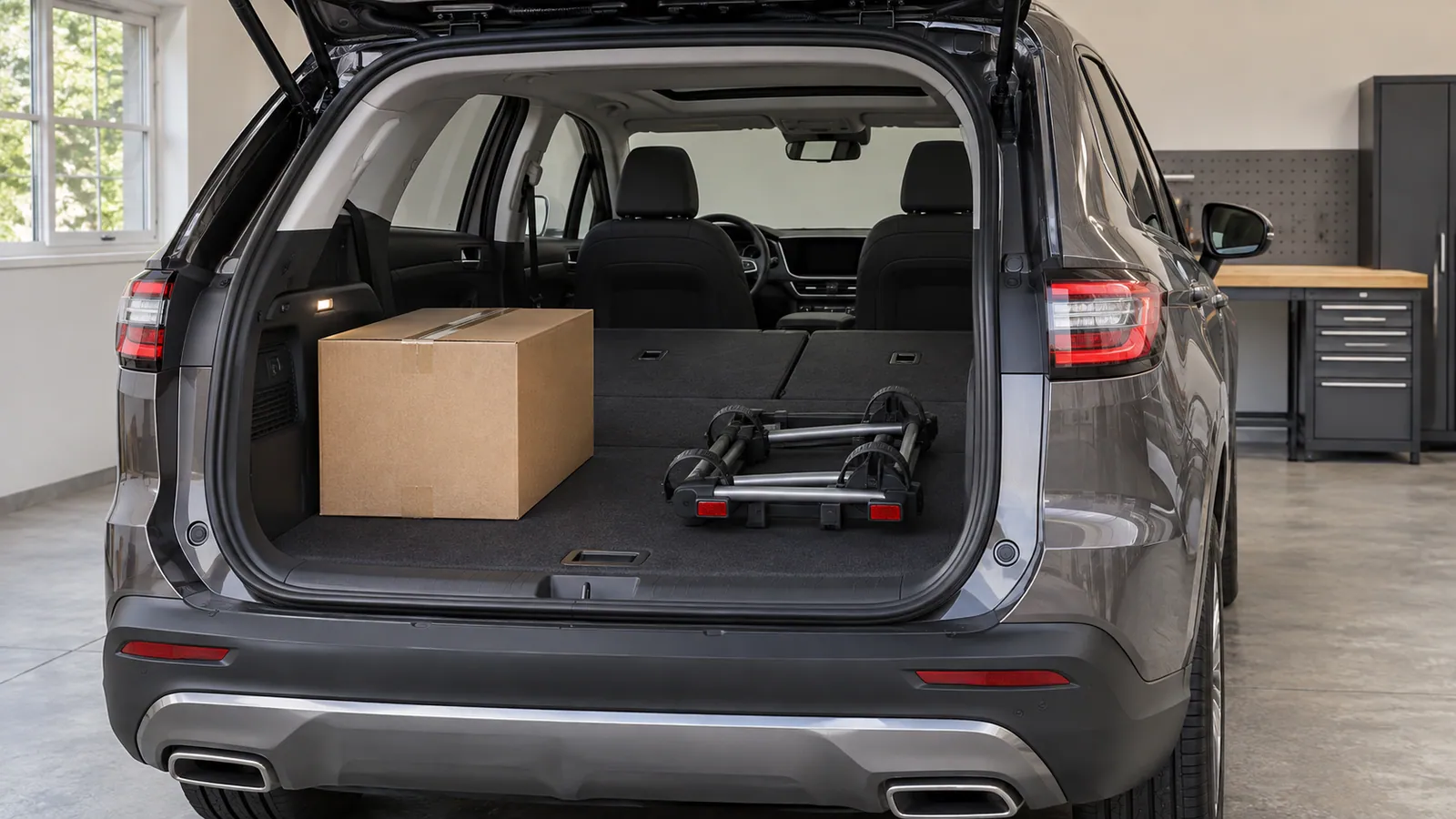 AI-generated illustration of the cargo floor of an Edge-style midsize SUV with the rear seats folded for visual reference; not an official Ford photo or evidence of measurements.
Do not turn these figures into a suitcase count. Bags vary in outside shape, rigidity, wheels and handles, and a neat stack in a photograph may omit the other objects you need to carry. An actual packing test is a better answer when cargo fit is a deciding factor.
The model year belongs beside every measurement
A used listing may combine a photograph of one vehicle, a model-level specification feed and a brief description written by the seller. Read the VIN, model year and trim before trusting a measurement attached to the advertisement.
Be particularly careful with a number copied from a discussion about another owner's car. It may be a perfectly honest measurement taken at a different seat position, floor level or opening height. Without those reference points it is difficult to use for a close-fitting object.
When comparing two listings, keep a simple note for each: exact year and trim, seating configuration, load-floor accessories and measurement endpoints. That prevents a floor-length figure from one car from being mistaken for the hatch opening or carried across the whole model's history.
Ford's retirement page is useful for understanding the current U.S. buying context, but it is not a technical specification sheet for the used vehicle. Treat model availability, factory equipment and cargo geometry as separate questions requiring the appropriate source.
Equipment to inspect on a 2024 example
Ford's 2024 Edge order guide, a Ford Division document hosted by a third party, lists a split-folding and reclining rear bench for SE and identifies its manual liftgate. It also lists cargo-management equipment and rear cargo tie-down hooks. This is equipment documentation, not evidence of hook strength or a complete floor-dimension table.
On a used vehicle, confirm what is actually installed and whether it works. Check the rear seat's movement using the vehicle manual, inspect the load-floor pieces and make sure the seller has not demonstrated an arrangement that requires missing hardware or an accessory you will not receive.
If the particular car has a powered liftgate, test its operation according to the manual and check the loading height you need. Do not assume a feature is present because another trim or another vehicle in the showroom has it. A printed model summary is not a substitute for inspecting the exact example.
Cargo dimensions in inches: take the useful measurements
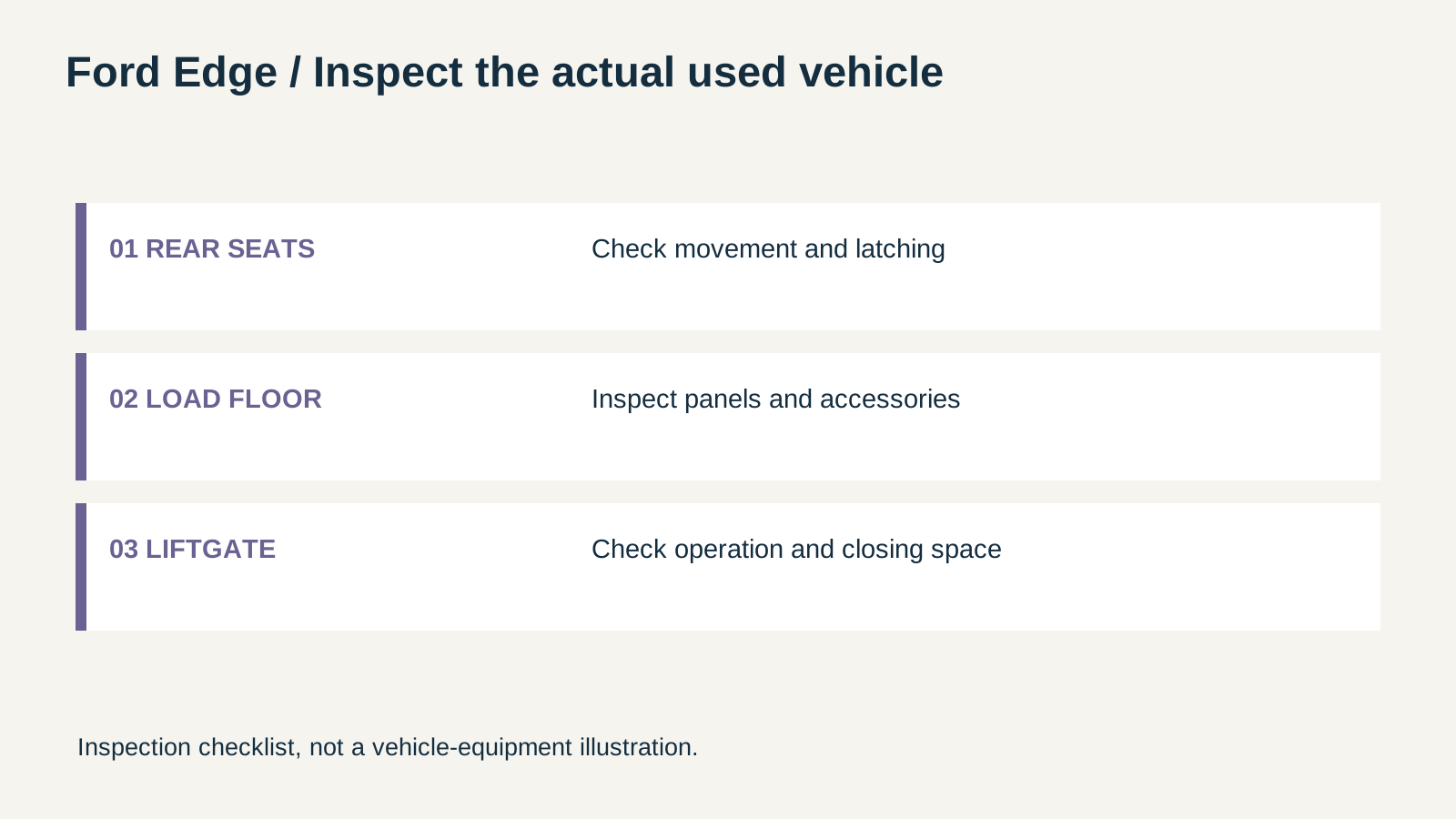
Original inspection diagram, not to scale. It identifies measurement locations without inventing factory dimensions.
The sources used here do not establish a complete primary-source set of usable floor and opening dimensions for the stated 2024 configuration. Rather than publish a borrowed inch table as factory-verified, measure the actual car:
| Measurement | What can make it misleading |
|---|---|
| Usable floor length | Front or rear seats moved differently from normal use |
| Narrow floor width | Measuring a wide part of the trim instead of the limiting point |
| Hatch width | Using the maximum width for an object that passes higher up |
| Entry height | Ignoring the loading surface or restrictive upper corners |
| Closed-hatch clearance | Measuring only with the hatch open |
Start with the seats needed by your passengers. Adjust the driver's seat for driving and check the front passenger position too. If the object requires rear seats folded, follow the manual and inspect the resulting surface before measuring it.
For a tall box, check its rear upper corner as well as its footprint. A package can sit on the floor yet meet the hatch glass as the liftgate closes. Never force a powered liftgate to compress the item or use its closing mechanism as a fit test.
Will a stroller or dog crate fit?
A stroller needs a check in its everyday folded configuration. Include its wheels, cupholder or other parts you normally leave attached. Try it with the other bags you carry and with the rear seat in the passenger arrangement you need.
If removing an attachment solves the problem, consider the routine it creates. You need somewhere to store that piece, and the arrangement should remain manageable when loading the car alone or in poor weather. A technically possible fit may still be a poor everyday choice.
A dog crate needs a different assessment. Use its outside dimensions, check whether the door can open in position and follow its manufacturer's installation instructions. Physical fit alone does not establish that a particular restraint arrangement is suitable, and this guide does not certify the vehicle's hooks for that purpose.
For either item, an exact paper match needs a real check when possible. Handles, latches, trim curvature and the angle used to load it can determine the outcome. Ask the seller about bringing the item or a lightweight template before making a purchase decision.
Furniture pickups: check the carton and the load's weight
Use the packaged dimensions of a flat-pack purchase rather than its assembled size. Confirm whether it can travel on its side and whether another person will be needed to lift it. The opening is only part of the problem if you cannot handle the object across the sill without damage.
Set both front seats to usable positions before checking a long carton. Consider where the object will be supported and how it will be secured according to the relevant instructions. A load that rests inside the parked vehicle has not yet passed a safe transport check.
Check the individual vehicle's loading labels and manual separately. Remaining carried-weight capacity depends on people and other equipment aboard; unused space is not unused weight capacity. The cargo-volume table is not a payload rating.
If the package does not fit without compromising the required seating or closing the hatch against it, arrange a more suitable transport method. The published maximum volume is not a reason to force a marginal load.
Compare the Edge with the right alternatives
Our Ford SUV size guide explains the current lineup, while the Explorer cargo guide addresses its own stated configurations. Do not mix a current three-row model's maximum with the Edge's rear-seat-up figure and call that a like-for-like comparison.
For used-car shopping, repeat the same loading exercise on each candidate. Bring the same bags, keep the required passenger positions and record the same reference points. That makes a meaningful comparison even when the published sources use different terminology.
Related SUVLook research
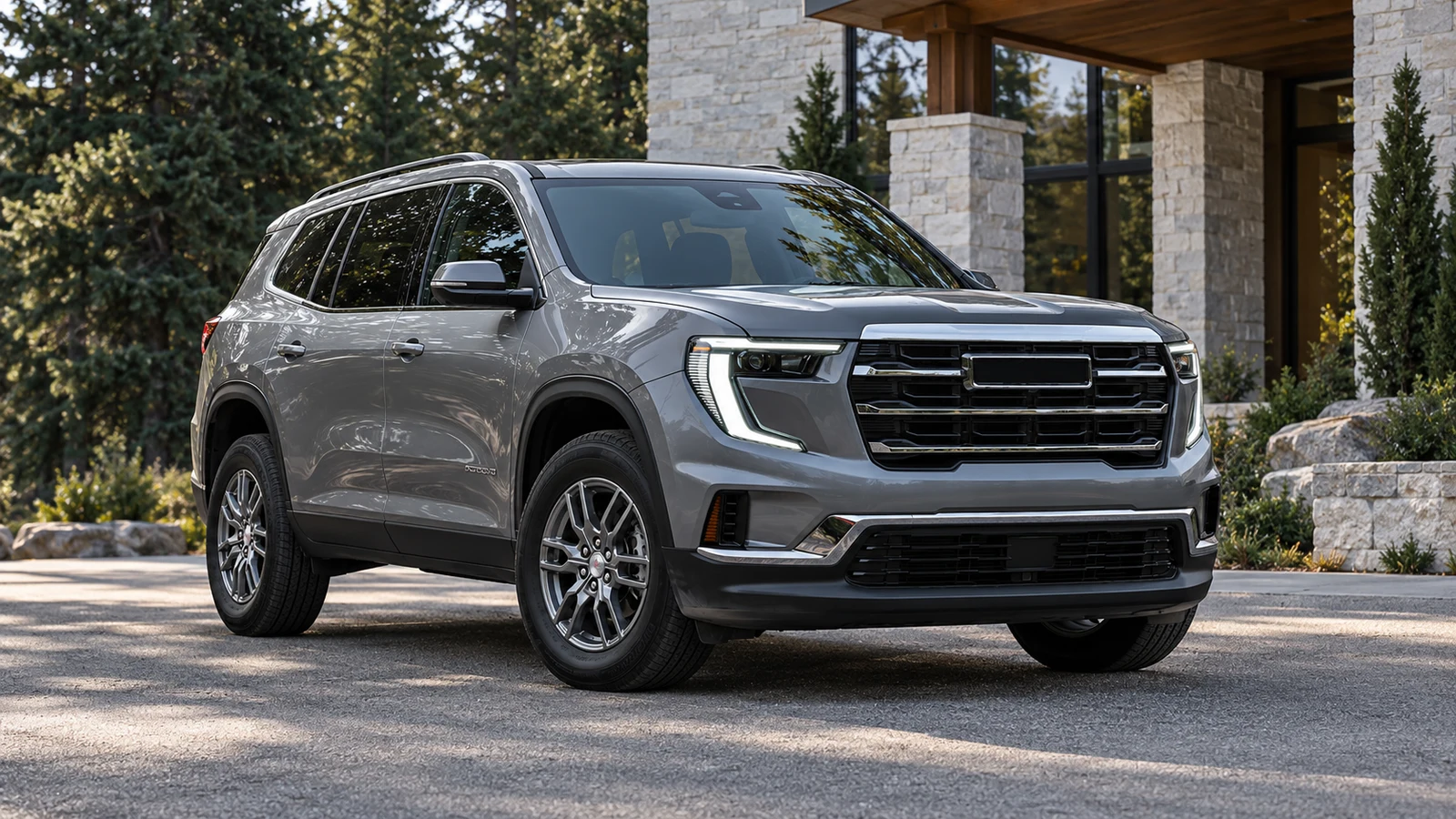
- GMC Acadia Cargo Space: Third Row Up, Folded and Maximum Room
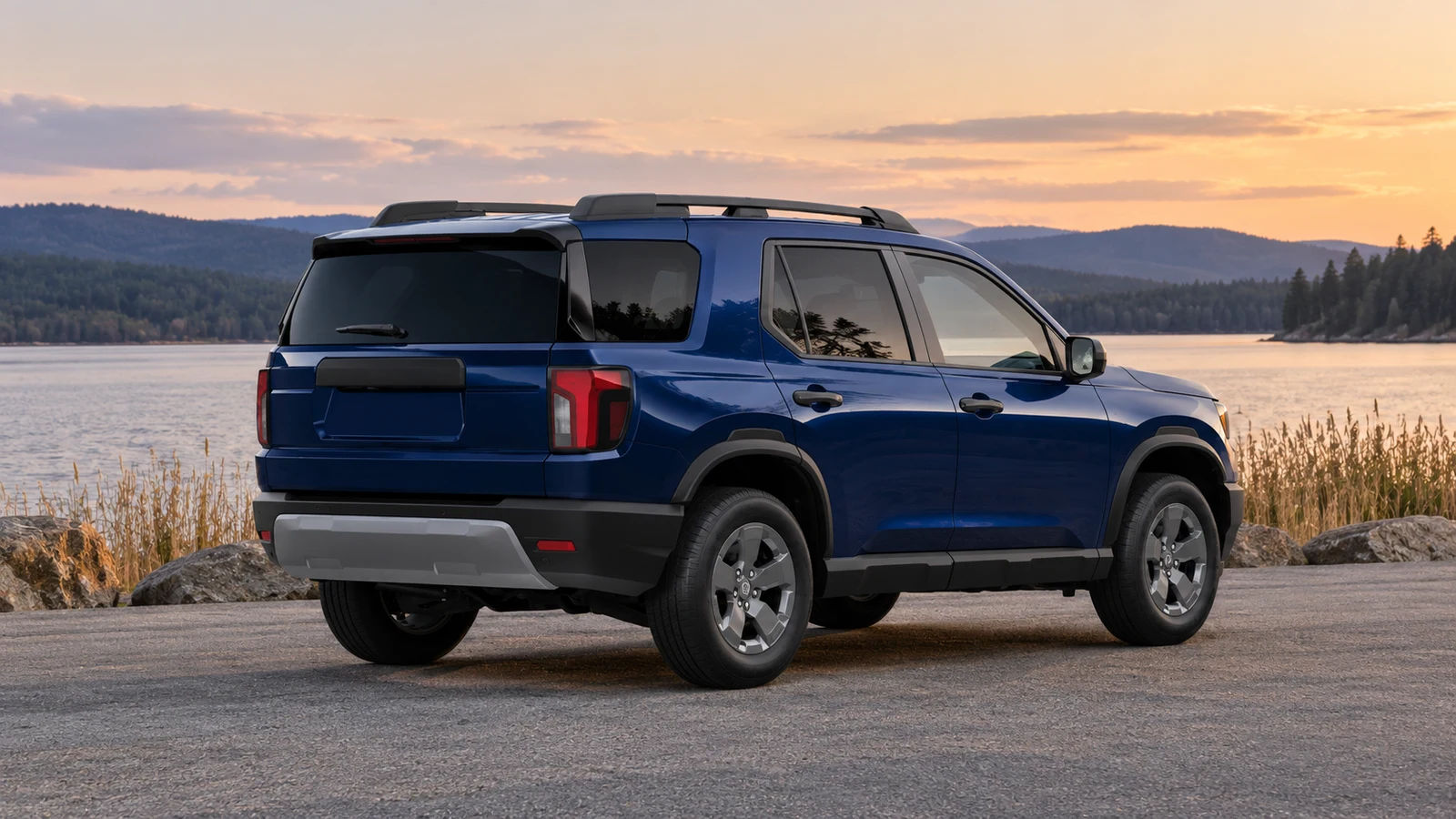
- Honda Passport Cargo Space: Why 83.8 and 104.6 Are Different Figures
- Cargo Fit Check: test a rigid item against published cargo measurements
Frequently asked questions
How much trunk space does the 2024 Ford Edge have?
The cited Edmunds SEL AWD specification page lists 39.2 cubic feet with all seats in place and 73.4 maximum. Check the exact trim and year; this is not a manufacturer-verified table for every Edge.
Is there a current U.S. 2026 Ford Edge to compare?
Ford's U.S. Edge page states that production has ended and points shoppers toward other vehicles and certified used inventory. This guide therefore treats the Edge as a used-SUV option.
Can I calculate cargo-floor length from 73.4 cubic feet?
No. Volume does not establish the shape, length or opening restrictions of the cargo area. Take linear measurements on the actual vehicle in the seating configuration you need.
Does a successful packing test prove the load is safe to carry?
No. Check weight limits, required passenger space, cargo securement and the vehicle's operating instructions separately from whether the object fits physically.