Dimensions · Space · Buying guides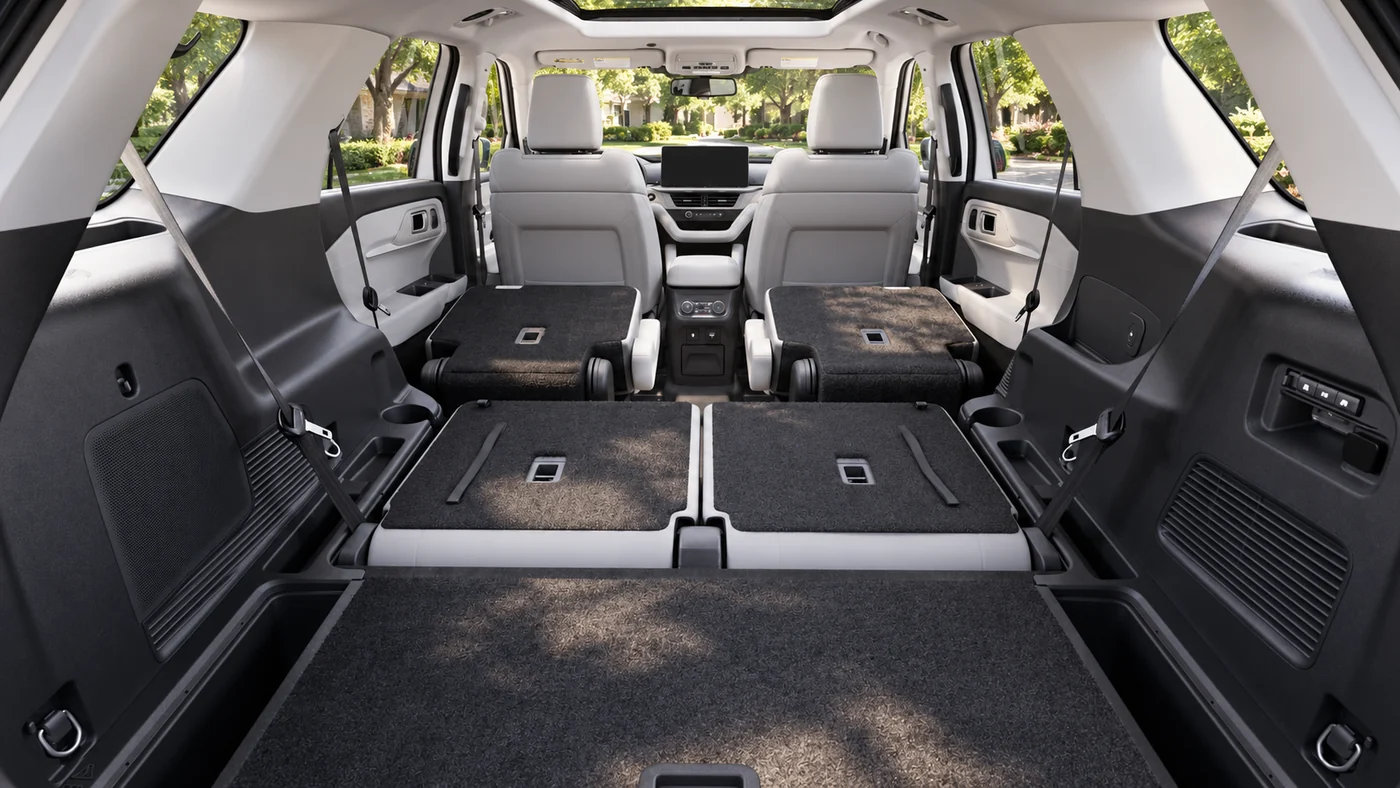
Ford Explorer cargo space changes substantially when passenger rows are folded. Ford's U.S. 2025 technical sheet lists 16.3 cubic feet behind the third row and 46.0 cubic feet behind the second row. Maximum capacity is 85.8 cubic feet for Active and ST-Line, or 85.3 for ST and Platinum. More importantly for loading, the sheet publishes actual cargo lengths, wheel-housing width and hatch-opening measurements. Ford's 2025 technical specifications, page 3.
For 2026, Ford separately confirms the seats-up 16.3-cubic-foot capacity and the trim-dependent maximums shown below. We do not transfer the 2025 linear measurements to 2026 without matching-year evidence. Ford's 2026 Explorer overview.
Before looking at the biggest cargo figure, count the seats you'll need on the trip. Leave those rows upright, then check whether your luggage fits behind them. For a tall crate or a bulky box, measure both the hatch opening and the space inside at the height the item will occupy.
Ford Explorer cargo space: seats up versus seats down
| U.S. model year and trim scope | Behind third row | Behind second row | Maximum, rear rows folded |
|---|---|---|---|
| 2025 Active / ST-Line | 16.3 cu ft | 46.0 cu ft | 85.8 cu ft |
| 2025 ST / Platinum | 16.3 cu ft | 46.0 cu ft | 85.3 cu ft |
| 2026 Active 100A / Active / ST-Line | 16.3 cu ft | Not verified here | 85.8 cu ft |
| 2026 other models, Ford overview scope | 16.3 cu ft | Not verified here | 85.3 cu ft |
If you need the third row every day, concentrate on the first capacity column. If you use it only occasionally, assess both the full-passenger arrangement and the third-row-folded arrangement. This avoids choosing a vehicle based on a loading scenario you rarely get to use.
2025 Ford Explorer cargo space dimensions in inches
| Manufacturer-published measurement | Active / ST-Line | ST / Platinum |
|---|---|---|
| Cargo length closed, behind third row | 20.8 in | 20.8 in |
| Cargo length closed, behind second row | 49.8 in | 49.8 in |
| Cargo length closed, behind first row | 84.1 in | 83.6 in |
| Cargo length above floor, behind third row | 12.7 in | 12.7 in |
| Cargo length above floor, behind second row | 43.4 in | 43.4 in |
| Cargo width at wheel housings | 48.1 in | 48.1 in |
| Rear opening width, lower | 47.6 in | 47.6 in |
| Rear opening height | 31.5 in | 31.5 in |
Evidence: Additional Cargo Dimensions, page 3 of Ford's 2025 technical sheet. Preserve Ford's measurement names: its above-floor lengths are not the same as its cargo-length-closed values.
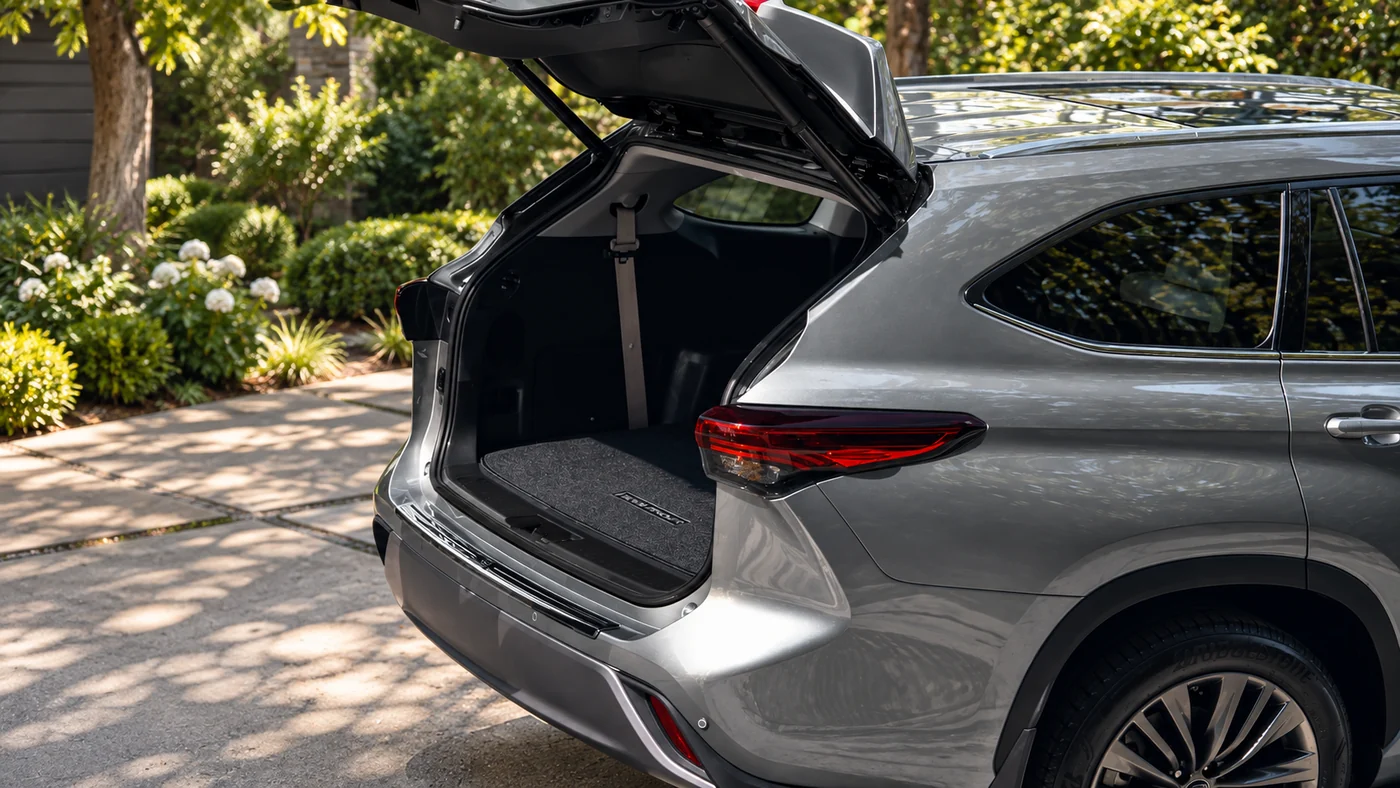
The loading bottleneck can differ from the resting position. The published lower rear-opening width is narrower than the wheel-housing cargo width. A wide rigid item therefore needs an entry-path check even if its footprint appears compatible with the floor. Do not interpret the lower opening measurement as the width everywhere higher in the hatch.
The same caution applies to height. An object's maximum height, handles and corners must clear the opening and the roof along the insertion path. The sheet does not establish a universal rectangular box that can pass through every point of the hatch. For a close fit, measure the exact opening rather than treating the table as a guarantee.
Cargo behind the third row: why floor depth is not enough
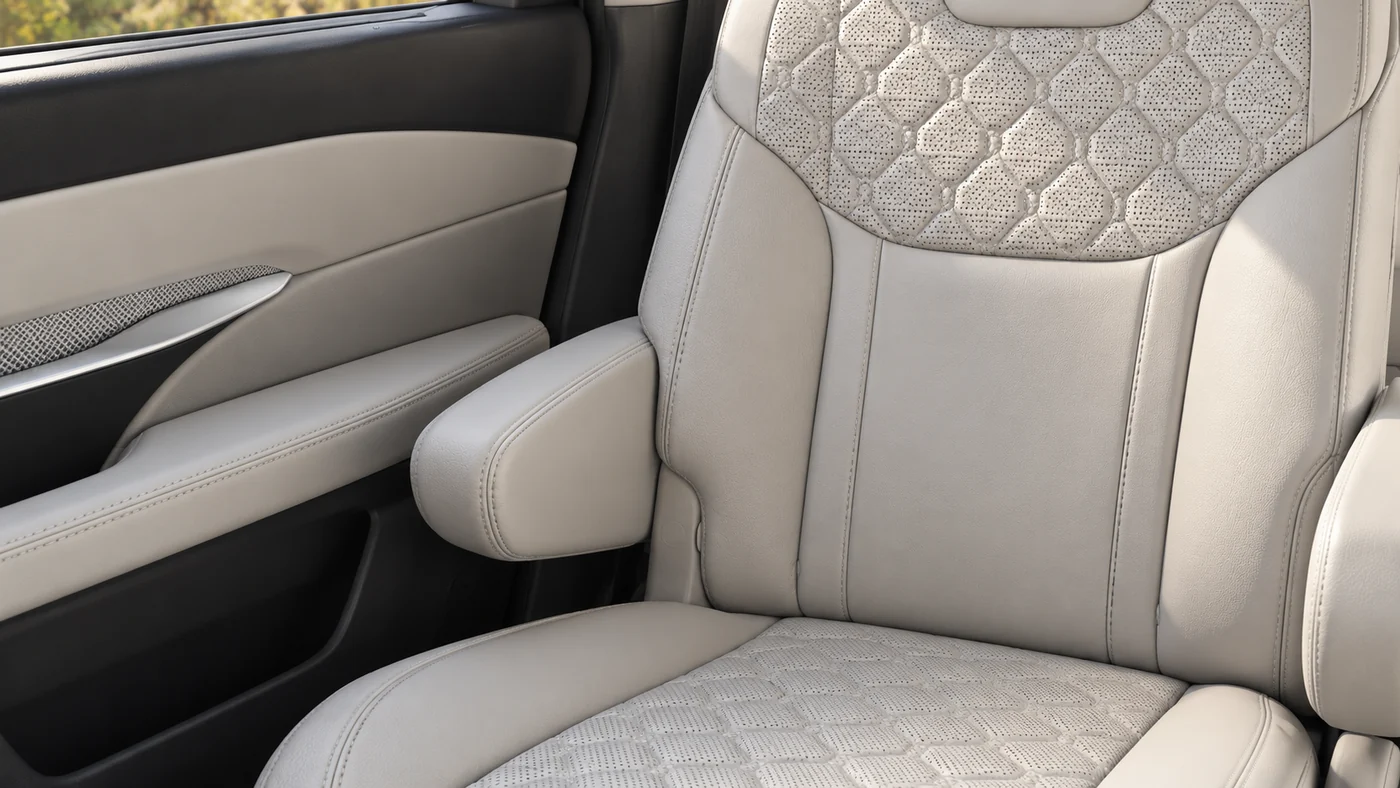
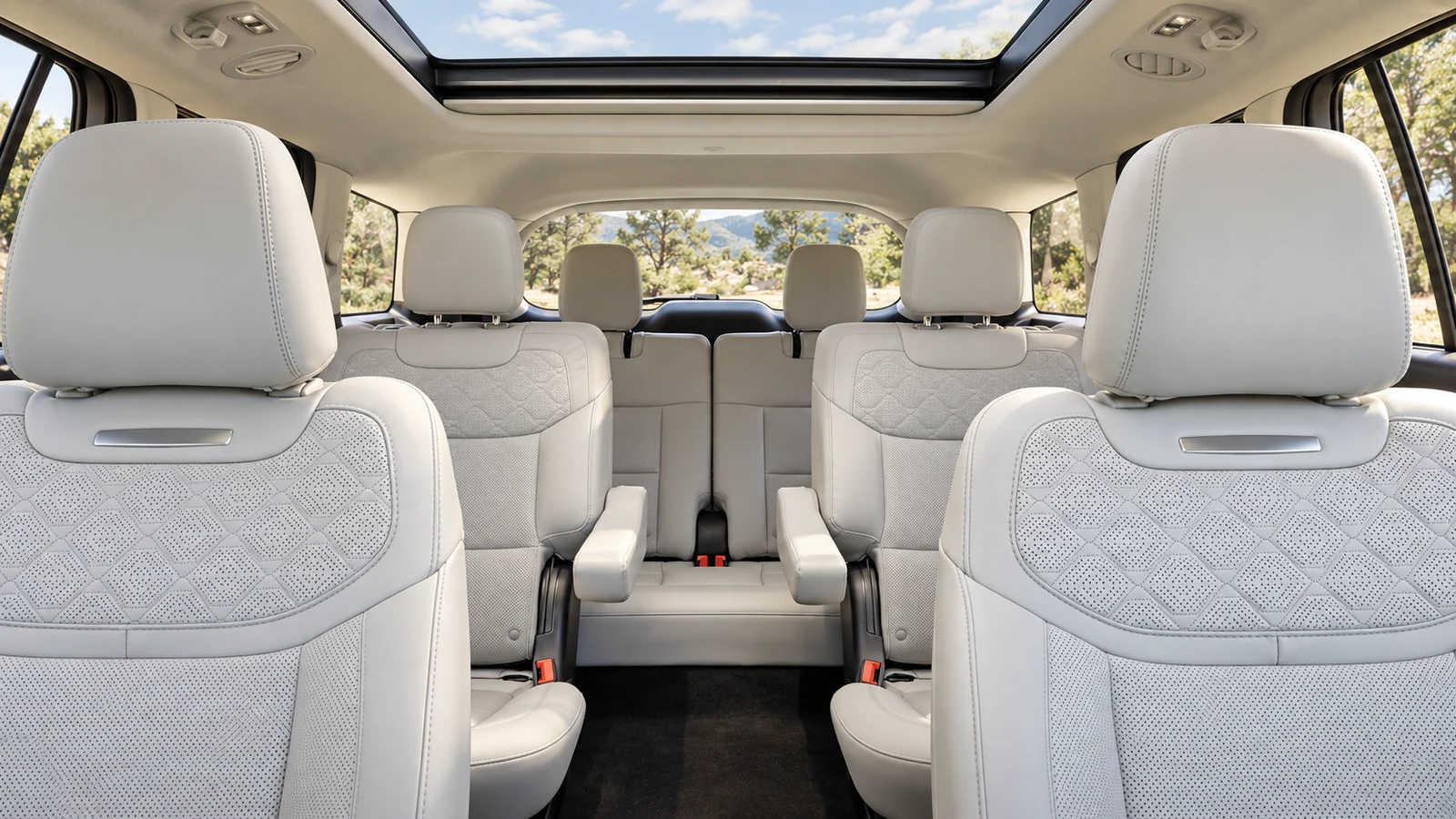
AI-generated seat-detail illustration based on Ford's 2025 Platinum captain-chair reference. Passenger seats may need to remain upright while loading. This is not a complete seating-layout view, a third-row picture or a measurement of cargo space behind either row.
The 2025 table's third-row cargo length closed and above-floor length describe different usable boundaries. A load can have a short enough floor footprint yet extend into a seatback or hatch surface higher up. That is especially relevant to a stroller, upright suitcase or rigid container.
Try the item the way you'll normally carry it. If it only fits after you remove a wheel, tilt the container or turn a bag sideways, note that extra step. Something you don't mind doing for a rare trip can become a nuisance when you're loading it every morning.
Leave the seatbacks in the position needed by their occupants. If moving a passenger's seat changes the result, include that condition. Do not photograph a load with a seating position folded and describe it as cargo capacity with every seat in use.
Check access as well as volume. Can you retrieve the bag used at a short stop? Does the load interfere with the hatch closing normally? Can it be secured following Ford's instructions without obstructing occupants? This guide supplies evidence for planning, not approval of a particular restraint setup.
Explorer cargo space with seats down
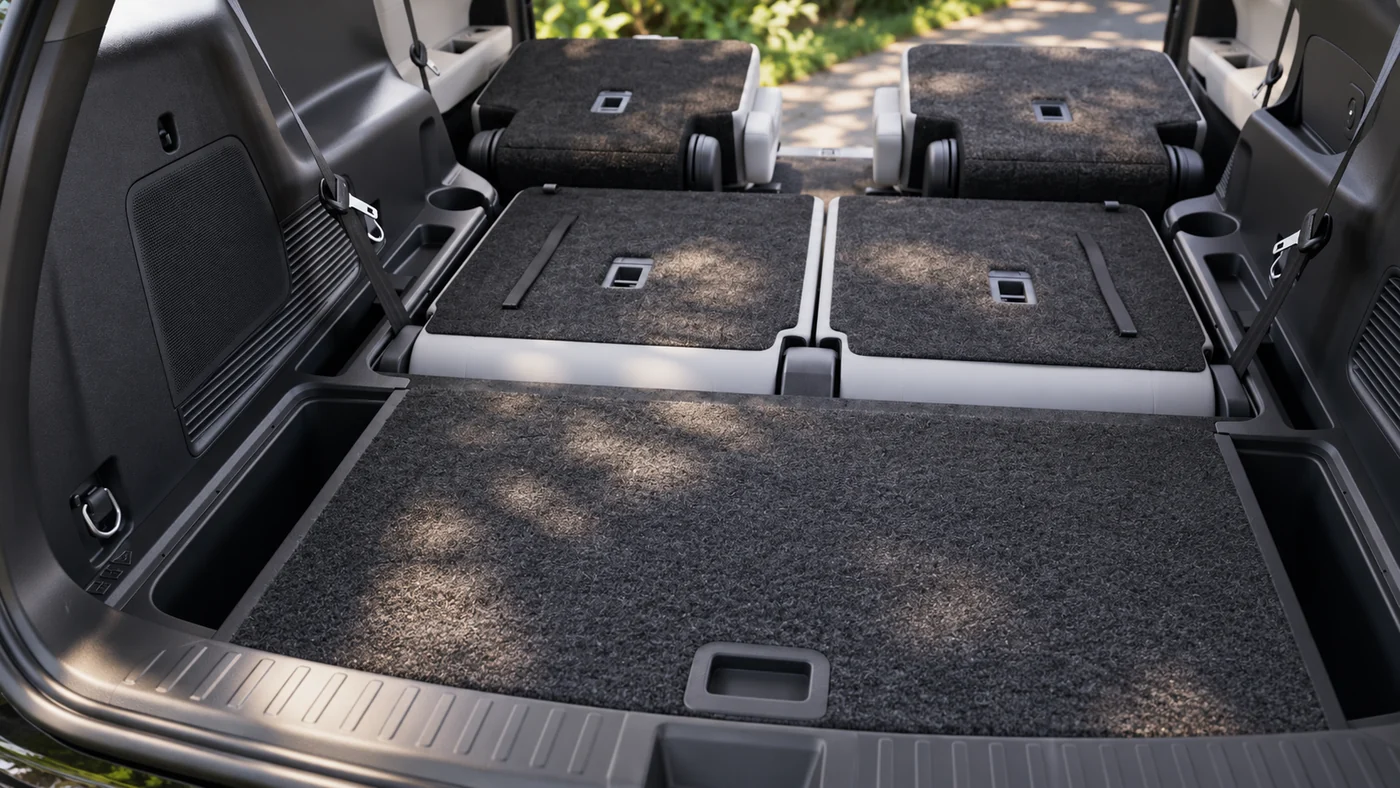
AI-generated closer illustration based on Ford's 2025 Platinum folded-seat reference. It identifies loading boundaries, not a measured floor length, flatness tolerance or safe payload.
For a long load, fold the rear seats into the arrangement the first-row cargo-length figure describes. Keep the driver and front passenger comfortable before checking the remaining space. If a box only fits with the driver's seat pushed too far forward to drive normally, it isn't a workable transport plan.
Inspect where the item rests. Hinges, gaps and changes in height matter for a narrow object or a concentrated load. Published maximum volume does not certify a continuous flat supporting surface, nor does it establish a sleeping-platform design.
A soft bag can bend around the space; a cabinet can't. For the cabinet, measure its widest point, height and length, including any packaging or handles. Then check how you'll lift and turn it through the hatch. Leave some clearance rather than counting on a nominally identical opening and item size to work perfectly.
If part of a rear row remains in use, treat that mixed arrangement as its own check. Neither the fully folded maximum nor the all-seats-upright capacity establishes the exact space beside a remaining passenger. Verify separation, buckle access and loading instructions on the vehicle.
2026 Explorer cargo space: what is separately confirmed?
Ford's 2026 overview confirms the third-row capacity and maximums in the earlier table. Its listed model set now includes Active 100A and Tremor, so the 2025 four-column technical sheet is not a complete 2026 trim matrix. Ford's 2026 model-year overview.
We have not verified a 2026 technical table supplying the same closed-length, above-floor and hatch measurements. Matching volume figures are insufficient evidence that every loading boundary is identical. If you are buying a 2026 Explorer for a particular crate, appliance or mobility device, measure that vehicle or obtain matching-year documentation before relying on an older figure.
For seating choices, see the Explorer interior guide; for broader specifications, see the 2026 model page. The trim guide covers its own stated model year, so check the year before using it to choose equipment for the vehicle you're shopping.
Measure your load before visiting the dealer
Make a short record with the object's length, width and height in its intended travel position. Include protruding handles, casters, folded stroller parts and protective packaging. If an item can change orientation, record which orientation remains practical and permitted for that item.
At the vehicle, check these boundaries in order:
- The opening at the height where the widest part must pass.
- The usable floor width, including wheel housings and trim.
- The available length with the required passenger seats in place.
- Clearance above the object and at the closed hatch.
- Access and a securing arrangement consistent with the owner's manual.
For a valuable or awkward load, a lightweight template can establish the geometry without forcing the real object into the vehicle. It does not establish the floor's loading capacity or permission to transport the item. Keep those questions separate.
Our measurement-method guide explains source labels, and the Cargo Fit Check can organize a comparison. Neither tool replaces a measurement on the exact vehicle when the margin is small. Sources were checked October 6, 2026; SUVLook did not perform a physical measurement for this guide.
Frequently asked questions
How much Ford Explorer cargo space is behind the third row?
Ford lists 16.3 cubic feet for the checked 2025 trims and separately confirms that capacity in its 2026 overview. Volume does not establish an exact suitcase count.
What are the 2025 Explorer cargo dimensions with the third row folded?
Ford lists 49.8 inches for cargo length closed behind the second row and 43.4 inches for length above the floor. The sheet lists 48.1 inches of wheel-housing width. These are 2025 figures, not verified 2026 measurements.
Is maximum cargo space identical across trims?
No. The checked 2025 sheet lists 85.8 cubic feet for Active/ST-Line and 85.3 for ST/Platinum. The 2026 overview also separates its models into those two maximum-capacity groups.
Will a mattress or large crate fit in an Explorer?
There is no verified universal fit in this guide. Compare the item's complete dimensions with the opening and intended seating configuration, then check the actual vehicle. Maximum volume is insufficient.