Dimensions · Space · Buying guides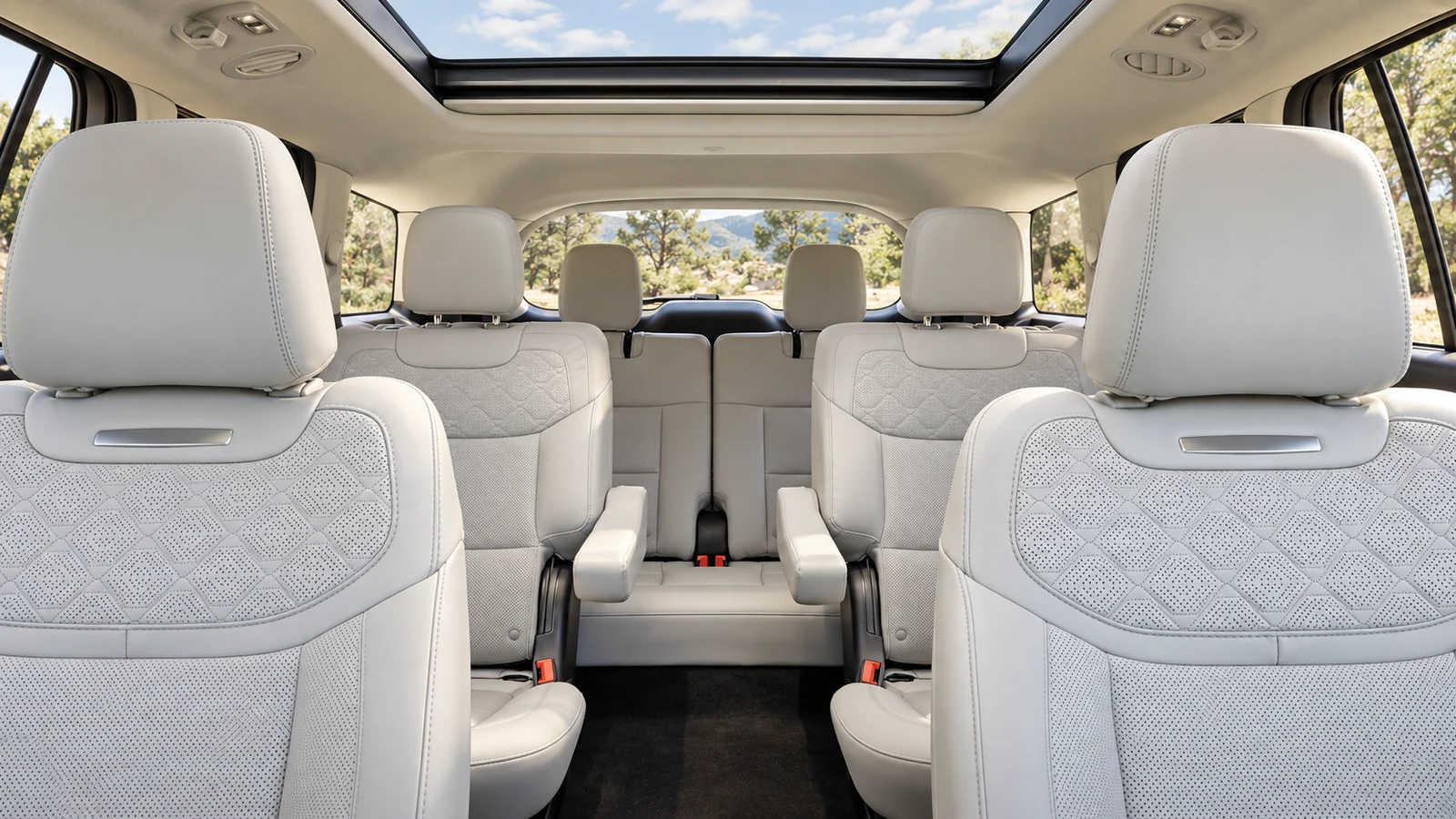
For U.S. 2026 models; checked September 30, 2026. The 2026 Explorer is a three-row SUV with six- or seven-passenger seating depending on trim and the second-row layout. Ford lists 42.9–43.0 inches of front legroom, 37.0–37.5 inches in the second row and 31.8 inches in the third row. The trim-specific differences are shown below.
Choose the seat layout before the upholstery. Then have your usual passengers sit in the second and third rows together, with the driver comfortable up front. Moving a seat just to make the last row look roomy won't tell you whether the cabin works when everyone's aboard.
2026 Explorer interior dimensions: the numbers to test
| Published 2026 measurement | Active 100A / Active | ST-Line / Tremor / Platinum / ST |
|---|---|---|
| Front legroom | 43.0 in | 42.9 in |
| Second-row legroom | 37.5 in | 37.0 in |
| Third-row legroom | 31.8 in | 31.8 in |
Ford's 2026 Explorer dimensions FAQ supplies these values. Its headroom figures also differ: front/middle/rear headroom is 40.7/40.5/38.9 inches, with Platinum listing 38.9/38.2/38.9 inches. These are factory specifications; evaluate the exact roof and seating configuration.
Front legroom is the strongest number here, but it should not be optimized in isolation. Set the driver's seat for pedal and steering-wheel reach, then sit directly behind it. If the second-row passenger has to move far rearward, repeat the third-row check because you are redistributing space rather than creating it.
Six seats versus seven seats
The Explorer is offered with either a second-row bench or second-row captain's chairs, producing seven- or six-passenger layouts. The layout matters more than the headline capacity suggests.
Captain's chairs give second-row passengers their own seats and create a center path toward row three. A bench gives you the extra seating position. Families using child restraints should test the actual installation because a restraint can block the seat motion you expected to use for third-row access.
If all three rows are used frequently, have the real passengers sit in all three rows at the same time. A comfortable empty third row can become tight once the second row moves to its normal occupied position.
How to judge the third row
Ford publishes 31.8 inches of third-row legroom. That is enough to justify a real test, not enough to promise comfort for every adult.
Check four things: knee clearance, foot room under the second row, head clearance, and the angle of the seat cushion. Then buckle the belt and make sure the buckle and shoulder belt sit naturally. Repeat the test on both sides if the intended passengers differ in height.
For occasional child use, confirm that the child can enter and exit without relying on a second-row seat movement that becomes impossible once a restraint is installed.
Seat materials and trim differences
Explorer trim levels change upholstery, seat functions, cabin trim and other comfort equipment. Upper trims can add richer materials and additional front- and rear-seat features, but the best choice still depends on which rows are occupied every day.
When comparing two trims, keep the driver position identical and evaluate the seat itself: cushion length, lumbar shape, bolster pressure and head-restraint angle. A more expensive material does not guarantee a better fit for your body.
If a panoramic roof is part of the trim you want, test head clearance in that exact roof configuration. Roof hardware can change the space above occupants even when legroom stays the same.
Screens and daily controls
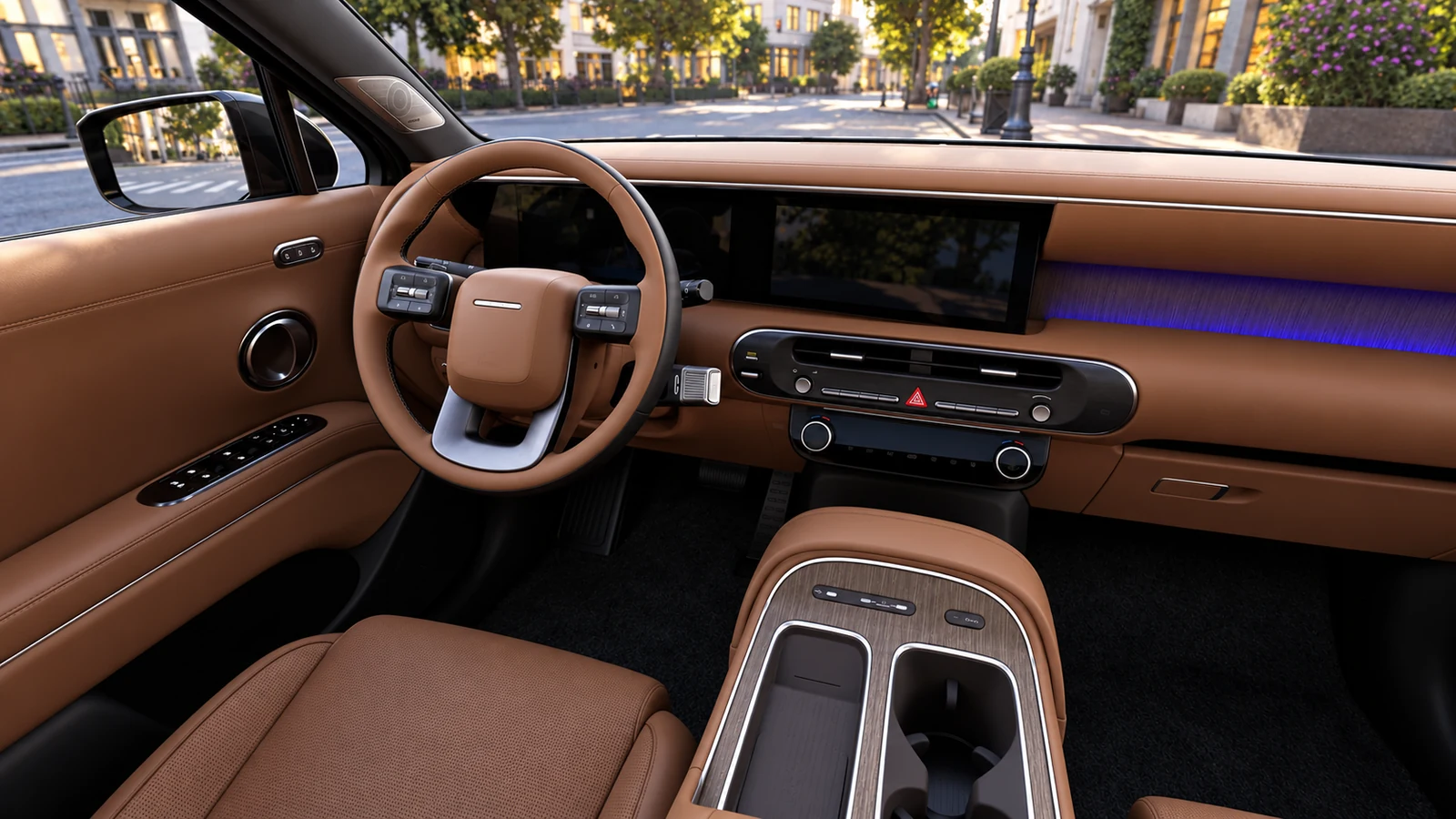
Ford lists a 13.2-inch center display and wireless Apple CarPlay and Android Auto capability on the 2026 model page. Pair your phone, adjust climate controls, switch audio sources, call up the camera view and enter a destination while parked.
If the vehicle will be shared, have the second driver repeat the setup. Check how quickly the seat, mirrors, phone and preferred screen layout can be restored. Daily friction matters more than showroom novelty.
Connected services can change over time or require subscriptions after trial periods. Ask which functions work without an active paid service.
Passenger space and cargo space are different questions
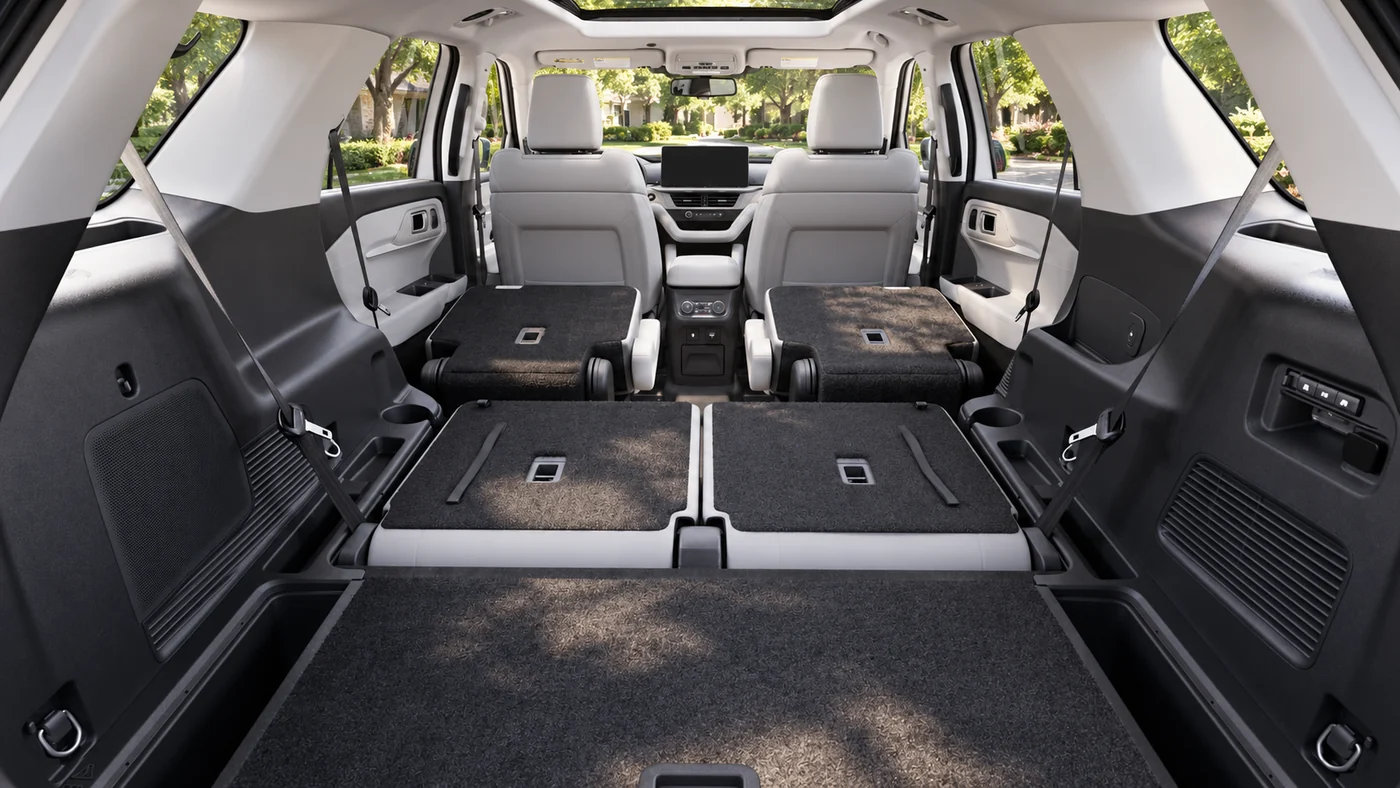
Ford publishes 16.3 cubic feet of cargo volume behind the third row and up to 85.8 cubic feet on Active/ST-Line configurations with rear seats folded. Those volume figures do not tell you the hatch opening dimensions or whether a rigid stroller, wheelchair or crate will pass through.
Plan cargo around the seats you must keep occupied. A maximum-volume number that assumes the second and third rows are folded is not useful for a six-person road trip.
Which Explorer interior should you choose?
Choose the second-row layout before the trim. A seven-seat bench is the better starting point when passenger count matters; captain's chairs make more sense when six seats are enough and row-three access matters more.
Then compare the exact trims for seat comfort, roof configuration, camera/driver-assistance controls and the connected features you will actually use. The Ford SUV size guide can help if you are also deciding whether Explorer is the right Ford footprint.
For the newer lineup and equipment differences, see our 2027 Explorer trim-level guide. It separates the current trims from the 2026 cabin references in this article.
Frequently asked questions
How many people does the 2026 Ford Explorer seat?
Depending on the second-row configuration, the Explorer seats six or seven.
How much third-row legroom does the 2026 Explorer have?
Ford publishes 31.8 inches in its 2026 dimensions FAQ.
Is the Explorer third row comfortable for adults?
That depends on passenger height and where row two is positioned. The published number is a screening reference, not a comfort guarantee.
Does this article use SUVLook road-test measurements?
No. The dimensions are manufacturer-published references; the fit advice is SUVLook editorial guidance.
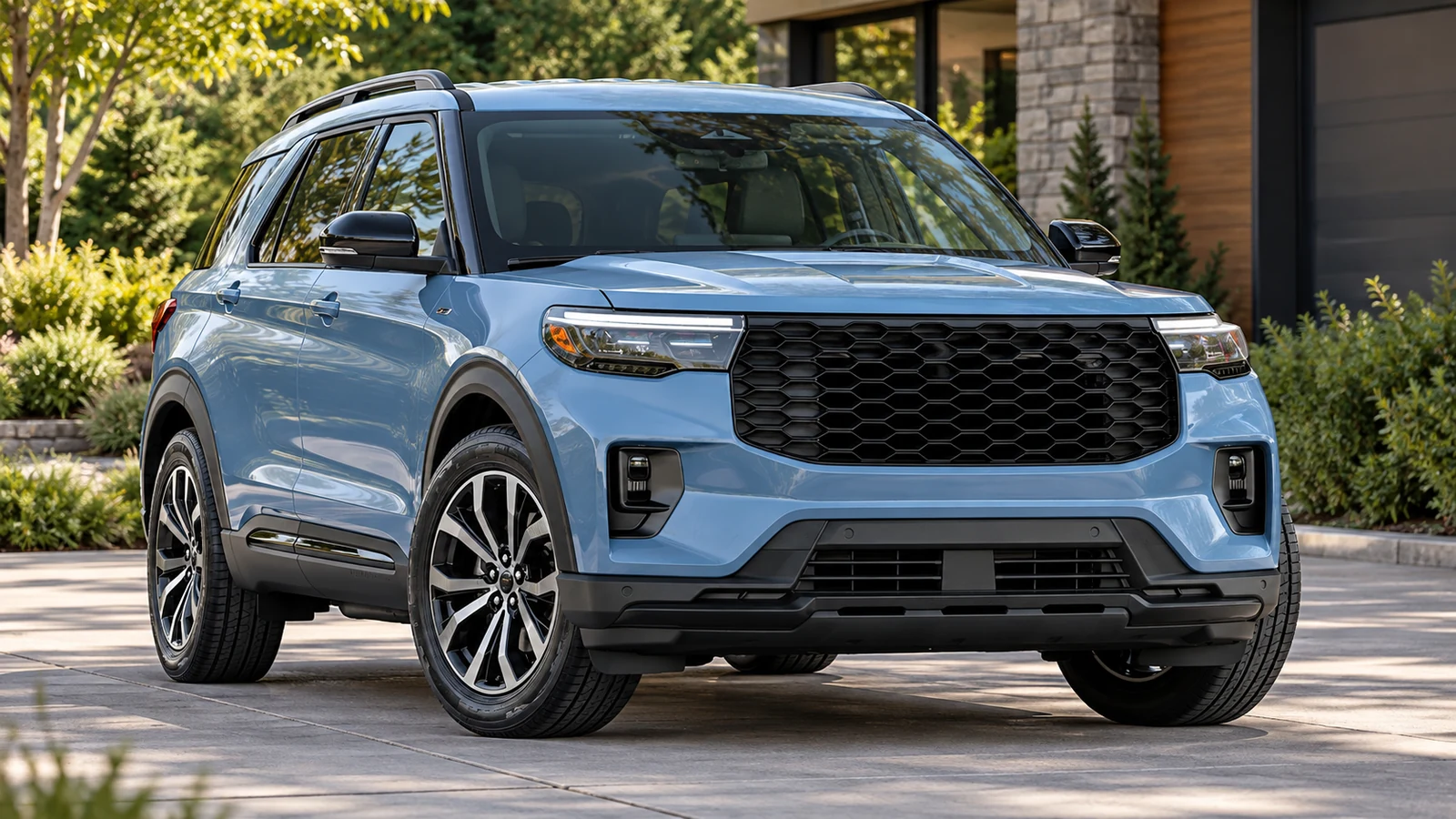
Is the hero image an official Ford photo?
No. It is an AI-generated editorial illustration based on a Ford cabin reference.