Dimensions · Space · Buying guides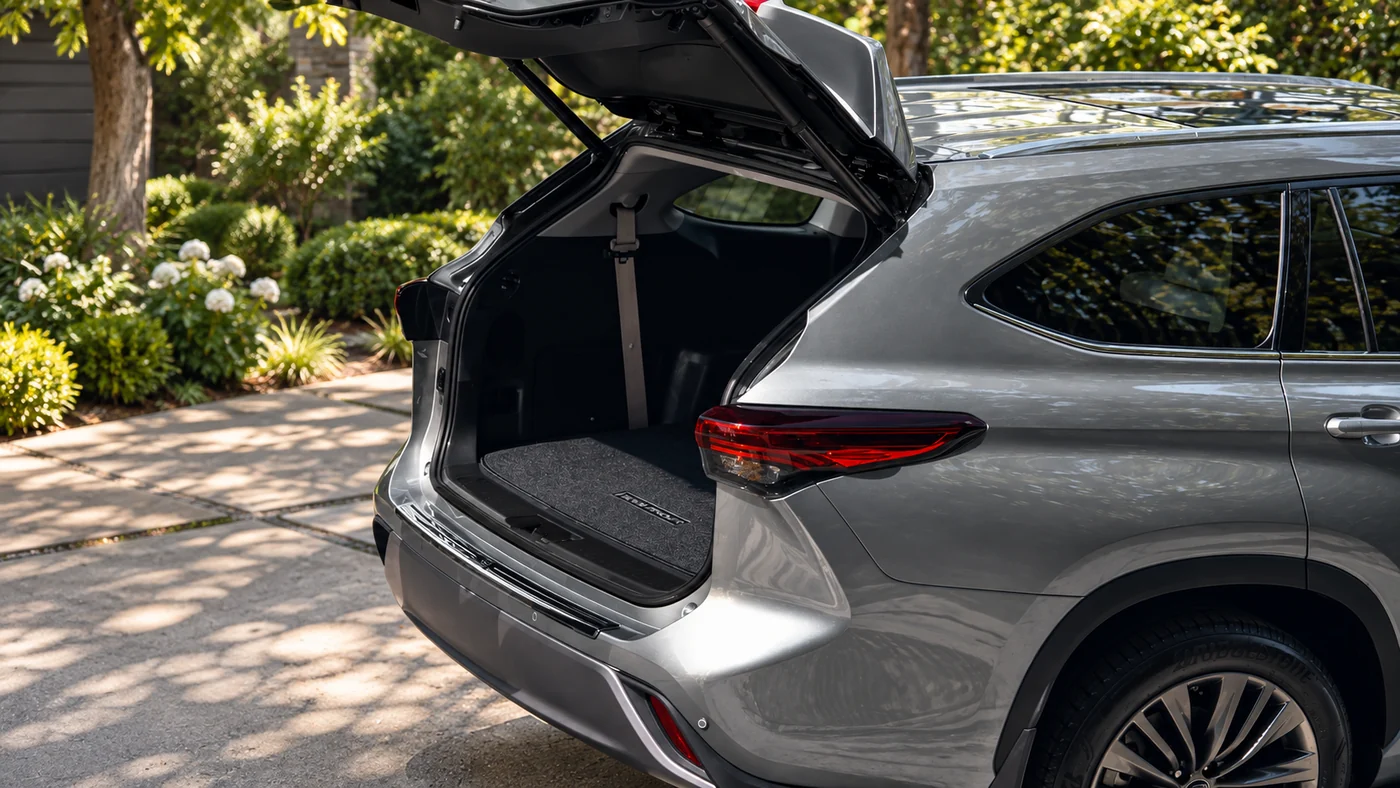
Toyota Highlander cargo space depends on which rows remain available for passengers. Toyota's U.S. 2025 overview lists 16.0 cubic feet behind the third row, 48.4 cubic feet with the third row folded, and up to 84.3 cubic feet with both rear rows folded. The 2026 announcement separately confirms the 84.3-cubic-foot maximum; it does not provide the other two figures in the material we could verify. Toyota's 2025 overview and 2026 announcement.
If your family fills the third row, try your luggage with that row upright. Folding it creates more room, but it also removes the seats someone needs. For a rigid crate or stroller, check the floor length, narrowest width and hatch opening too. The capacity figures are a starting point, not proof that your usual load will fit.
This guide covers U.S. Highlander, not Grand Highlander. Sources were checked October 6, 2026. SUVLook has not physically measured or load-tested the vehicle.
Toyota Highlander cargo space by seating configuration
| U.S. model-year evidence | Behind third row, seats upright | Behind second row, third row folded | Both rear rows folded |
|---|---|---|---|
| 2025 Toyota overview | 16.0 cu ft | 48.4 cu ft | Up to 84.3 cu ft |
| 2026 Toyota announcement checked | Not separately verified | Not separately verified | Up to 84.3 cu ft |
These capacities come from Toyota. Where a 2026 figure isn't verified, the table says so; it doesn't mean the vehicle has no cargo space or that its capacity changed. Use the confirmed figures for comparison and check the missing ones before making a close buying decision.
First choose the configuration that describes your ordinary trip. If passengers occupy the third row, the first capacity column is relevant. If everyone sits in the first two rows, the middle column becomes useful. The maximum belongs to journeys where neither rear row is needed for passengers.
Our Highlander interior guide covers passenger layout separately. A cargo decision can require a different arrangement from the seating layout that looked most convenient in the showroom. Write down both needs before comparing vehicles: who travels, and what travels with them.
Cargo space behind the third row: the family-trip test
For the checked 2025 model, the 16.0-cubic-foot figure applies behind the third row. It is the starting point for shopping with a full passenger load, but it does not establish a specific suitcase count. Case dimensions, rigid corners, wheels and the space required to close the hatch all affect the result.
Bring your actual stroller or record its folded dimensions, including handles and protruding wheels. Then check the load with the third-row seatbacks in their intended passenger position. A dealer demonstration with a seatback moved forward or part of the row folded answers a different question.
Check whether you can reach the bags, not just whether they fit. At a short stop, can you get the bag you need without unpacking the whole trunk? Put that bag in last and try taking it out. Also check your view through the rear window and work out how you'll secure the load.
Do not count a folded third-row seating position as available passenger space. If your solution depends on folding part of the row, verify that every remaining passenger has a usable, permitted seat and that cargo does not interfere with belt use or access. Follow the vehicle's loading instructions; this article is not a load-restraint certification.
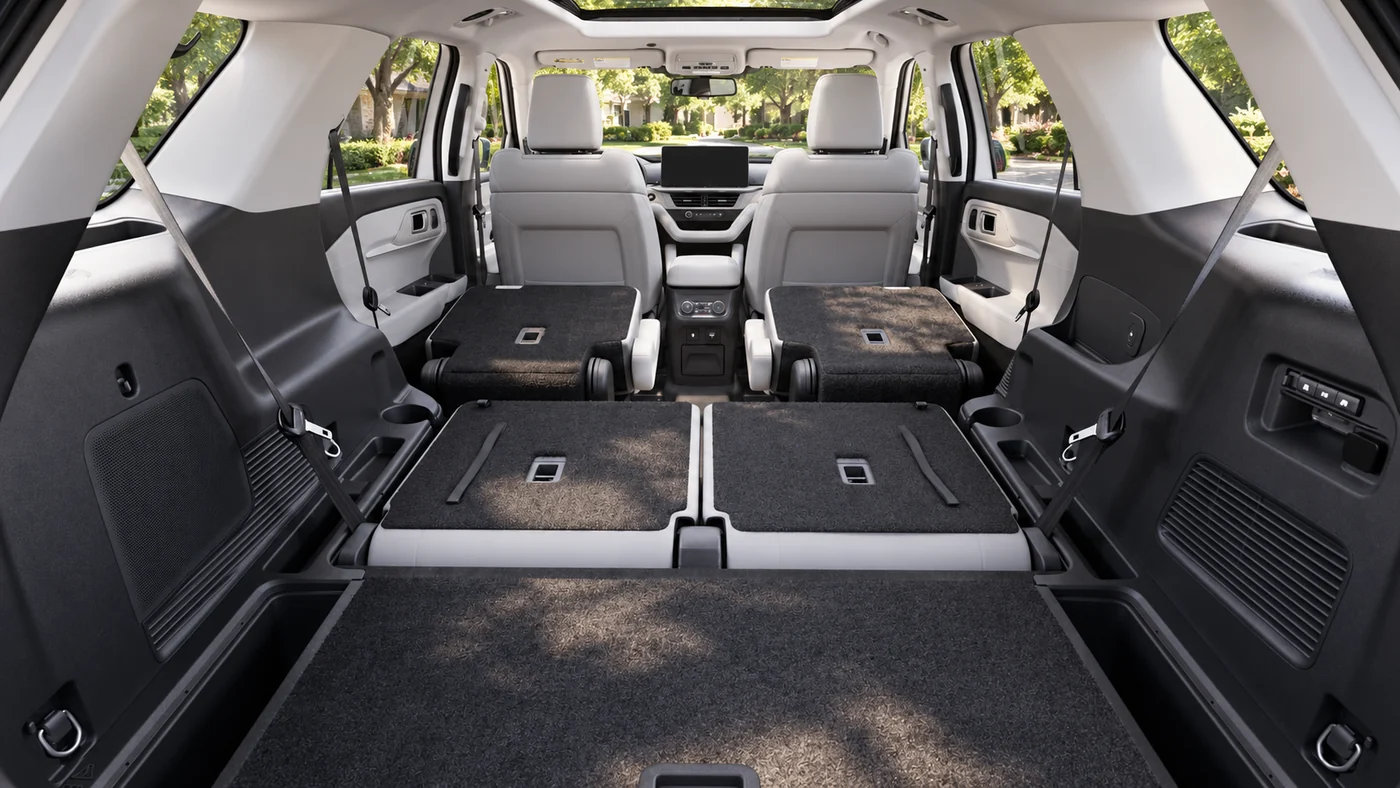
Highlander cargo space with seats folded
The checked 2025 capacities rise to 48.4 cubic feet with the third row folded and up to 84.3 cubic feet with both rear rows folded. Those configurations answer different jobs: luggage behind occupied second-row seats versus bulky loads behind the front row.
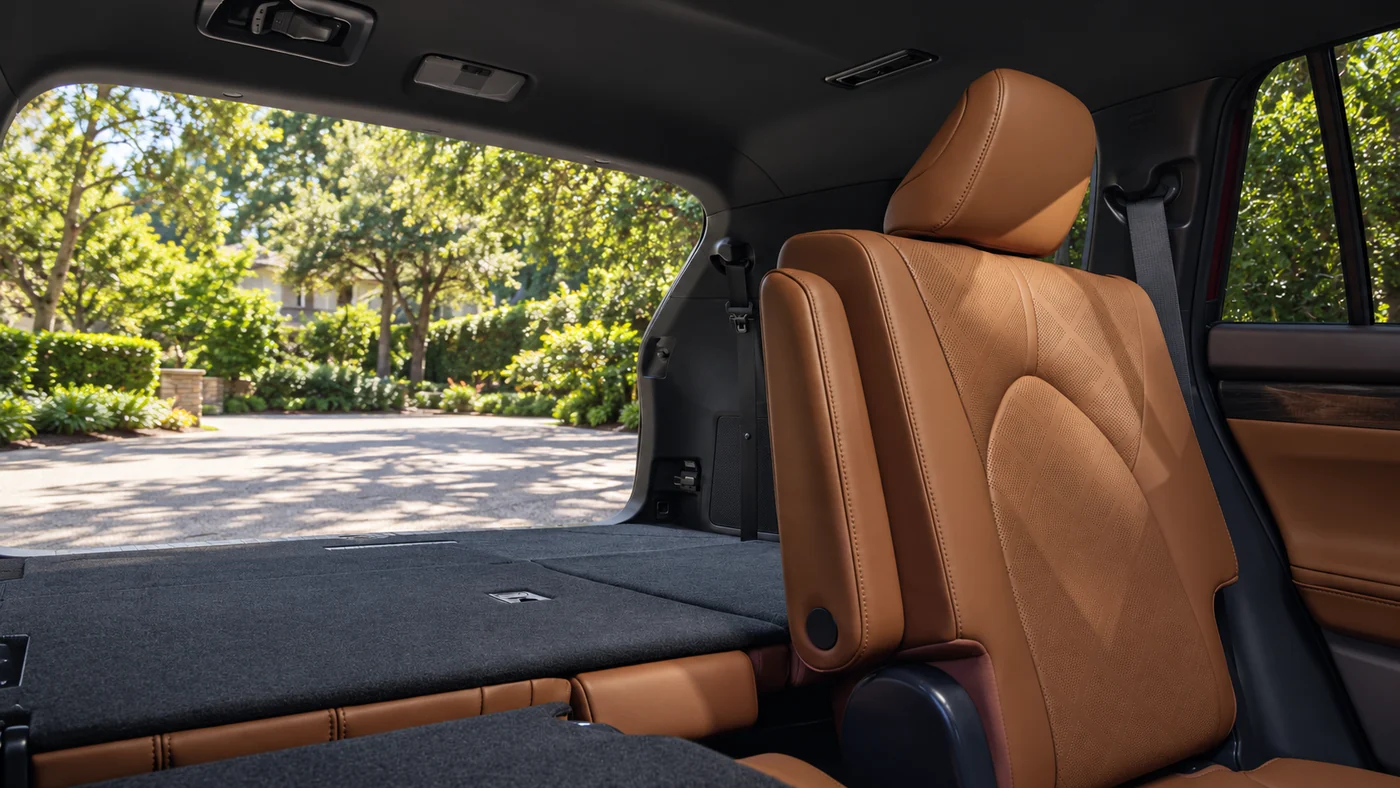
AI-generated editorial illustration based on Toyota's older MY20 gallery seating-layout reference: one captain chair stays upright beside folded seating. It is not a picture of both rows fully folded, an exact 2025/2026 trim specification or a verified sleeping-platform fit.
Before relying on the larger configuration, operate the folding mechanism on the actual vehicle. Look for the seatback angle, hinges, changes in floor height and gaps between surfaces. A folded seating illustration is not proof that every point supports a heavy or concentrated load.
Set the front seats for the people who will drive and ride before evaluating the available floor. Moving a front seat into an unusable position can create an impressive-looking space that is irrelevant to a moving journey. If you are investigating sleeping space while parked, record that different seat position rather than presenting it as normal driving capacity.
A rigid item must fit both the final resting position and the path into it. An object can be narrower than the widest point inside the vehicle yet fail to pass through the opening. Likewise, a tall box may occupy a short enough floor footprint while contacting the sloping seatback above it. Check all three dimensions at the height where the object will sit.
Toyota Highlander cargo space dimensions in inches
Toyota confirms the 2026 maximum capacity, but the material available here doesn't give a complete set of floor and hatch measurements. If you're buying a 2026 vehicle for a tight-fitting item, ask for those measurements or check it yourself. The following exact-year values remain unverified:
| Fit measurement needed | Status in the sources checked | Why it matters |
|---|---|---|
| Floor length behind the third row | Not verified | Stroller or case depth with all rows upright |
| Floor length behind the second row | Not verified | Load length while carrying second-row passengers |
| Usable length with both rear rows folded | Not verified | Long rigid loads or a parked sleeping arrangement |
| Width between wheel housings | Not verified | Narrowest floor-level fit |
| Hatch-opening width and height | Not verified | Whether an item can enter the cabin |
Do not substitute exterior width, wheelbase or passenger shoulder room for these values. They describe different boundaries. Our measurement-method guide explains why factory volume and physical fit measurements must remain separate.
For a near-limit item, request a tape measurement on the exact model year and configuration. Photograph the endpoints with the owner's permission and record whether the tape runs along the floor or above it. A number without those conditions can be misleading even when it was measured carefully.
Hybrid cargo space and model-year boundaries
Toyota's 2025 overview describes the hybrid battery beneath the second-row seats and states that it does not reduce cargo or passenger space. That supports the manufacturer's 2025 packaging claim; it is not a separate SUVLook measurement of every trim's usable floor. Toyota's 2025 hybrid overview.
If you are comparing gas and hybrid vehicles, inspect the actual floor, stored equipment and seat arrangement in both. Matching published capacities do not prove that a crate's support points, a cargo liner or an accessory will be interchangeable. Compatibility requires its own evidence.
For a 2026 Highlander, the maximum capacity is independently confirmed by the newer announcement. The detailed seats-up capacities and linear dimensions remain explicitly unverified here. Before a purchase that depends on third-row luggage room, obtain the exact 2026 specification or measure that vehicle. We do not treat a matching maximum as confirmation of every other entry.
Buying a used 2016 or 2018 Highlander? Look for measurements of that model year and check the vehicle itself. This table doesn't establish its cargo dimensions. The same caution applies when a newer model arrives: similar-looking seats or matching names aren't enough to confirm a close fit.
Highlander is not Grand Highlander
Grand Highlander has its own model identity and loading evidence. The name similarity does not justify borrowing its cargo capacity, measurements or images for Highlander. If your shortlist includes both, compare the same occupied-row arrangement rather than comparing one vehicle's maximum with the other's seats-up figure.
If you're also considering the larger vehicle, start with the Grand Highlander model page. Its figures don't belong in this Highlander table. Try passengers and luggage together in each vehicle before choosing; a photograph can't show whether your household and your bags fit at the same time.
A five-step showroom loading check
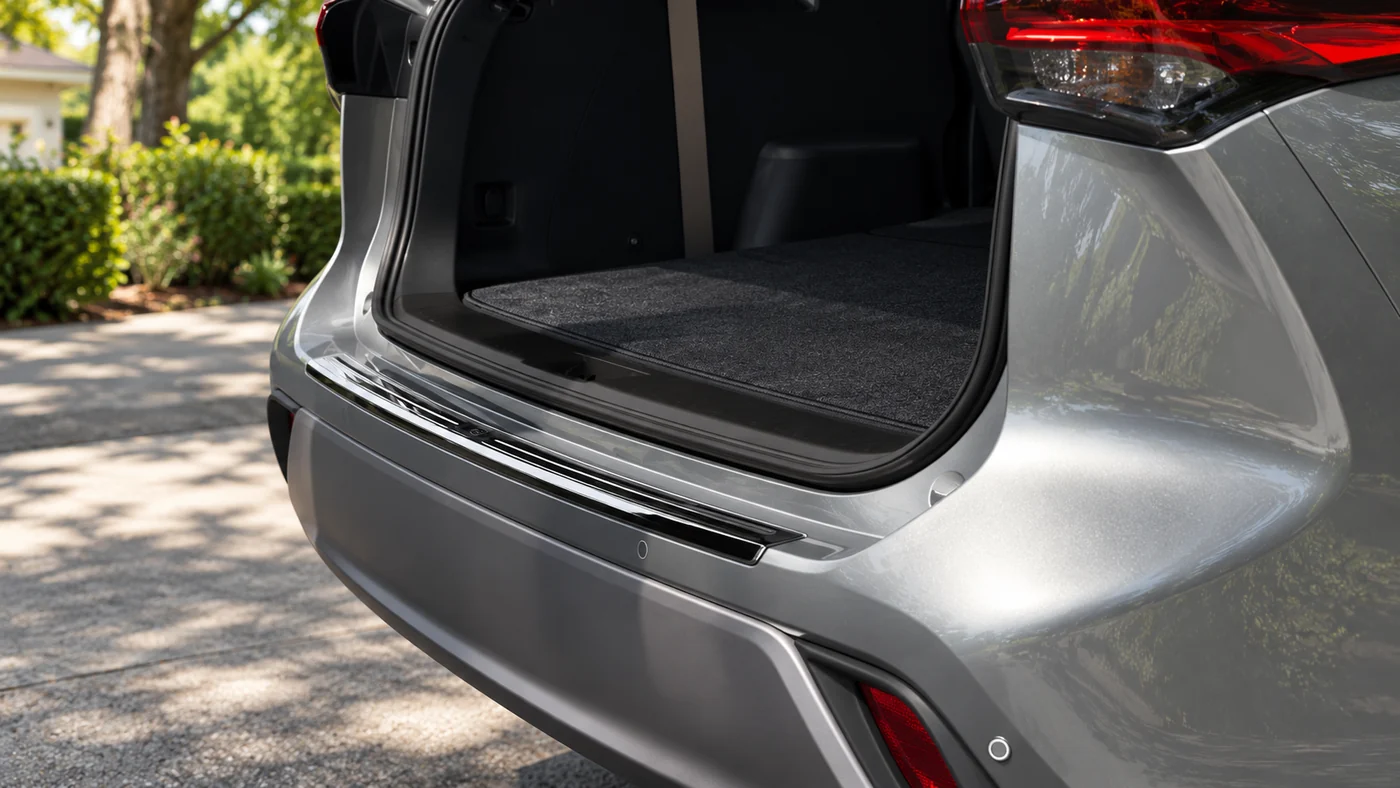
AI-generated illustration derived from Toyota's MY25 open-hatch reference. The closer composition identifies boundaries to measure; perspective is not a ruler or verified opening dimension.
- Identify the model year, powertrain and seat configuration on the vehicle itself.
- Leave every needed passenger seat upright and set front seats normally.
- Measure the narrowest opening, the usable floor and the clearance above the load.
- Try your real item, or a dimensionally accurate lightweight template, without forcing trim or closing the hatch against it.
- Confirm visibility, access and the manufacturer's loading and securing instructions before calling the arrangement usable.
Keep a simple result: fits in the intended configuration, fits only after changing seats, or not yet verified. This is more useful than declaring that a vehicle has enough cubic feet. If a load needs seats folded that your family uses daily, it may fit the vehicle but not fit your routine.
Frequently asked questions
How much cargo space does the 2025 Highlander have behind the third row?
Toyota lists 16.0 cubic feet in its U.S. 2025 overview. That is volume, not a verified floor length or guaranteed suitcase count.
How much space is available with the rear seats folded?
The checked 2025 overview lists 48.4 cubic feet with the third row folded and up to 84.3 with both rear rows folded. The 2026 announcement separately confirms the 84.3 maximum.
Does Highlander Hybrid lose cargo space to its battery?
Toyota's 2025 overview says its battery placement does not reduce cargo or passenger space. Exact-year linear fit and accessory compatibility still require separate checks.
Will a mattress fit in a Toyota Highlander?
This guide does not verify a mattress fit. Measure usable length, narrowest width, hatch clearance and the intended seat positions; cargo volume alone cannot settle it.