Dimensions · Space · Buying guides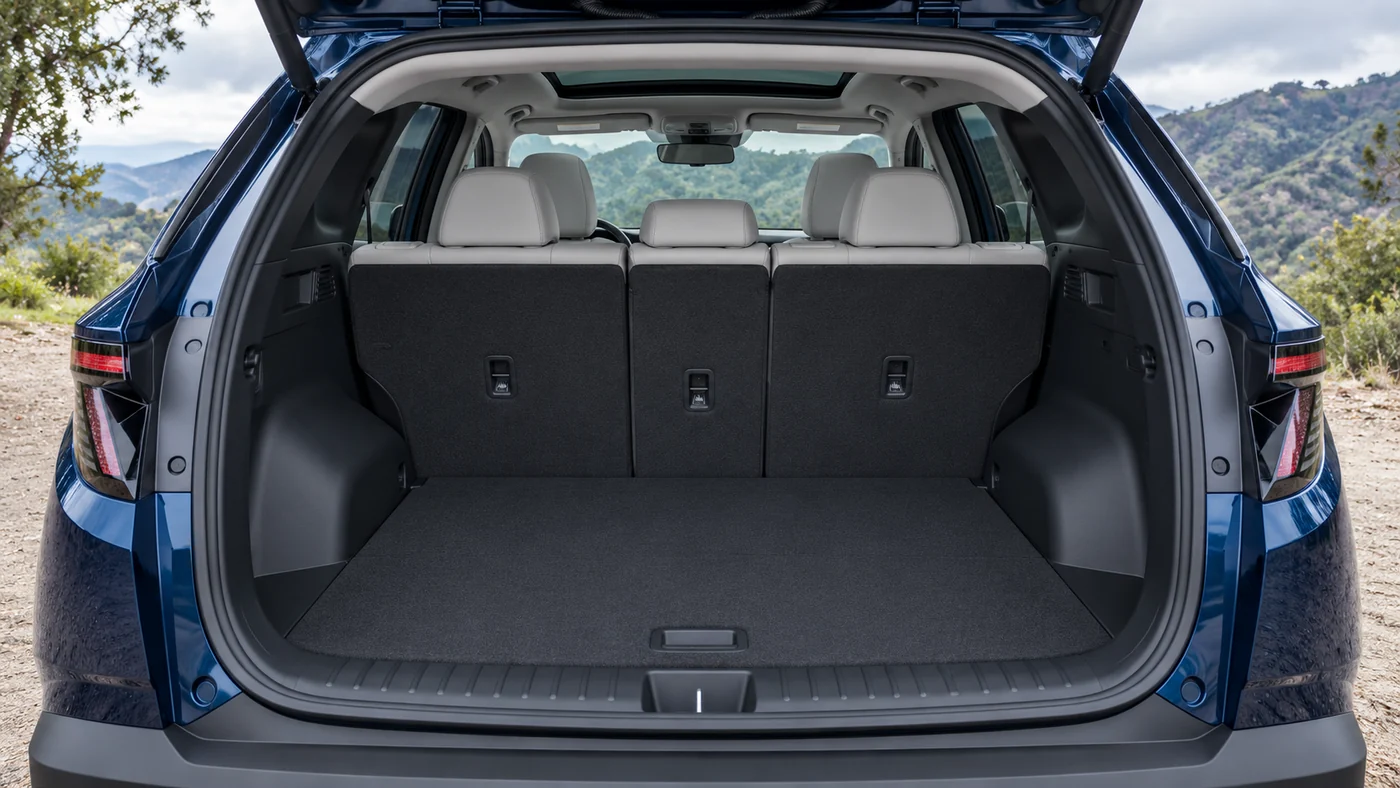
The U.S. 2026 gasoline Hyundai Tucson has 38.7 cubic feet behind the rear seats and 74.8 cubic feet with them folded, using Hyundai's SAE-labeled figures. The regular hybrid has the same seats-up rating but a slightly lower folded-seat rating; the plug-in hybrid is smaller in both configurations. These are factory-published volumes, not cargo floor dimensions in inches.
For a stroller, dog crate or wheelchair, you'll need a tape measure as well as the capacity figures. Check floor length, the width between the wheel housings, and the hatch opening's width and height. Hyundai's tables checked here don't give those measurements in inches. A cubic-foot rating can't tell you whether a rigid object will pass through the opening or sit where you need it.
Quick cargo comparison: gas, hybrid and plug-in hybrid
Use the same measurement label when comparing powertrains. Hyundai publishes both SAE and maximum figures; mixing them would overstate a difference or hide one.
| U.S. 2026 Tucson | Rear seats upright, SAE cu. ft. | Rear seats folded, SAE cu. ft. | Rear seats upright, maximum cu. ft. | Rear seats folded, maximum cu. ft. |
|---|---|---|---|---|
| Gasoline | 38.7 | 74.8 | 41.2 | 80.3 |
| Hybrid, not plug-in | 38.7 | 74.5 | 41.2 | 80.0 |
| Plug-in hybrid | 31.9 | 66.3 | 31.9 | 71.8 |
Evidence: Hyundai USA's 2026 gasoline specifications, 2026 hybrid specifications and 2026 plug-in-hybrid specifications, checked October 6, 2026. The gasoline page displays the larger figure first with SAE in parentheses; this table separates the definitions for clarity.
For a family keeping the second row occupied, gas and regular hybrid start with equal published volume. That is a useful shortlist result, but it does not establish identical floor geometry. The plug-in hybrid needs its own loading trial. A cargo liner advertised simply for “Tucson” is not evidence that every powertrain has interchangeable underfloor space.
Cargo dimensions in inches: what is actually available
The cabin's rear legroom figure is not the distance from the tailgate to the seatback. Likewise, the vehicle's exterior width includes body structure and cannot stand in for the space between wheel housings.
| Linear measurement needed | Status in factory material checked | Where to check on your vehicle |
|---|---|---|
| Floor length with rear seats upright | Not published | Closed-hatch boundary to the rear seatback at floor level |
| Floor length with rear seats folded | Not published | Closed-hatch boundary to the nearest front-seat obstruction |
| Narrowest cargo width | Not published | Between wheel housings or any tighter trim intrusion |
| Hatch-opening width | Not published | Narrowest part of the opening the item must pass through |
| Hatch-opening height | Not published | Sill to the lowest opening obstruction along the loading path |
| Usable height above the floor | Not published | Floor to the lowest obstruction above the item's full footprint |
Evidence: the three Hyundai USA specification tables above provide cargo volume, but no numeric values for these six linear fields. This is a limitation of the material checked, not a claim that no owner or specialist has ever measured a Tucson.
For a close fit, obtain those numbers from the exact vehicle rather than a different trim, a European short-wheelbase Tucson or an AI image. Record the year, powertrain, floor position and seat settings alongside the measurements. Those configuration notes make a tape measure result reusable.
Rear seats upright versus folded
Seats-up loading is the everyday scenario: rear passengers retain their seats, and bulky items must fit behind them. Measure with the seatbacks latched in the position you will actually use. A seatback angle that creates extra room for luggage may reduce passenger comfort, so do not solve one problem by concealing the other.
With the rear seats folded, length becomes more useful, but the front seats still define the forward limit. Set the driver's seat for the actual driver first. A long-item demonstration with that seat pushed far forward does not answer whether the same object can be carried while you drive normally.
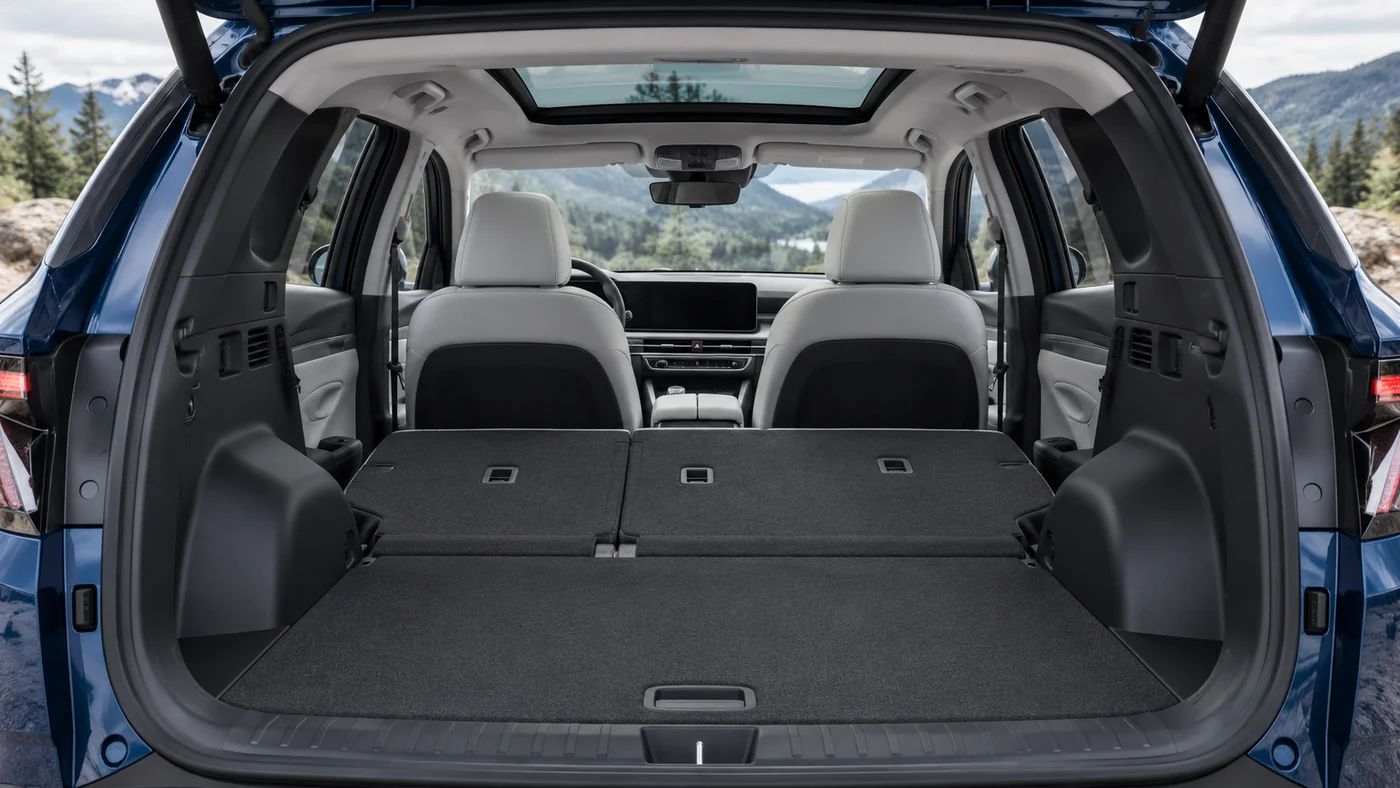
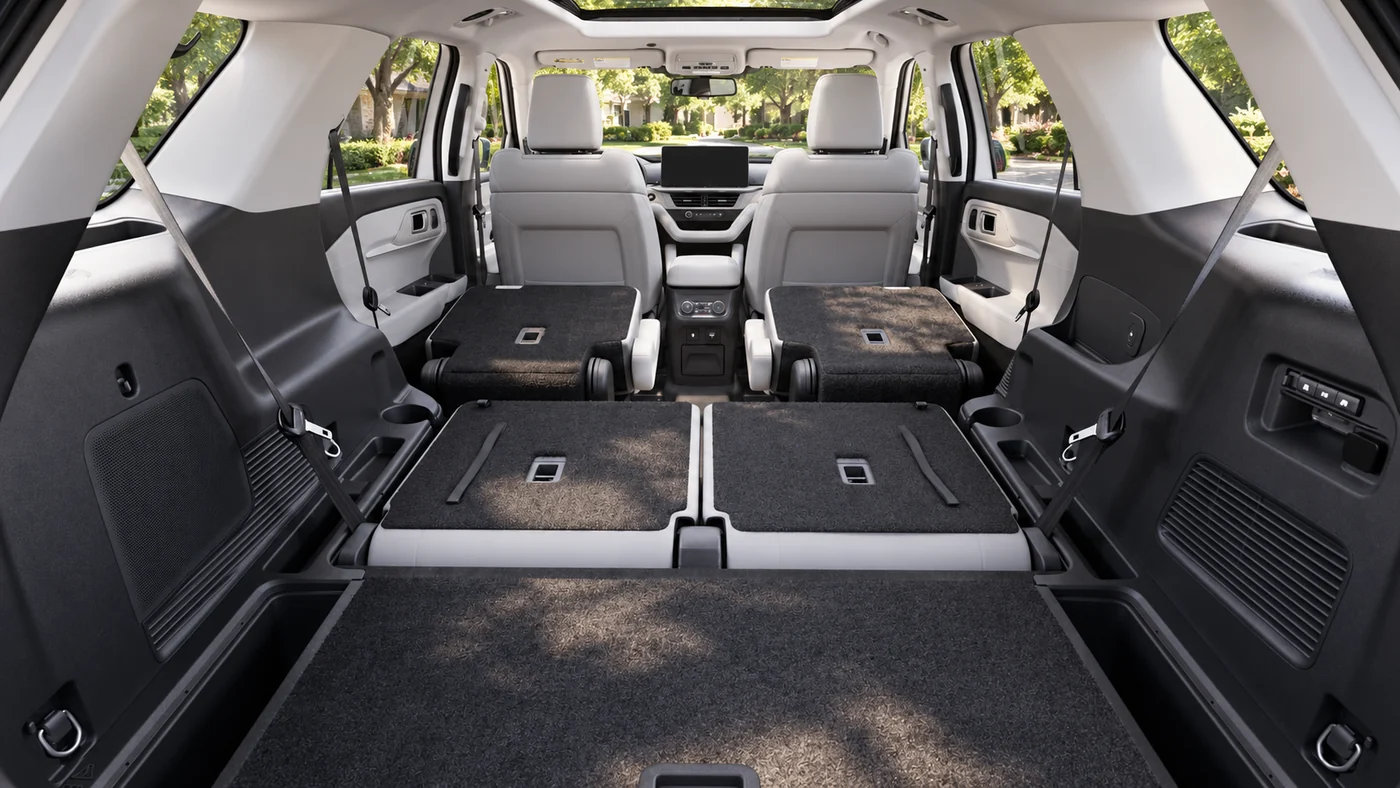
AI-generated editorial illustration of the U.S. 2026 gasoline Tucson Limited, using manufacturer gallery references. The folded-seat seams and floor arrangement are illustrative, not proof of a level platform, usable length or sleeping fit.
Check the transition between the cargo floor and folded seatbacks. Put a straightedge across any change in slope before planning a rigid platform. A soft sleeping pad can respond differently from a plywood panel; neither follows automatically from the folded-seat volume. If you need one rear seat for a passenger, test that split configuration separately instead of using the all-seats-folded rating.
Why the plug-in hybrid deserves a separate fit test
Compared with the gasoline SAE figures, the plug-in hybrid has 6.8 fewer cubic feet with seats upright and 8.5 fewer with them folded. Those are calculated differences between Hyundai's published values, not measured losses in floor length or height. The regular hybrid's folded-seat SAE difference is only 0.3 cubic foot, but a small volume difference still does not guarantee the same storage compartments.
A useful shopping sequence is to inspect the underfloor area, then load the largest rigid item, then add the remaining travel bags. Do not assume the visible upper cargo floor tells you everything about cable storage, a spare or accessories below it. Ask which floor positions and storage arrangements apply to the specific powertrain and equipment fitted to the car.
For passenger measurements, including the plug-in hybrid's distinct rear-legroom figure, use the separate Tucson interior-dimensions guide. Keeping passenger and cargo evidence separate makes it easier to spot the compromise that affects your household.
Strollers, crates, wheelchairs and long objects
These checks are SUVLook editorial guidance, not results from a physical loading test.
- Folded stroller: measure the actual travel configuration, including wheels, handles and attachments. Try the angle at which one person can lift it into the hatch, not just its final position on the floor.
- Dog crate: use the crate's outside dimensions, including latches and projecting handles. Verify that its door can open once loaded and that a suitable restraint arrangement is possible. This guide does not certify animal transport or tie-down strength.
- Wheelchair or mobility equipment: record folded dimensions and lifting requirements. Passing through the opening is only the first test; check stable positioning, restraint and room for other passengers' belongings.
- Flat-pack furniture: use package dimensions rather than the assembled product's size. Protect trim, keep cargo clear of the driver and verify that the hatch can close without pressing on the package.
For a hypothetical rigid box measuring 36 × 24 × 20 inches, the relevant questions are whether that orientation clears the opening and whether its entire footprint has sufficient room. We are not claiming that this box fits a Tucson: there are no verified linear measurements in this guide to support that conclusion. That distinction also applies to mattresses and bicycles, where diagonal loading and irregular shapes add more uncertainty.
Measure the hatch path, not just the floor
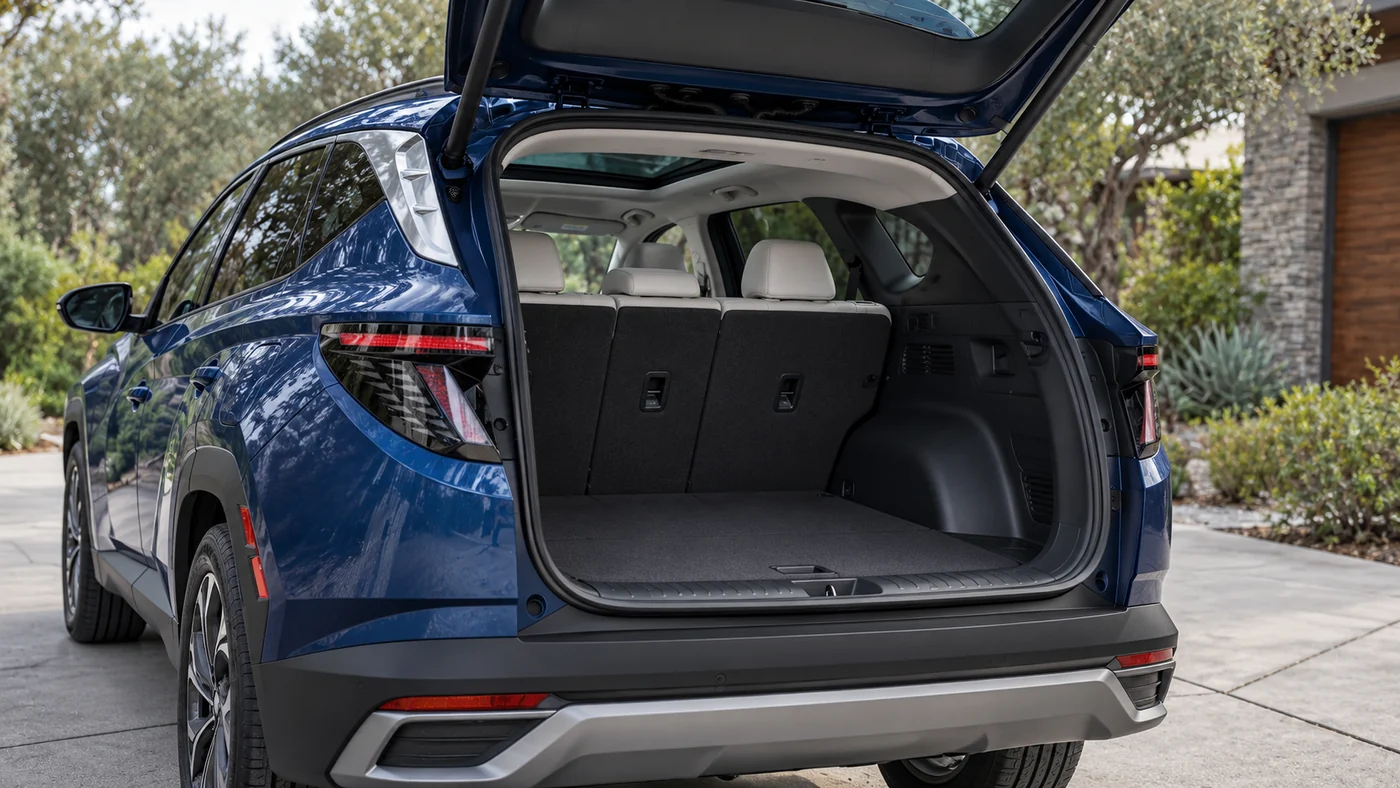
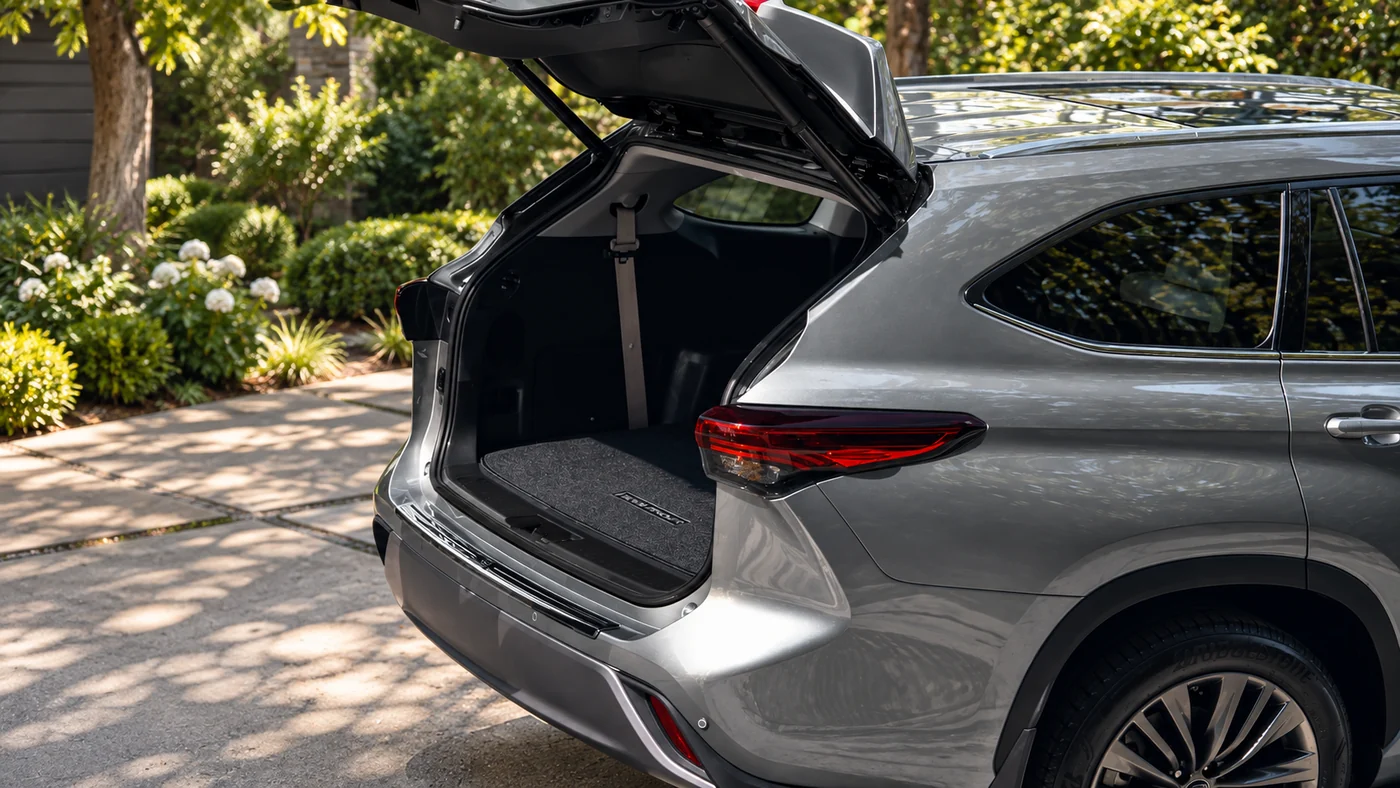
AI-generated editorial illustration guided by the U.S. 2026 Tucson Limited gallery. It illustrates the loading opening with no measurement markings. It is not evidence of hatch width, clearance or an object's safe loading path.
Start with an empty car parked safely on level ground. Keep fingers away from liftgate and seat mechanisms. Use a tape measure with a helper or a cardboard template so you can check a bulky object's full shape without lifting it repeatedly.
- Identify the year, powertrain, trim and installed accessories. Set the front seats to normal driving positions and photograph their settings for your own record.
- Record the cargo floor position and any liner, organizer or cover that will remain fitted. Measure the usable surface rather than an empty recess you cannot actually use.
- Measure floor-level length, then repeat at the height of the object's widest part. A sloped seatback or hatch can make those lengths different.
- Check width along the whole route, including the opening and wheel housings. The widest point is not the limiting point.
- Check vertical clearance at the opening and over the object's final position. Account for the hatch's inward shape when closed.
- Place a template or the actual item without forcing trim. Close the hatch slowly, confirm clearance and plan restraint before driving.
A template helps answer geometric fit; it does not reproduce an object's weight or lifting difficulty. Leave practical clearance rather than accepting a result that only works with perfect alignment. Never treat an illustration as a substitute for this check.
2025 Tucson and model-year boundaries
Hyundai's separately checked 2025 gasoline Tucson specifications list the same 38.7/74.8 SAE and 41.2/80.3 maximum seats-up/seats-folded values as the 2026 gasoline table. That supports a volume comparison for those two gas-model years, not a universal cargo-floor measurement or proof of every accessory's interchangeability.
This guide does not assign the 2026 hybrid or plug-in-hybrid figures to a 2025 vehicle without a separate matching-year source. Older Tucson queries and 2027 vehicles also require their own evidence. If a used listing provides only “Tucson cargo space,” ask for the year and powertrain before comparing its figure with this table.
Which Tucson should you shortlist for cargo?
For an occupied rear row, start with gas or regular hybrid if published volume is your main filter; both have the same SAE seats-up rating. Include the plug-in hybrid only after checking that its smaller rated compartment suits your actual load. This is a cargo-based shortlist, not a recommendation about fuel costs, charging or overall value.
The 2026 Tucson profile puts the vehicle in broader context. The compact-SUV comparison helps frame alternatives, and the cargo-fit tool is useful where its inputs have supporting linear evidence. An unavailable dimension must stay unavailable in a calculator too.
Frequently asked questions
What are Hyundai Tucson cargo dimensions in inches?
The factory tables checked do not publish numeric floor length, wheel-housing width, hatch width or hatch height. The guide lists the missing fields and a method for measuring your exact vehicle. Cubic-foot ratings cannot be converted into those dimensions.
How much cargo space does the 2026 Tucson Hybrid have?
The regular hybrid is rated at 38.7 cubic feet behind the rear seats and 74.5 with them folded, using Hyundai's SAE values. Its separately labeled maximum figures are 41.2 and 80.0. The plug-in hybrid has different ratings and should not be substituted.
Does the 2025 gas Tucson have the same cargo volume as 2026?
The independently checked Hyundai model-year tables list matching gasoline volume ratings: 38.7/74.8 SAE and 41.2/80.3 maximum. That does not establish identical usable inches for every floor, seat or accessory configuration.
Can a mattress or large dog crate fit in a Tucson?
That cannot be confirmed from the published volume alone. Measure the object's outside dimensions and the exact vehicle's opening, usable floor area, height and closed-hatch clearance. Check restraint and passenger needs as well as geometric fit.