Dimensions · Space · Buying guides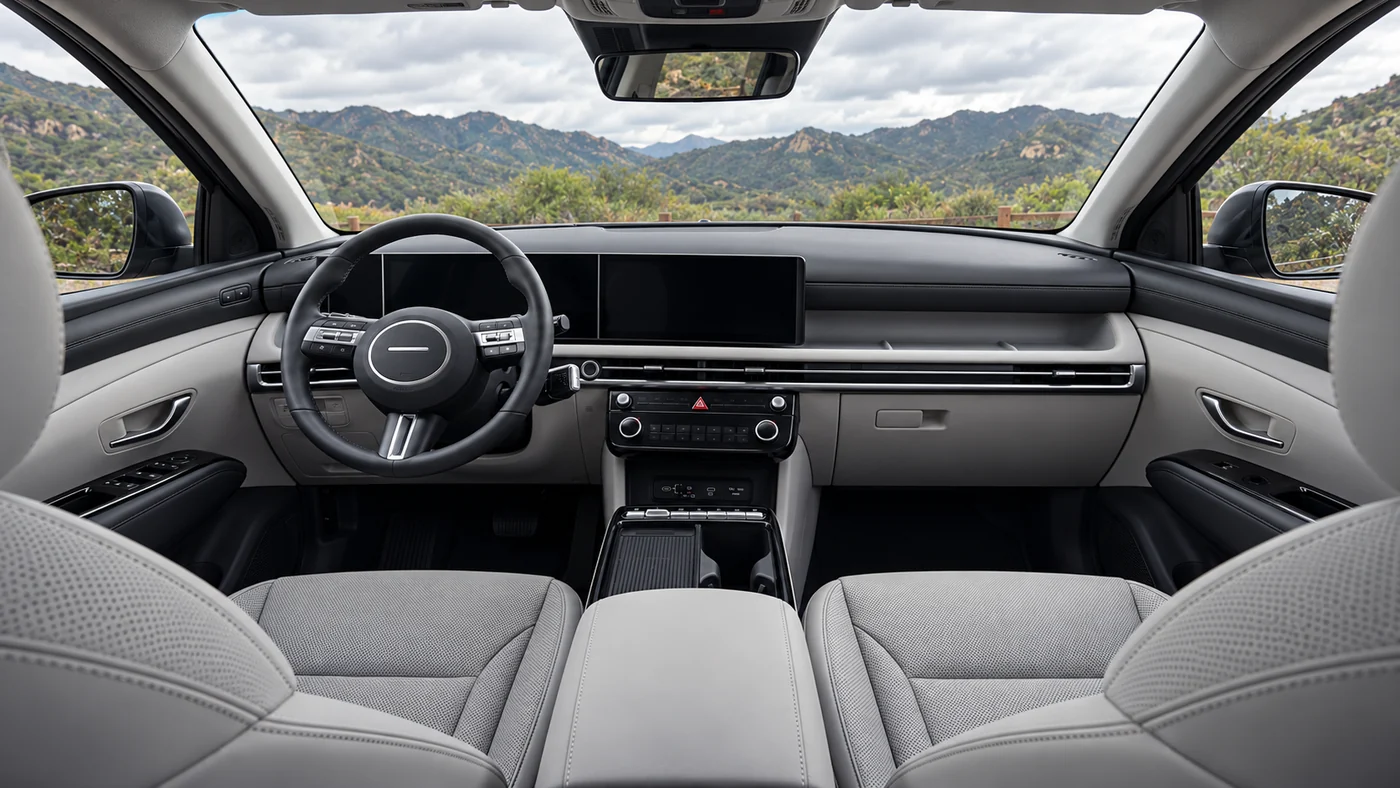
For the U.S. 2026 Hyundai Tucson, the gasoline and regular-hybrid specification tables list 41.4 inches of front legroom and 41.3 inches of rear legroom. The plug-in hybrid keeps the front figure but lists 39.5 inches in the rear. Headroom depends on trim and roof equipment, so a single “Tucson interior dimensions” figure does not describe the whole lineup.
The gasoline SE FWD lists 40.1 inches of front headroom and 39.5 inches in the rear. If you're tall, check which roof the vehicle has before sitting in it. Adjust the seat, reach for the wheel and see how much space remains above your head. The measurements help you choose vehicles to try; they can't promise a comfortable posture or a successful child-seat installation.
2026 gasoline Tucson: front and rear passenger measurements
The table starts with SE, SEL, SEL Plus and XRT because Hyundai lists the same headroom for those four gas trims. The roof-equipped exceptions follow separately.
| Factory-published passenger dimension | Front, inches | Rear, inches | 2026 gasoline scope |
|---|---|---|---|
| Headroom | 40.1 | 39.5 | SE, SEL, SEL Plus, XRT |
| Legroom | 41.4 | 41.3 | All six listed gas trims |
| Shoulder room | 57.6 | 56.0 | All six listed gas trims |
| Hip room | 54.5 | 53.9 | All six listed gas trims |
Evidence: Hyundai USA's 2026 gasoline Tucson comparison table, checked October 6, 2026. Its six columns are SE, SEL, SEL Plus, XRT, SEL Premium and Limited. Specifications are for U.S. vehicles.
Shoulder room and hip room describe different parts of the cabin; neither is a measured seat-cushion width. Do not divide rear shoulder room by three and call the result three equal seating spaces. Seat bolsters, belts, door contours and the center position still matter when people sit side by side.
The near-equal front and rear legroom figures are also not additive. They do not describe a straight 82.7-inch floor that can be used for sleeping or cargo. Each is a passenger-space specification with its own measurement context. To compare a person behind a driver, preserve the driver's real seating position and test the rear seat directly.
Roof and trim changes: where headroom is lower
| U.S. 2026 gasoline trim group | Factory-listed roof | Front headroom, inches | Rear headroom, inches |
|---|---|---|---|
| SE, SEL, SEL Plus, XRT | Listed sunroofs not available | 40.1 | 39.5 |
| SEL Premium | Standard power tilt-and-slide sunroof | 38.3 | 39.5 |
| Limited | Standard panoramic sunroof | 38.1 | 39.0 |
Evidence: the roof equipment and interior-dimensions rows in Hyundai's gasoline specifications. These are trim-table values, not a physical experiment isolating the effect of a roof panel.
The difference between the first group and Limited is 2.0 inches in front and 0.5 inch in the rear, calculated from the published numbers. SEL Premium has a different combination: lower front headroom but the same listed rear figure as the first group. Treating every sunroof as the same penalty would miss that distinction.
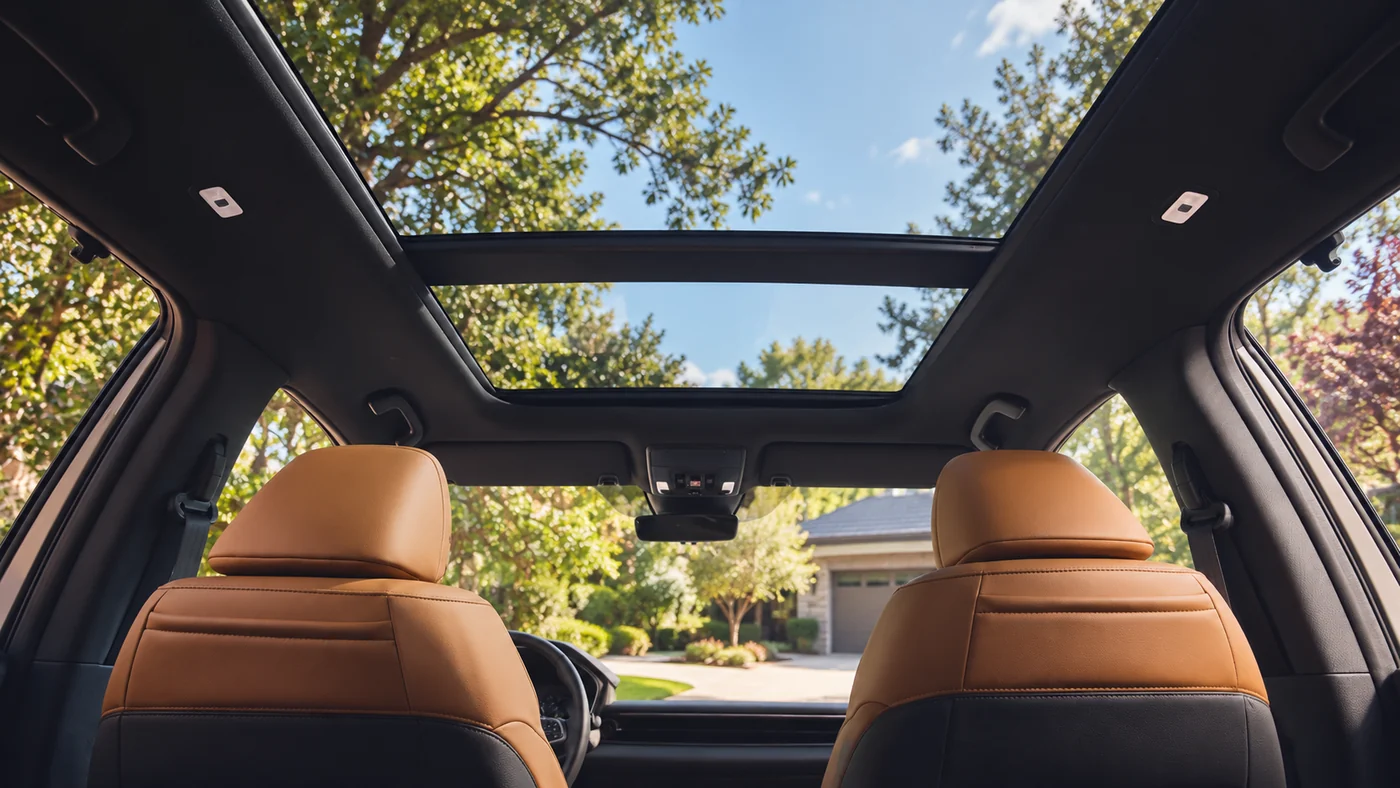
If headroom is your main constraint, first sit in a trim from the higher-headroom group and then compare the roof-equipped car you are considering. Keep seat height, backrest angle and footwear similar. An attractive panoramic roof may be worth the trade for you, but a brighter cabin is not evidence of greater physical clearance.
Gas, regular hybrid and plug-in hybrid are not interchangeable
| U.S. 2026 powertrain | Front legroom, inches | Rear legroom, inches | Front/rear shoulder room, inches | Front/rear hip room, inches |
|---|---|---|---|---|
| Gasoline | 41.4 | 41.3 | 57.6 / 56.0 | 54.5 / 53.9 |
| Hybrid, not plug-in | 41.4 | 41.3 | 57.6 / 56.0 | 54.5 / 53.9 |
| Plug-in hybrid | 41.4 | 39.5 | 57.6 / 56.0 | 54.5 / 53.9 |
Evidence: separate gasoline, hybrid and plug-in-hybrid manufacturer tables, not an assumption that all electrified Tucsons share measurements.
The regular hybrid's SE, SEL and SEL Convenience list 40.1/39.5 inches front/rear headroom. Its panoramic-roof Limited lists 38.1/38.7. The plug-in hybrid has two listed trims: SEL at 40.1/39.5 and panoramic-roof Limited at 38.1/38.7. The gasoline Limited's rear headroom is 39.0, so even the Limited name does not authorize one shared headroom row across powertrains.
The plug-in hybrid has 1.8 inches less published rear legroom than gas or regular hybrid, a calculated table difference. That is relevant to your shortlist; it does not establish where every inch is lost or predict the clearance behind a particular driver's seat. Avoid explanations about battery placement unless they are separately established by technical evidence.
Tucson interior dimensions in centimeters
These conversions use 1 inch = 2.54 centimeters, rounded to one decimal place. They are calculated from Hyundai's published inches, not independent metric measurements. The table uses the 2026 gasoline SE/SEL/SEL Plus/XRT headroom baseline; roof-equipped headroom must be converted from its own value.
| Passenger dimension | Front, published inches | Front, calculated cm | Rear, published inches | Rear, calculated cm |
|---|---|---|---|---|
| Headroom, baseline gas trims | 40.1 | 101.9 | 39.5 | 100.3 |
| Legroom, gas and regular hybrid | 41.4 | 105.2 | 41.3 | 104.9 |
| Shoulder room | 57.6 | 146.3 | 56.0 | 142.2 |
| Hip room | 54.5 | 138.4 | 53.9 | 136.9 |
| Legroom, plug-in hybrid | 41.4 | 105.2 | 39.5 | 100.3 |
Evidence: inch inputs come from the three Hyundai USA specification tables above; centimeter values are SUVLook calculations. Rounding does not add accuracy to the original specification.
For example, gasoline Limited headroom converts separately to approximately 96.8 cm front and 99.1 cm rear. Regular-hybrid and plug-in-hybrid Limited rear headroom converts to approximately 98.3 cm. Do not read the baseline centimeter row as applying to those panoramic-roof trims.
SE FWD: dimensions versus actual seat adjustment
The SE FWD question is answered by the gasoline SE column: use the baseline passenger table, not a Limited photo's equipment. The gas page lists FWD as standard and AWD as optional, but it does not supply separate FWD/AWD passenger-dimension rows. There is no basis here for inventing an AWD legroom penalty.
Hyundai lists a six-way adjustable driver seat for SE, while the other gas trims list an eight-way power driver seat. Those are adjustment/equipment descriptions from the same manufacturer table, not extra inches of passenger room. A seat can fit your body differently even when published legroom is equal, so check cushion support and adjustment range rather than ranking seats solely by the number of controls.
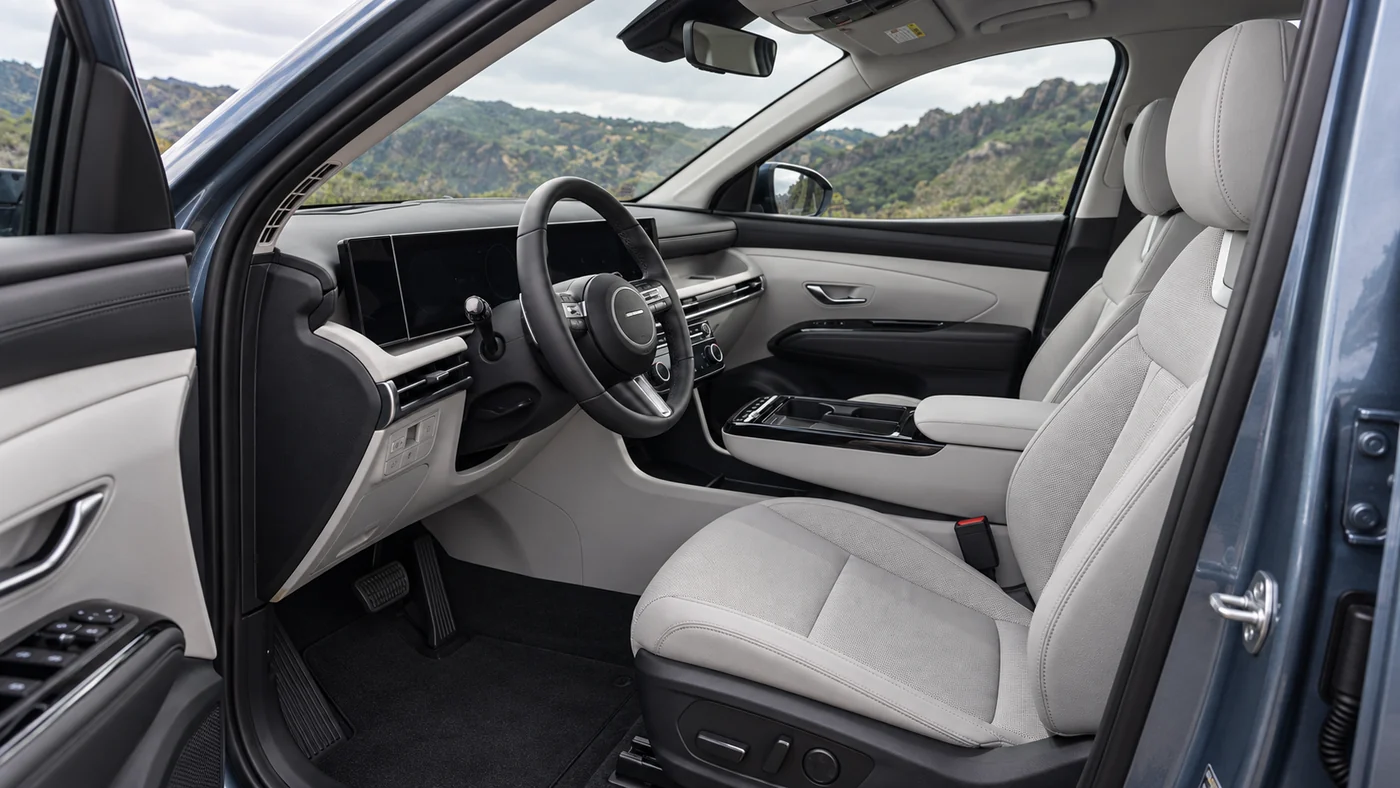
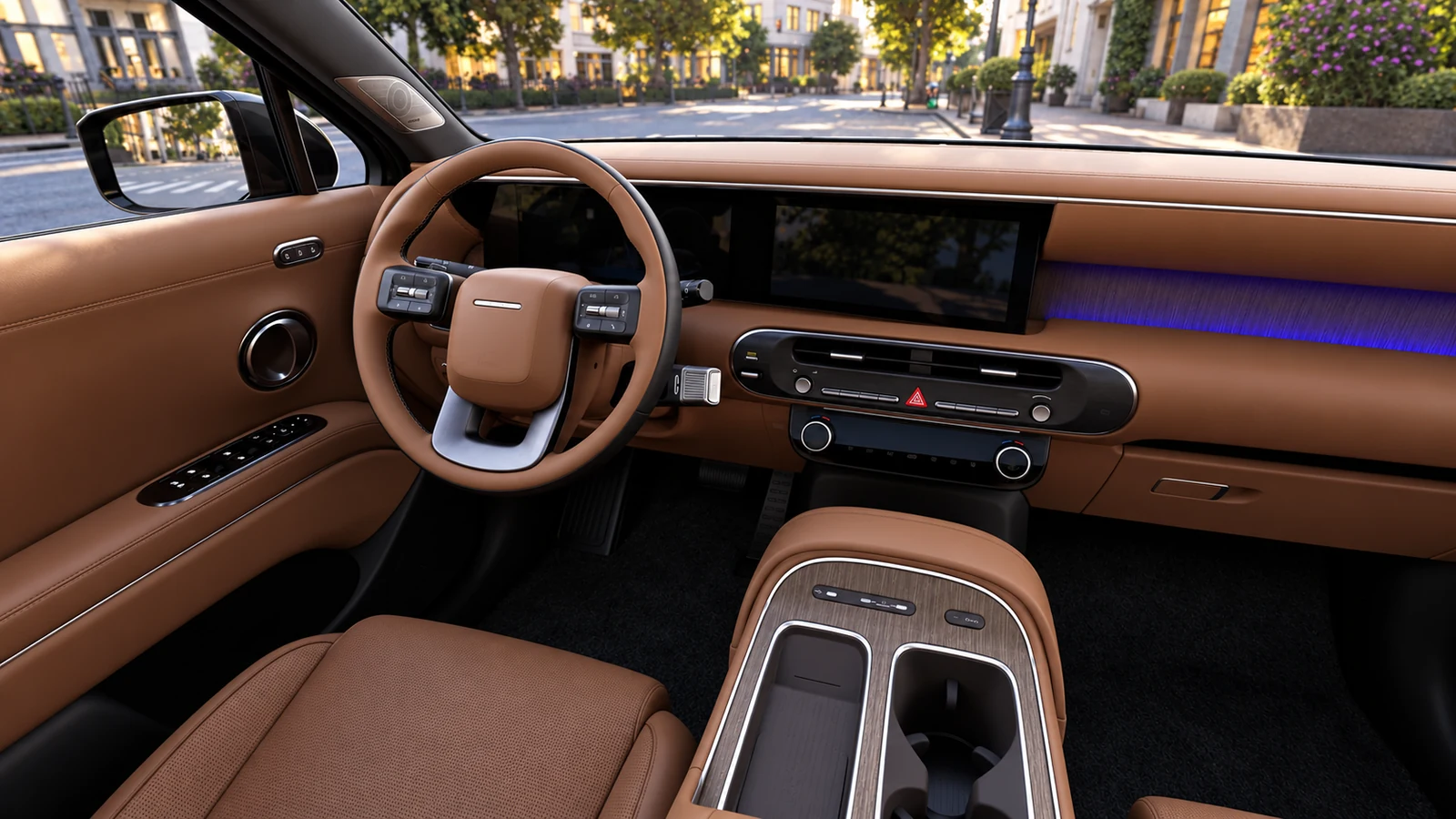
AI-generated editorial illustration of the U.S. 2026 gasoline Tucson Limited, guided by manufacturer references. The pictured power-seat and column-selector cabin does not represent base SE equipment. It is not a tested driver-fit result.
Set the seat for comfortable pedal reach first. Then adjust the steering wheel without moving your shoulders away from the backrest. Check whether your thigh rests naturally on the cushion and whether the console or door presses against your knee. Lowering the seat to gain head clearance may change visibility and leg support; test the resulting posture rather than treating maximum clearance as the sole objective.
Rear-seat adults and family fit
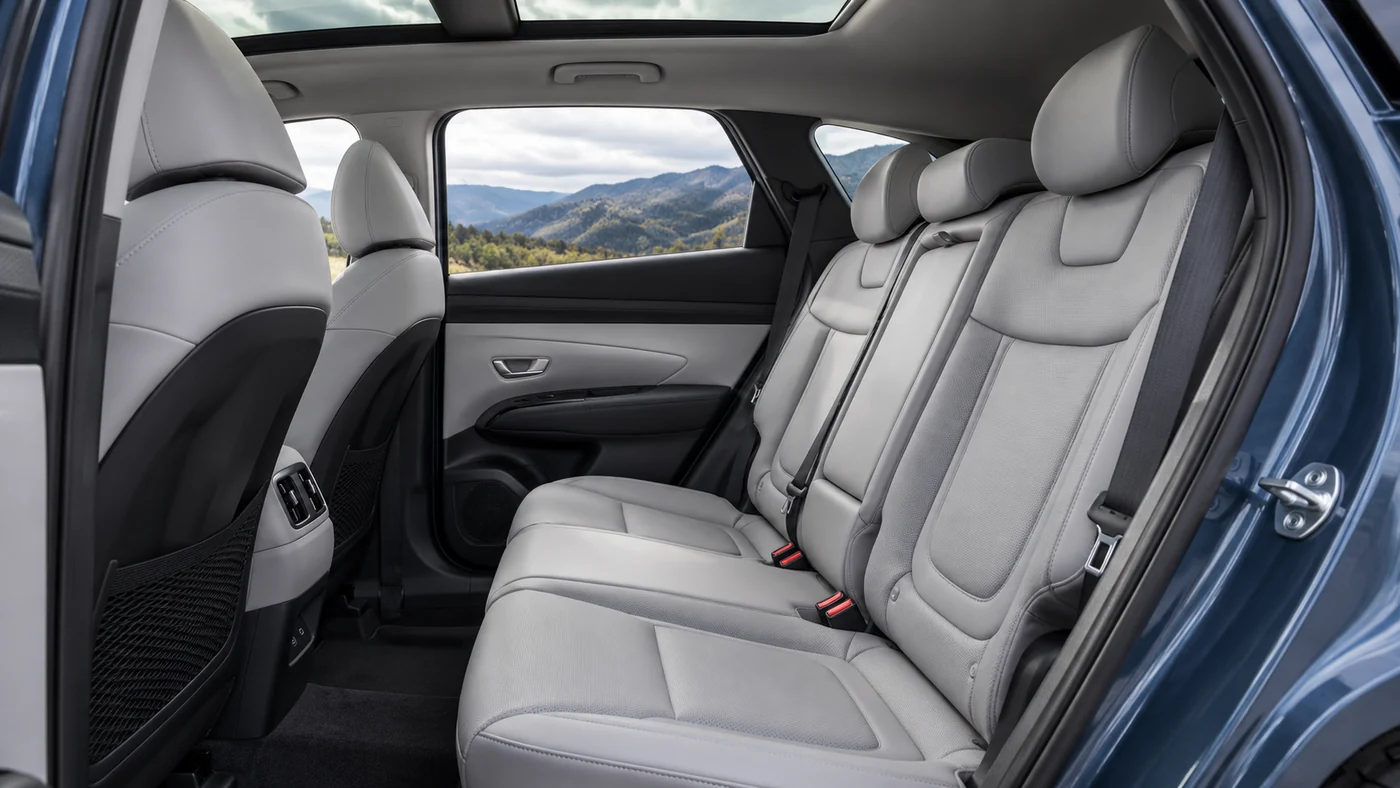
AI-generated editorial illustration guided by Hyundai's U.S. 2026 gasoline Tucson Limited rear-seat reference. It shows an unoccupied three-place bench, not proof of three-adult comfort or a successful child-seat installation.
Ask the regular driver to set the front seat before anyone evaluates the rear row. Sit behind that seat with feet naturally placed rather than turned sideways. Check knee clearance, foot access beneath the front seat, thigh support and head clearance while sitting upright. Repeat behind the front passenger if that person's seating position will be different.
For two adults in back, evaluate the outboard positions first. For three, have all three sit together, use their belts and shut both doors. Published shoulder room cannot tell you whether their shoulders overlap or whether the middle passenger can find a comfortable foot position. Door closure should not force anyone into a posture they cannot maintain on a longer journey.
A child-seat test should use the exact seat and the intended seating position. Follow both the vehicle and child-seat instructions, confirm the permitted installation method and make sure adjacent buckles remain usable. Rear legroom alone cannot establish rear-facing-seat clearance, a three-across arrangement or installation safety. If the arrangement is uncertain, use a qualified child-passenger-safety technician rather than an AI illustration or a generic online fit claim.
Also rehearse entry and exit. Someone who fits when seated may still find the opening, sill or roof edge awkward. Bring the family member who will use that position and, where relevant, the equipment they normally carry. The most useful test is the actual household arrangement, not a demonstration with the front seats moved to unusually generous positions.
Passenger space versus cargo space
Hyundai's 2026 passenger-volume rows list 108.2 cubic feet for gasoline, 107.9 for regular hybrid and 105.9 for plug-in hybrid. These aggregate specifications are not a substitute for the roof-qualified headroom rows or individual legroom figures. They also do not include an object's usable loading dimensions.
Evidence: the interior-volume sections of Hyundai's separately cited powertrain tables. They are published volume rows, not SUVLook measurements or guarantees about every seat setting.
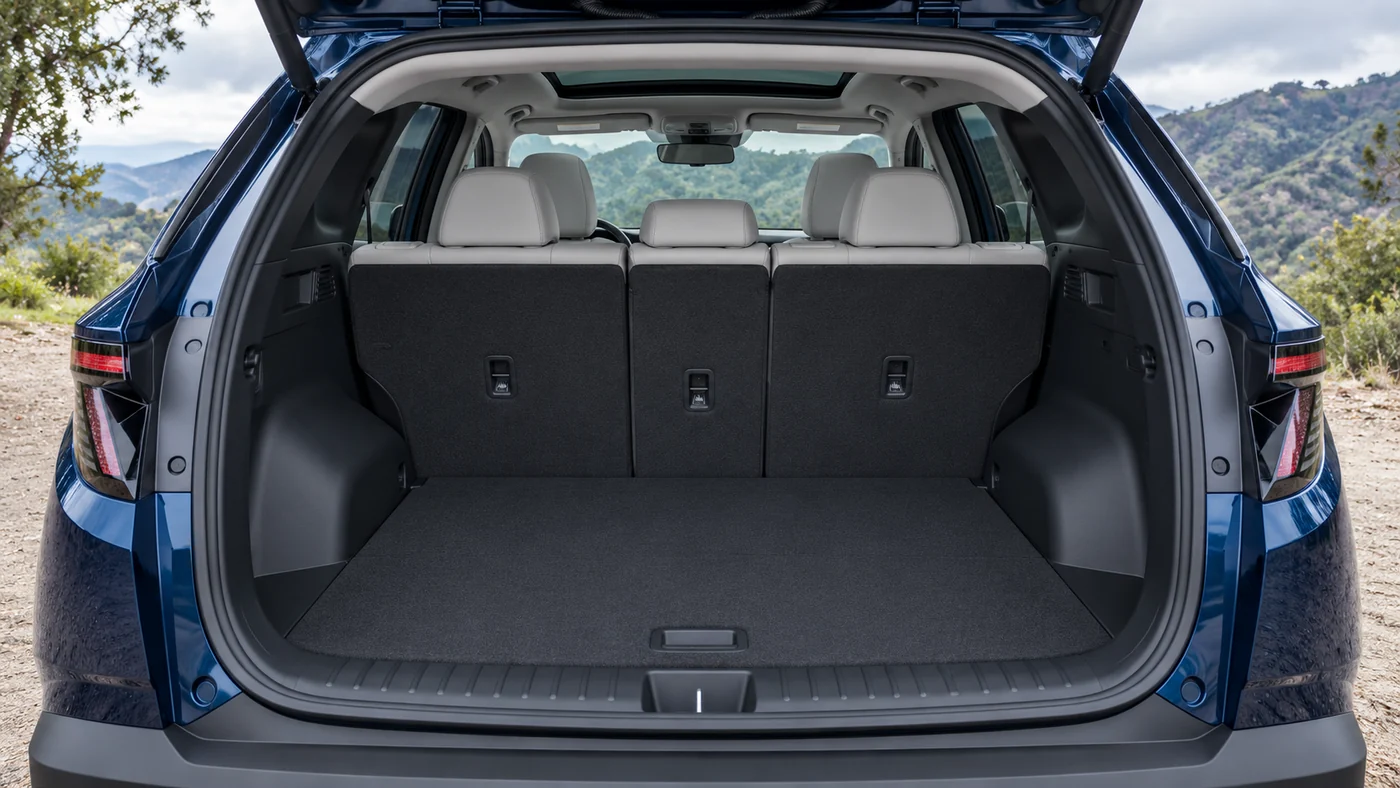
Use the Tucson cargo-dimensions guide for seats-up/seats-folded capacity and the missing linear-fit measurements. Keep the second row occupied when testing a stroller if that is how your family will travel. A successful all-seats-folded demonstration does not solve a five-passenger trip.
The 2026 Tucson profile covers broader vehicle research. The cabin-fit tool can help organize your priorities, while the compact-SUV comparison provides alternatives. Use tools to shortlist vehicles, then verify the actual seat and roof combination in person.
Model-year scope and a useful shopping order
These passenger tables cover U.S. 2026 vehicles. They do not claim that every historical Tucson year or every 2027 vehicle has the same cabin. Even when a related cargo guide verifies matching 2025 gasoline volume, that does not prove all 2025 passenger or roof-equipped measurements match this page.
For a used car, ask for the exact year, trim and powertrain before interpreting a measurement. For an imported vehicle, obtain its market-specific specifications rather than treating the U.S. table as universal. A shared model name is not enough to establish identical packaging.
Our practical shortlist order is: choose the required powertrain, check its rear-legroom row, identify the roof, then try the seats with your household. Gas and regular hybrid share published legroom, but Limited roof values still differ. Plug-in hybrid deserves a separate rear-seat trial. This is passenger-fit advice, not a fuel-economy or value ranking.
Frequently asked questions
What are the 2026 Hyundai Tucson interior dimensions?
Gasoline SE, SEL, SEL Plus and XRT list 40.1/39.5 inches front/rear headroom and 41.4/41.3 inches legroom. Shoulder room is 57.6/56.0 and hip room 54.5/53.9. SEL Premium and Limited have separate headroom values in the roof table.
Does the Tucson Hybrid have the same rear legroom as gasoline?
The regular hybrid and gas tables both list 41.3 inches of rear legroom. The plug-in hybrid lists 39.5. Those figures do not establish identical seat comfort, and Limited headroom must also be checked by powertrain.
What are Tucson interior dimensions in cm?
The baseline gas front/rear legroom converts to approximately 105.2/104.9 cm; baseline headroom converts to 101.9/100.3 cm. These use 2.54 cm per inch and one-decimal rounding, not separate physical measurements.
Is a panoramic-roof Tucson suitable for a tall driver?
That depends on the driver's proportions and preferred seating position. Gasoline Limited lists 38.1 inches of front headroom, versus 40.1 for the baseline trims. Sit in the exact roof-equipped vehicle and verify pedal reach, wheel reach, visibility and comfortable head clearance together.