Dimensions · Space · Buying guides
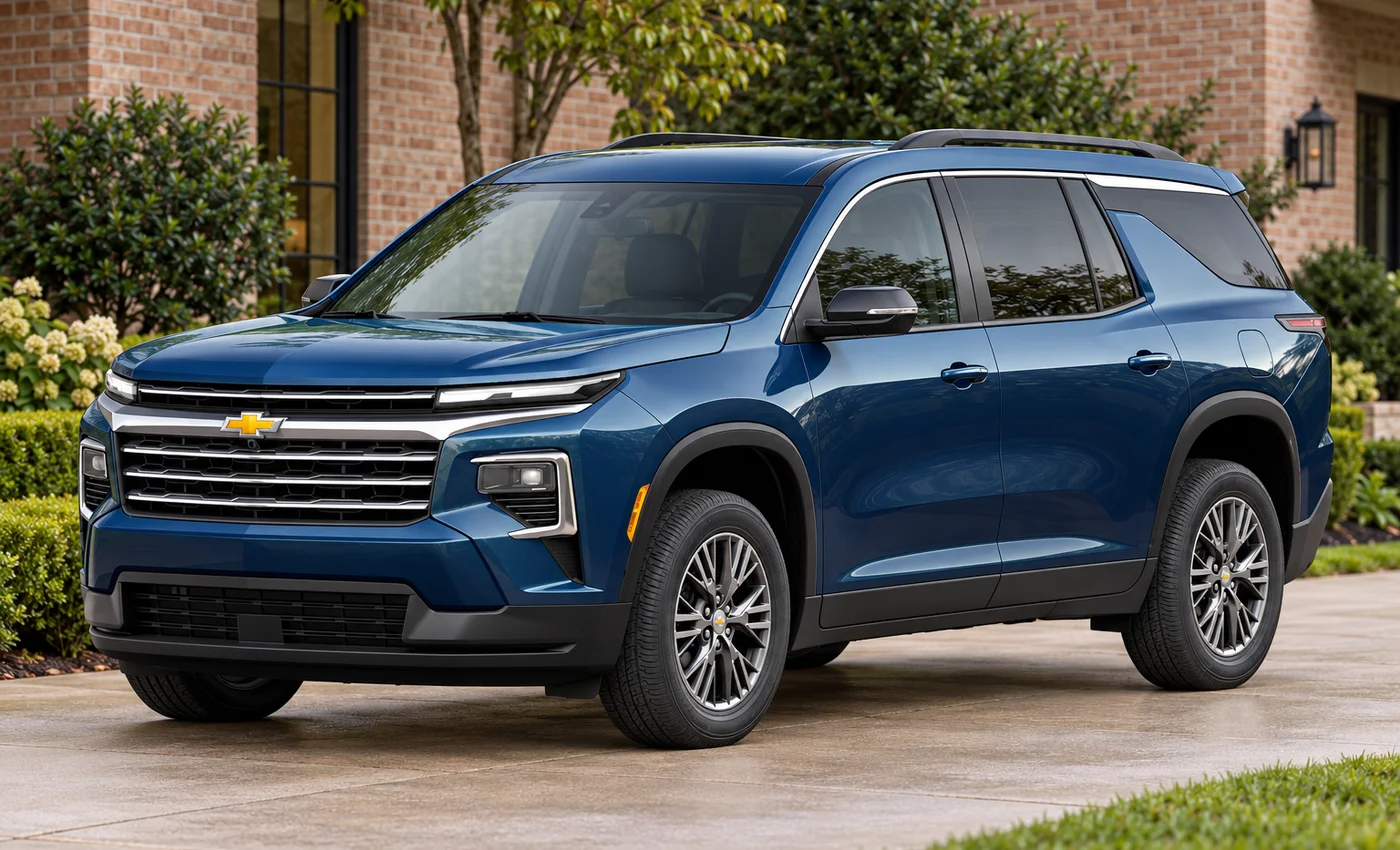
For the U.S. 2026 Chevy Traverse, start with LT if you want the family essentials or need eight seats. Choose Z71 for its specific off-pavement equipment. High Country and RS make more sense when you want the upper-trim conveniences, with a different look inside and out. RS is not a reason to expect a stronger engine.
The first decision is the second-row layout. An available bench makes LT the eight-passenger choice; Z71, High Country and RS seat seven. That can settle the comparison before you spend time on wheels, décor or packages.
This guide covers 2026 U.S. gasoline models, checked October 20, 2026. Chevrolet also lists a 2027 Traverse, which is outside this equipment and pricing comparison. The recommendations below are SUVLook editorial judgments based on manufacturer information, not a road test.
2026 Traverse trims at a glance
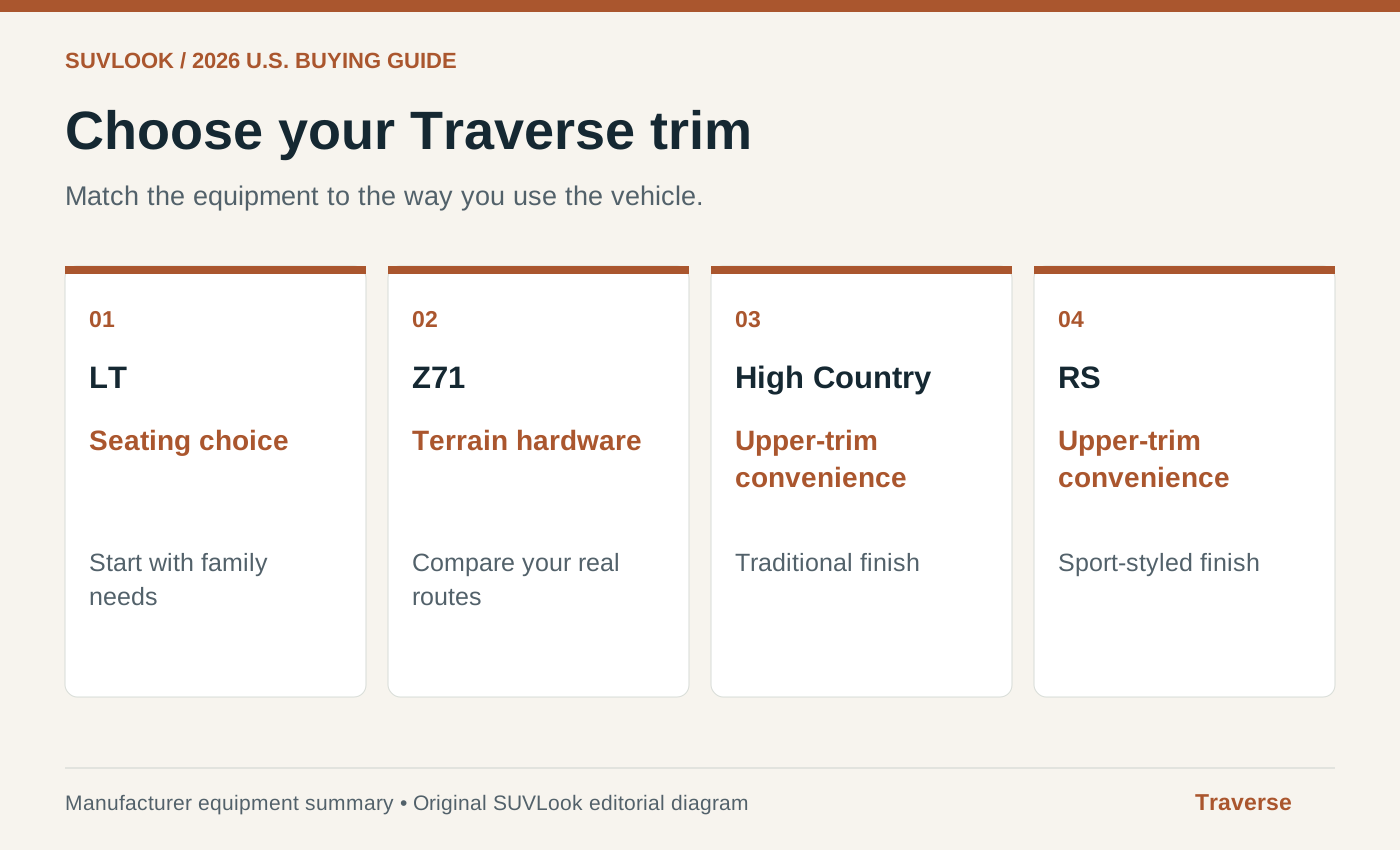
SUVLook comparison graphic. Trim roles summarize Chevrolet's 2026 U.S. model information; the graphic is not a vehicle photograph.
Chevrolet's 2026 Traverse comparison lists four models. The figures below are starting MSRPs before destination, not prices for identically optioned vehicles. In particular, Z71 includes its specialized AWD hardware, so the difference from the entry LT is not simply the price of an appearance package.
| Trim | Starting MSRP before destination | Seating | Best reason to put it on your shortlist |
|---|---|---|---|
| LT | $40,800 | Seven; eight with the available second-row bench | Keep the price lower or retain the eighth position |
| Z71 | $48,900 | Seven | Get the dedicated terrain equipment |
| High Country | $55,100 | Seven | Prioritize upper-trim convenience with a more traditional finish |
| RS | $55,400 | Seven | Choose the upper-trim package with a darker, sport-styled appearance |
Chevrolet separately lists a $1,995 destination freight charge for the 2026 Traverse. See its destination schedule. Taxes, title, license, dealer charges and options are additional. A dealer sets the transaction price, and a particular listing may already include destination.
The table is a starting point for choosing which vehicles to examine. It does not establish that the cheapest LT advertised near you has the seats, drivetrain or options you need. Ask for the window sticker before treating a listing as a match.
The equipment differences are easier to read as separate branches:
| Decision | LT | Z71 | High Country | RS |
|---|---|---|---|---|
| Need an eighth seat? | Available bench configuration | No | No | No |
| Terrain-specific hardware is the reason to upgrade | Start by assessing your drivetrain needs | Dedicated Z71 hardware | Cabin-focused comparison | Style-focused comparison |
| Upper-trim powered rear-seat functions | Check the actual configuration | Check the actual configuration | Standard | Standard |
| Enhanced Driving Package with Super Cruise | Do not infer installation from the model name | Do not infer installation from the model name | Included | Included |
Chevrolet's interior and technology descriptions support the upper-trim inclusions. The two configuration-check cells deliberately do not imply that an unverified option is fitted or available on a specific LT or Z71.
LT: the right place to start for most families
LT is worth considering on its own merits. Chevrolet lists the large center touchscreen, Smart Slide seats and AutoSense power liftgate in the entry model's equipment. You do not have to buy the most expensive Traverse simply to get the basic technology and access features highlighted in the manufacturer's LT description.
Begin with the tasks your household repeats: getting everyone aboard, loading the weekly shopping, parking at school and changing the rear-seat arrangement. If LT handles those jobs and its actual upholstery and controls suit you, a higher trim needs a specific justification. A longer equipment list is not automatically a more useful vehicle.
The available second-row bench is especially important. Someone who carries an extra relative occasionally may find that position more valuable than a premium wheel design. Conversely, if you normally carry fewer people and prefer separate second-row seats, inspect a seven-seat LT rather than assuming you need to move up a grade.
Make sure the layout you test is the layout you would buy. A demonstration vehicle with captain's chairs will not answer questions about reaching the center buckle on the bench. Equally, a bench-equipped stock photo does not prove that the vehicle attached to an online listing has eight seats.
For an LT with options, ask the seller to identify the factory packages by name. Then compare its complete equipment and selling price with the next vehicle on your list. This is more useful than comparing a base LT figure with a photographed High Country carrying additional equipment.
LT versus Z71: buy the hardware for the roads you use
Z71's case rests on a different set of priorities. Chevrolet specifies an advanced twin-clutch AWD system, terrain-focused controls, off-road suspension, a skid plate and all-terrain tires for the 2026 Z71. Those are reasons to investigate it if your regular routes include rough access roads rather than only paved streets.
Describe the route to yourself before choosing the trim. A maintained gravel driveway, a steep unpaved approach and a deeply rutted trail are different problems. Ask which Z71 feature addresses the conditions you actually encounter. Do not turn an off-road badge into permission to exceed clearance, tire, traction or recovery limits.
For mostly paved use, test Z71 against the alternative on the same roads. Pay attention to the tire feel, steering response, noise and getting in and out. We have not driven these vehicles back to back, so this guide does not assign a comfort or noise advantage from the equipment list alone.
Also separate the need for AWD from the desire for Z71. Chevrolet says AWD is available in the Traverse range; the specialized Z71 system is a particular configuration, not proof that every other model is unsuitable for your climate. Compare the actual drivetrains and tires on the vehicles being quoted.
Z71 is the wrong detour if eight seats are essential. Its terrain equipment does not solve the missing second-row center position. Resolve seating first, then investigate the route and traction question with the remaining configurations.
High Country versus RS: make the close comparison in person
High Country and RS sit close together in Chevrolet's starting-price table. Their headline difference is the character of the finish: High Country uses its own badging and brighter details, while RS emphasizes dark exterior elements and red interior accents. Chevrolet includes the Enhanced Driving Package with Super Cruise on both, and identifies powered rear-seat conveniences in its 2026 equipment descriptions.
It is therefore worth looking at both before deciding that one is the automatic top choice. Sit in the available interior colors, inspect the trim in daylight and decide which details you would still enjoy after the initial showroom impression. Photographs can make finishes look more similar, or more different, than they do in the vehicle.
Chevrolet's High Country overview also identifies the Traverse's standard turbocharged engine. Do not import the V8 choices associated with a High Country pickup into this SUV. A shared Chevrolet trim name does not establish shared engines or towing capability across vehicle lines.
For RS, treat the sport styling as styling unless a particular performance change is documented. Red accents, dark wheels and a flat-bottom steering wheel do not constitute an instrumented acceleration result. If power delivery is a deciding factor, test the exact vehicle and read an identified test of the correct model year and configuration.
The small gap between the two starting figures can become a different gap between actual stock vehicles. Paint, drivetrain and options can change the comparison. Ask for equipment-matched quotes rather than letting a few hundred dollars in an entry table decide between two differently configured vehicles.
Seven seats or eight: check access with the rows occupied
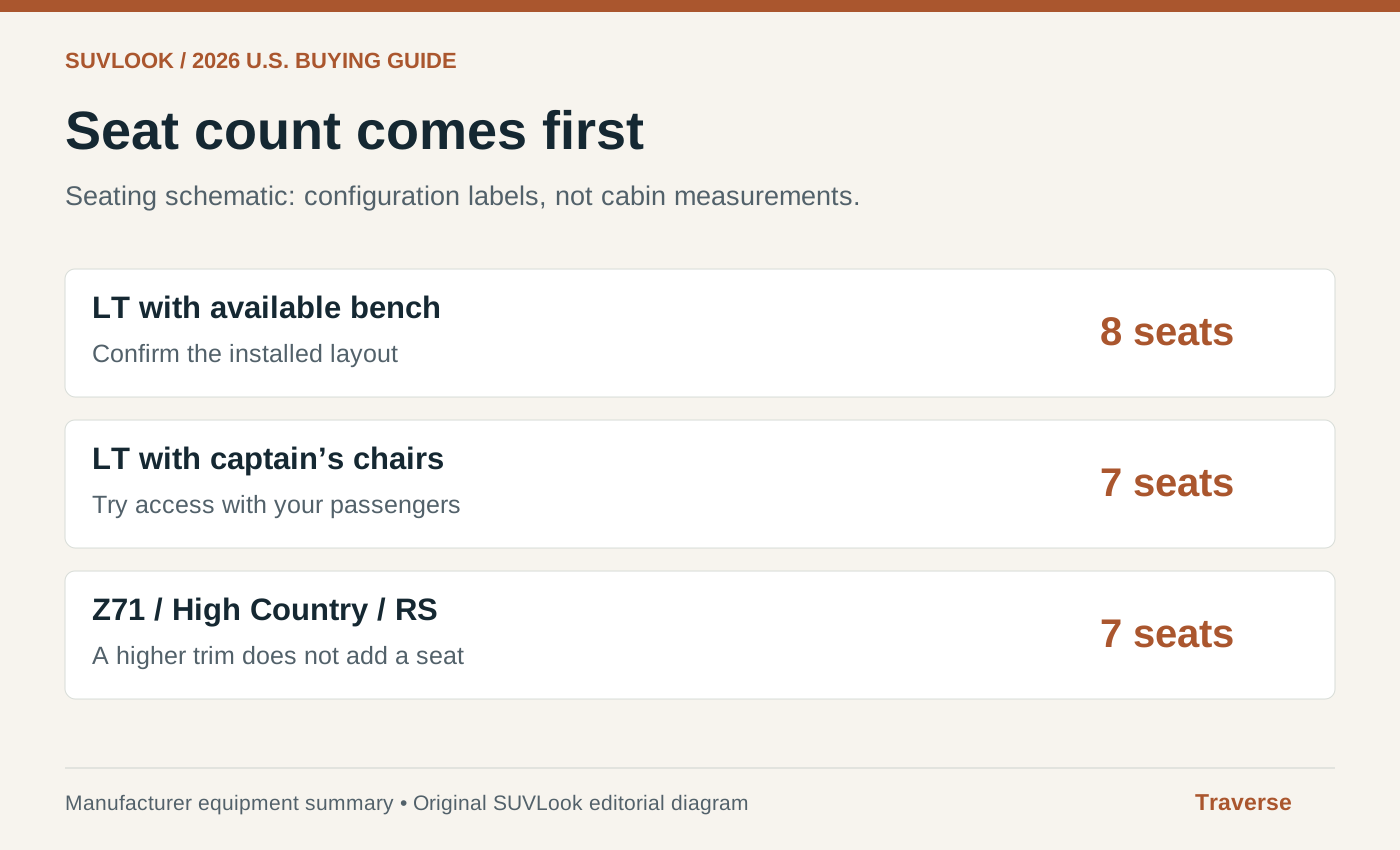
Editorial seating schematic based on Chevrolet's published seat-count distinction. Symbols show seating positions, not scale, child-restraint compatibility or passenger measurements.
The 2026 seating FAQ and footnotes specify the eight-seat LT configuration and the seven-seat upper models. Use that distinction to choose the correct vehicle to inspect, then check whether its access arrangement works for your passengers.
Set the driver's seat normally. Put a regular second-row passenger behind it, and only then have someone try the third row. Moving every seat forward for a quick demonstration can hide the compromises your family would face when all three rows are occupied.
Try the entry procedure from the side you use most often. Consider where the vehicle will be parked and how widely the door can open there. A motion that works in an empty showroom space may be awkward beside a garage wall or another parked car.
Bring the child restraints you intend to use. The number of seats on the brochure is not a count of compatible child-restraint installations. Follow the vehicle and restraint instructions when evaluating installation and access; do not assume an access function can be used with a restraint attached.
For a fuller discussion of the layout choice, see our SUV captain's-chair guide. It is a useful companion if the family is still deciding whether a bench or separate seats better matches its normal trips.
When powered folding is worth paying for
Powered rear-seat functions deserve attention if your Traverse will switch repeatedly between passenger and cargo duty. Have the seller demonstrate the controls on the actual configuration, then repeat the process yourself. You are looking for a practical reduction in effort, not just an impressive movement during a sales presentation.
Think through a normal changeover. Where will the head restraints, buckles, floor mats and bags be? Which side of the vehicle will you be standing on? Can you see that the area is clear before operating the seats? Ask for the permitted sequence and limitations in the owner's manual.
Do not infer that a powered fold creates a different-sized luggage compartment. The feature changes how the seat moves. A close-fitting stroller, crate or other rigid item still needs measurements of the relevant floor and opening, with the seats in the positions you will use.
Test with the object that drives your purchase where the dealer permits it. A cardboard outline can help with an awkward rigid item, but its thickness and clearance requirements still need consideration. Keep a margin rather than treating a tight diagonal placement as an everyday loading solution.
Someone who rarely changes the seat arrangement may get less value from this convenience than someone who does it several times a week. That is a usage decision you can make without claiming that one mechanism will be more reliable over an unmeasured ownership period.
Super Cruise: compare availability, inclusion and service terms
Super Cruise is driver assistance, and its availability should be checked separately from the name of the trim. Chevrolet identifies it as included through the Enhanced Driving Package on High Country and RS in the 2026 Traverse technology section. Read the installed package and service terms on any other configuration you consider.
Ask for a demonstration of the system's permitted use, driver-attention requirements and handover procedure. Check whether the roads you travel are compatible using the manufacturer's current information. A feature that suits a long compatible-road commute may matter less on local trips where it cannot be used.
The included service period is also a separate question from having the hardware. Ask what remains available when that period ends, what an ongoing plan requires and whether a used vehicle's original included period has already begun. Do not assume the clock restarts whenever a vehicle changes hands.
There is no reason to accept a package based only on a sentence in a general model description. Ask the seller to show where it appears on the exact window sticker. A headline saying that a technology is available in the range does not establish that it is installed on every Traverse.
Keep the decision concrete: if the system is one of your must-haves, verify it early and compare complete eligible configurations. If it is merely interesting, avoid letting it distract you from seating and access requirements the vehicle must meet on every journey.
Compare complete vehicles before comparing discounts
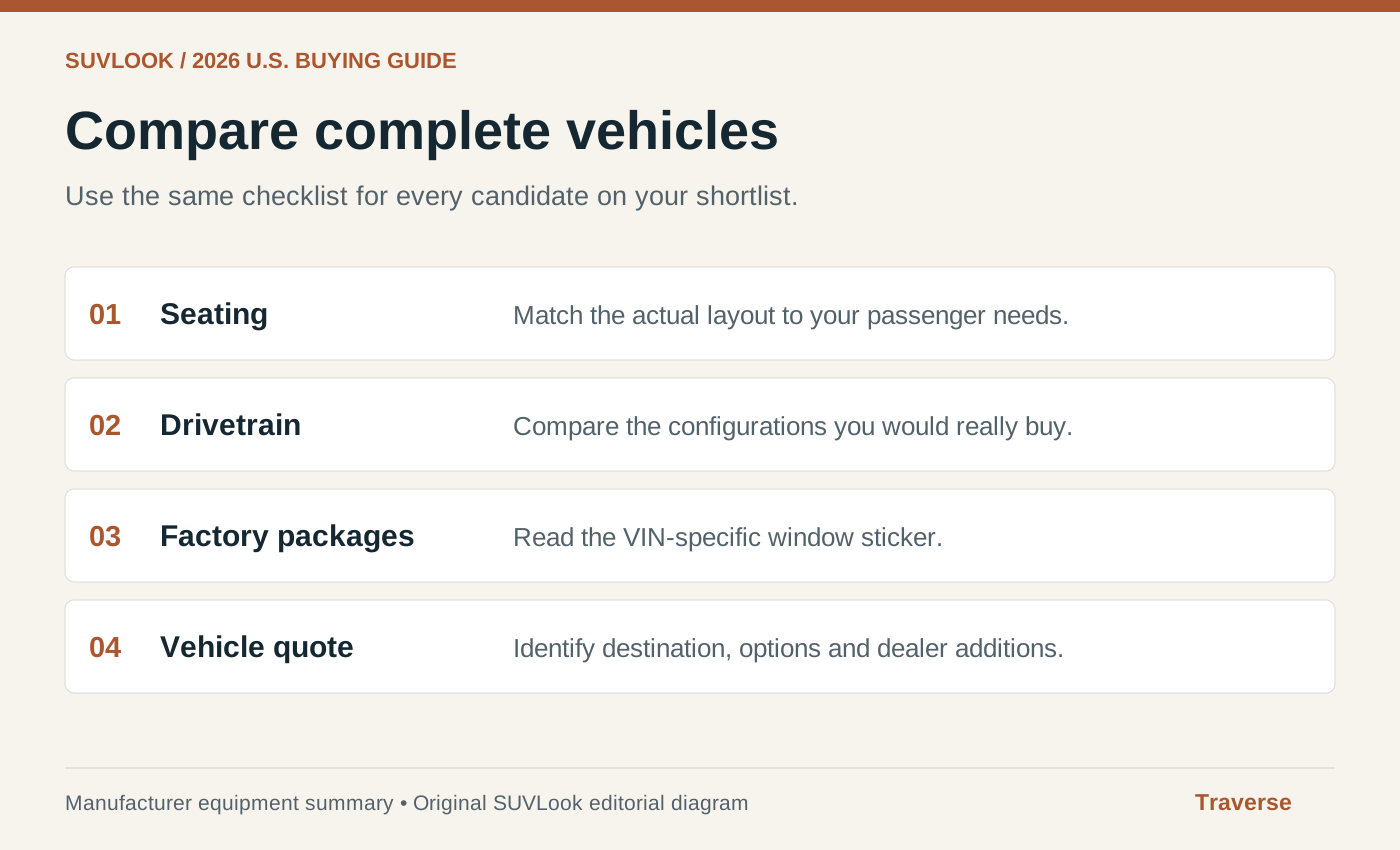
SUVLook purchase-comparison checklist. These are questions to resolve for each vehicle, not additional factory equipment.
Write down the model year, trim, drivetrain, seat layout and factory packages for each candidate. Put the stock number or VIN beside the list so the quote cannot quietly become attached to a different vehicle during the discussion.
Then request an itemized vehicle price. Identify whether destination is already included and distinguish factory options from dealer-installed accessories. An advertised reduction is meaningful only in relation to the vehicle and conditions being offered.
For example, an optioned LT with the layout you need may be a more suitable purchase than a discounted seven-seat upper trim. The latter does not become the better family vehicle merely because its reduction from sticker is larger. Match the car to the job before judging the discount.
Likewise, a Z71 quote should be compared with the drivetrain and equipment you would actually choose elsewhere in the range. Comparing it with an empty entry-price figure can exaggerate the cost of the hardware you wanted, while comparing it with unrelated luxury options can hide that cost.
Keep trade-in and financing discussions separate enough that you can still identify the vehicle selling price. This guide does not evaluate a particular finance product. Its purpose is to help you compare the configurations on clear terms, rather than infer value from a monthly-payment headline.
A focused test-drive plan for the two finalists
Once you have two plausible configurations, use the same short route and the same passenger arrangement. Include the low-speed surfaces, parking turn and road speeds you normally encounter. Choose a lawful, ordinary route rather than trying to reproduce a capability demonstration.
Have the person who will drive most often set the seat, mirrors and controls. If two adults share the vehicle, both should repeat that process. A preferred interior finish cannot compensate for a driving position or control layout that one of them struggles to use.
Check the features that explain the higher quote. If seat operation, a camera view or a driver-assistance option is the reason for moving up, use it within its permitted conditions. Leaving that feature unexplored and judging only the exterior reverses the purpose of the comparison.
Record your observations immediately after each drive. Keep subjective impressions labeled as your impressions, and compare them with the factory equipment list. This separates what you actually preferred from what the brochure suggested you might prefer.
If neither Traverse meets the seating or space requirement, reopen the vehicle shortlist rather than moving to another trim indefinitely. Our Honda Pilot trim guide and Ford Explorer trim guide offer different family-SUV comparisons; their own model-year scopes still apply.
Which 2026 Traverse trim should you choose?
Choose LT first when the priority is a useful family configuration at a lower starting price. It is also the place to start when you need the available eighth seat. Decide which equipment is missing before assuming you need to leave it behind.
Choose Z71 when its particular terrain equipment solves a recurring need and the seven-seat arrangement suits your household. Confirm the route requirements, then evaluate the actual tires and ride on the roads you use most often.
Compare High Country and RS together when the premium conveniences are important. Focus on the exact installed equipment and the finishes you prefer. Treat RS styling and High Country branding as choices within the Traverse range, not evidence of a different class of engine.
For most buyers, the productive final comparison is between two specific stock vehicles. Once you can explain why each remaining option matters, you can stop researching trim names and start checking the actual configurations.
Frequently asked questions
Which 2026 Traverse seats eight?
LT with the available second-row bench. Chevrolet lists Z71, High Country and RS as seven-seat configurations. Verify the actual seat layout before arranging a viewing.
Is Z71 simply a more expensive LT?
No. It adds terrain-focused hardware and a particular AWD system. Whether that is useful depends on your routes; it does not preserve the eight-seat LT layout.
Does RS mean a different engine?
Do not use the RS badge to infer an engine upgrade. Compare the powertrain specification on the actual vehicle and distinguish styling equipment from measured performance.
Are 2027 prices and packages covered here?
No. This comparison uses Chevrolet's identified 2026 U.S. information. Check the correct year's manufacturer material before using it for a 2027 vehicle.