Dimensions · Space · Buying guides
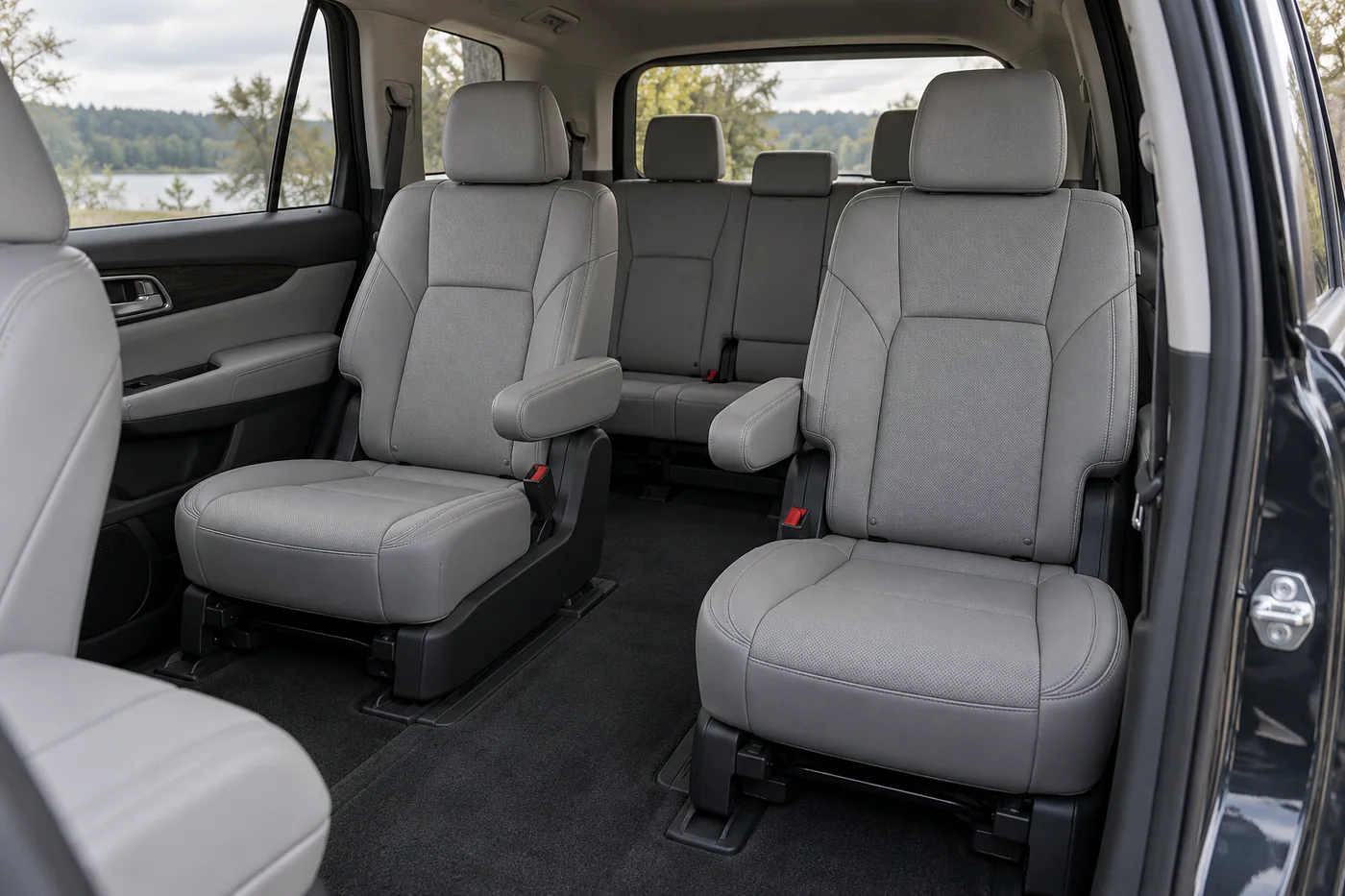
Captain's chairs give second-row passengers individual seats and can create a route between them to the third row. The trade-off is a missing middle seating position. Before shopping for SUVs with captain seats, work out how many people you carry on an ordinary day, when you need every seat, and whether passengers can actually reach row three.
The U.S. 2026 Toyota Highlander XLE, Honda Pilot TrailSport and Kia EV9 GT-Line AWD offer verified examples, including gasoline, hybrid and electric choices. Their captain's-chair configurations do not all carry the same number of people. This guide uses manufacturer specifications checked October 17, 2026; it does not report SUVLook cabin tests.
A shortlist of third-row SUVs with captain seats
These are starting points for different seating needs, not an overall vehicle ranking. The table identifies exact U.S. 2026 configurations; it does not describe every trim in each lineup.
| Model, powertrain and trim | Captain's-chair availability | Total seats with chairs | Bench alternative to investigate |
|---|---|---|---|
| 2026 Toyota Highlander XLE, gasoline AWD | Standard second-row chairs | 7 | Optional second-row bench seats 8 on this trim |
| 2026 Toyota Highlander Hybrid XLE, AWD | Standard second-row chairs | 7 | Optional second-row bench seats 8 on this trim |
| 2026 Honda Pilot TrailSport, gasoline V6 AWD | Standard second-row chairs | 7 | TrailSport has chairs exclusively; investigate EX-L separately for a removable center seat |
| 2026 Kia EV9 GT-Line AWD, battery electric | Standard second-row chairs | 6 | This GT-Line configuration is not the seven-seat bench version |
Ask for the vehicle's window sticker and confirm its installed seating. A model name or a dealer's generic stock photo cannot establish which second row the vehicle has. Keep the model year visible when comparing listings, too: these configurations are not specifications for a later year.
Which configuration should you start with?
Highlander XLE: compare seven seats against eight
The useful reason to start with XLE is the layout choice. Toyota offers captain's chairs or an optional bench in both the gasoline and hybrid XLE for 2026. That lets you decide on seating without automatically changing powertrain. Toyota also lists the optional bench for gasoline Limited, but not Hybrid Limited in its year-specific release. See the manufacturer's seating description before choosing a grade.
Choose chairs if two people regularly occupy row two and the center passage works for your passengers. Choose the bench if the extra position matters more. Our Highlander interior guide explains the trim distinctions; do not substitute Grand Highlander information for this separate model.
Pilot TrailSport: dedicated chairs, with a different option elsewhere
Honda identifies TrailSport as the captain's-chair trim and lists seven-passenger capacity. Its chairs have inboard armrests and heating. Those features are confirmed in Honda's 2026 chair guide and seating-capacity table.
If you want an occasional middle seat, investigate the 2026 Pilot EX-L instead. Honda describes a removable second-row center seat on EX-L, Touring, Elite and Black Edition in its seating guide. Removing that seat creates a different arrangement from buying TrailSport's dedicated chairs. Compare the remaining seats and armrests in person. The Pilot interior guide provides broader cabin context.
Electric SUV with captain seats: EV9 GT-Line AWD
Kia lists second-row captain's chairs and six-passenger seating for the U.S. 2026 EV9 GT-Line AWD. That is the configuration to examine if an electric powertrain is part of your brief. The manufacturer's GT-Line description supports that specific layout; the EV9 family's advertised maximum seating does not describe every trim.
Count your passengers before considering the equipment. A household needing seven occupied seats should eliminate this six-seat configuration, however appealing the individual chairs seem. Also check your home-charging arrangements and usual trip stops before making the seating layout the deciding reason to buy an EV.
Captain's chairs versus a bench in everyday use
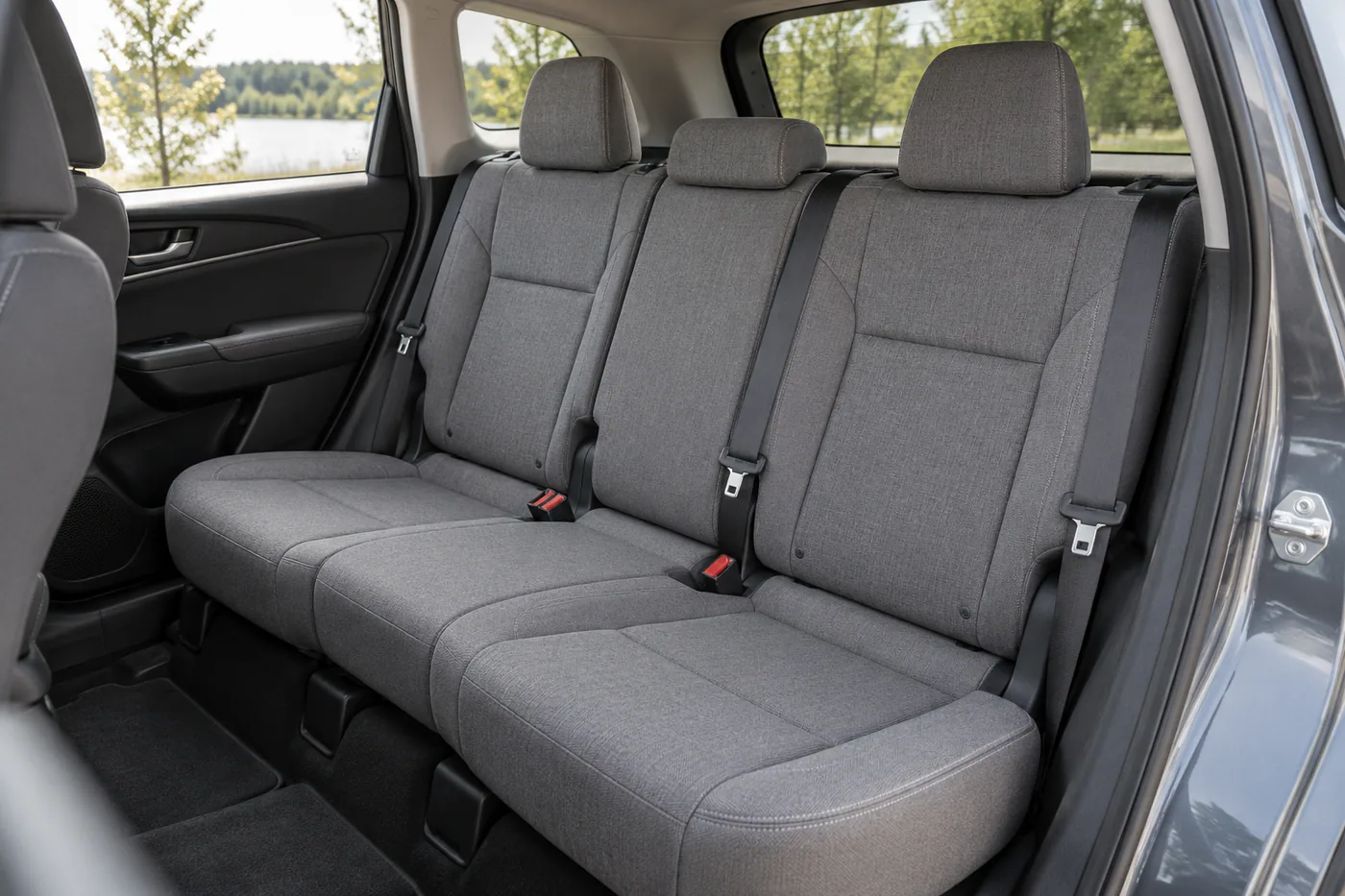
AI-generated bench-seat concept illustrating a middle seating position. It is not a named vehicle, a seating-conversion example or child-restraint installation guidance.
The biggest difference may appear when the third row is folded. With two front seats and two second-row chairs, you have four seating positions available. A second-row bench can provide a fifth, potentially leaving row three folded for luggage. That is a layout calculation, not a measured cargo advantage.
Chairs can give two passengers separate cushions and controls, but their shape and adjustment still need checking. A wider-looking gap does not prove the seats are comfortable, and an armrest may occupy space a passenger wants for movement.
The aisle is also conditional. Inspect trays, consoles and the position of both seats before assuming someone can walk through. Have the intended third-row passenger try entry and exit with the front and second-row seats set where their occupants need them. Repeat with the doors opened only as far as your parking space allows.
Child restraints: capacity does not establish compatibility
Bring your actual restraints and consult both the vehicle and restraint manuals for approved positions, installation methods and seat-adjustment restrictions. NHTSA says not every car seat fits every vehicle and advises checking fit before use. Its car-seat guidance also explains how to find installation help.
Ask whether the access procedure remains permitted with the restraint installed. Do not assume a seat may be tilted, slid or powered forward in that situation. An aisle alone does not establish that your planned arrangement works, and this guide does not recommend a particular child-seat placement.
A useful dealership check before deciding
Set the driver's seat first, then settle the second-row passengers, and evaluate row three last. Otherwise, moving every seat forward for the demonstration hides the compromise. Check access to buckles, foot space and head clearance, then try the seat controls with everyone clear of moving parts.
Finally, load the bags you normally carry with the necessary seats upright. Decide whether the extra bench position, a center passage or individual second-row seats solves the problem you actually encounter. The best three-row SUV with captain's chairs for your household is the one whose complete arrangement works; a feature checkbox cannot settle that decision.
More verified layouts: Grand Highlander, Pathfinder and Explorer
Three more U.S. 2026 configurations show why chair availability and total capacity need separate columns. These are additional examples, not a claim that every grade offers the same arrangement.
| Exact 2026 U.S. configuration | Captain's-chair layout | Bench comparison |
|---|---|---|
| Toyota Grand Highlander gas XLE | Seven seats with standard second-row chairs | Optional bench provides eight seats |
| Nissan Pathfinder SL | Seven with the specified Premium Package with Captain's Chairs | Eight-seat standard layout; confirm the exact installed package |
| Ford Explorer Active | Six with second-row captain's chairs | Available bench configuration provides seven; verify the vehicle's equipment |
The Explorer example is particularly useful for families assuming that chairs always mean seven seats. Its chair-equipped layout seats six, while the Grand Highlander example seats seven. Count the third-row positions as well as the individual chairs before comparing the total.
Grand Highlander is a separate model from Highlander. Do not use the smaller Toyota's dimensions or its trim restrictions to complete a Grand Highlander listing. Likewise, Nissan's Premium-package wording needs to be matched to its actual seating variant. Ask to see the vehicle and sticker rather than deciding from a photograph shared across several inventory entries.
Which layout suits an ordinary week?
Write down who travels on the journeys you make most often, then consider the occasional fully occupied trip. A household might usually carry four people but need seven seats for visiting relatives. Another may carry five people every weekday and use the third row only occasionally. Both can be interested in captain's chairs, but they have different luggage and access priorities.
For the regular five-person trip, a second-row bench may keep the third row folded. Two captain's chairs require that fifth person to sit farther back. The consequence is a different passenger-and-luggage arrangement, not a universal argument against chairs. Try both layouts with the real bags and people before choosing.
If two second-row occupants strongly prefer separate chairs, verify the support, adjustment and armrests of the exact seats. The word captain does not establish a standard cushion width or a particular level of comfort. Have both people sit in their normal positions while someone tries the third row, rather than moving one chair to an unrealistic position to make everything appear spacious.
For a six-person household, do not stop at the total capacity of a six-seat vehicle. Assess how frequently every position will be occupied and whether its remaining luggage space works. A seven- or eight-seat alternative may provide flexibility, but additional positions do not automatically improve the particular seats your family uses.
An aisle is useful only if the complete access route works
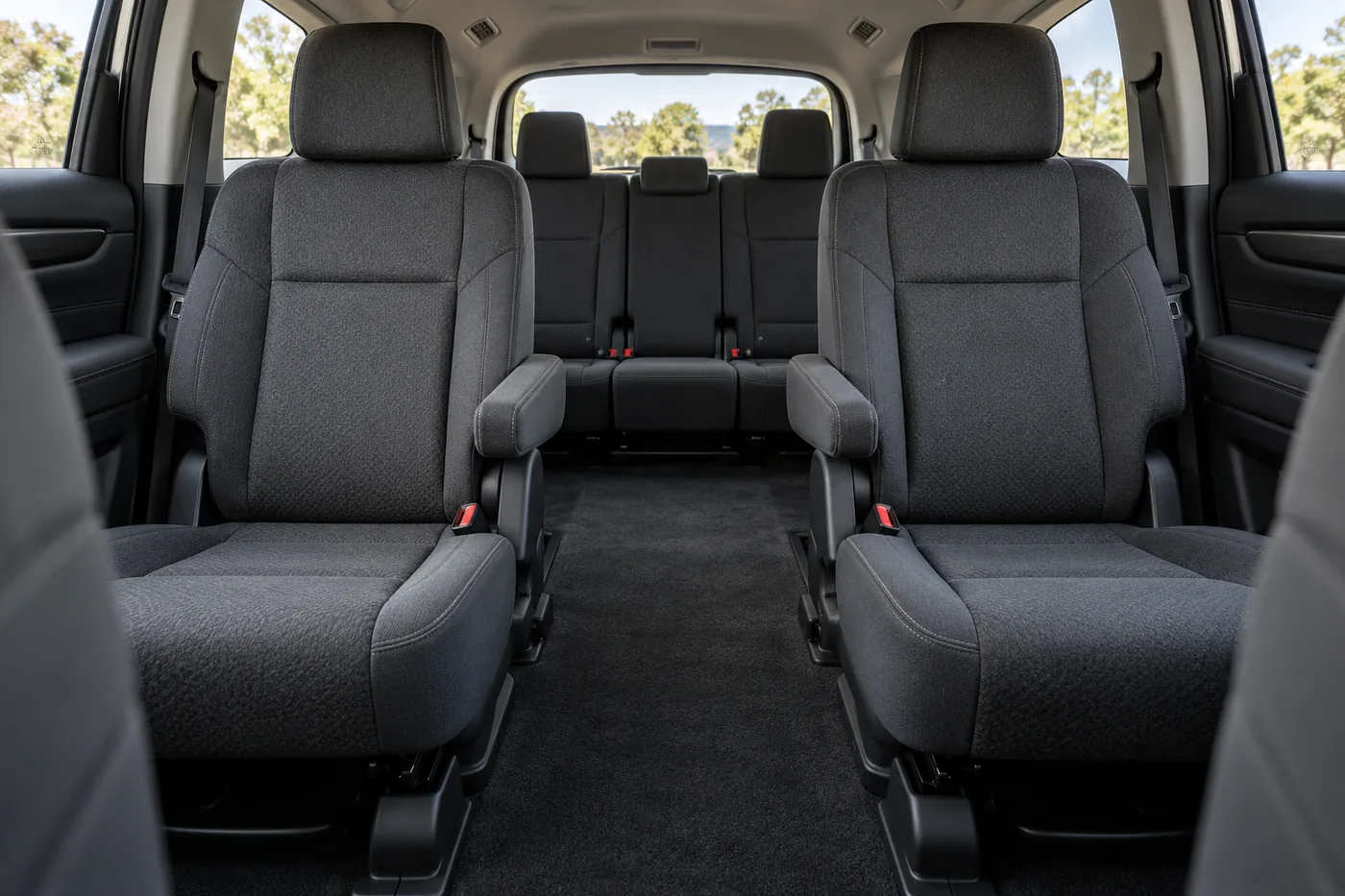
AI-generated generic center-passage illustration. The pictured gap is not a measured aisle width or proof of accessibility in any vehicle.
Look at the route from outside the vehicle, not just the gap between the chairs. Door opening, the step into the cabin, seat position and any console can all affect the demonstration. Have the intended passenger try entering and exiting while the vehicle is parked and everyone is clear of moving seats.
Test the arrangement in both directions. A person who can climb into row three with assistance may find getting out more difficult. A younger passenger may manage an aisle comfortably while someone with restricted movement needs a different route. This guide does not establish accessibility for any particular person or mobility need.
Do not assume a center console is removable simply because another SUV has a removable one. Where the manufacturer provides removal and storage instructions, follow those instructions. Confirm where the part belongs when it is not in use and whether it will travel in the vehicle. A console that ends up among the luggage can change the arrangement you initially tested.
If access depends on folding or sliding a seat, check the permitted procedure for the installed restraints and occupied positions. Never use a favorable photograph as authority to move a seat. The vehicle and restraint instructions, with appropriate installation assistance, govern the actual arrangement.
Compare luggage with the passenger layout already settled
After choosing the seats you need, keep them available while loading. Put the folded stroller or mobility device into its normal transport shape and add the bags that travel with it. Test the whole set rather than checking one suitcase, removing it, and then checking another.
For a regularly occupied third row, pay attention to the space behind that row. A vehicle's maximum cargo number generally describes a different layout with passenger seats folded. Do not choose on that figure and discover later that the load only works after removing a seat a passenger needs.
If only part of the third row is folded, assess that exact arrangement. Check the load's entry path and final position without assuming a fully folded rating applies. Keep objects secured according to the manufacturer's instructions, and do not let a photograph of an open aisle become a plan to leave loose luggage between passengers.
Underfloor storage and removable-seat storage also need inspection. A brochure showing a compartment does not establish that it remains available when you store a seat or console there. Ask the seller to demonstrate the intended storage arrangement, then add your ordinary load with those parts actually put away.
Removable middle seat or dedicated captain's chairs?
The Pilot examples illustrate the distinction. Honda describes a removable center position on specified trims and dedicated captain's chairs on TrailSport. Those are different purchase choices, even if both can produce a gap in row two. Inspect the remaining seats and controls rather than deciding that every photograph with two separate cushions represents identical hardware.
A removable middle seat can be attractive when an extra seating position is occasionally needed. Ask the seller to demonstrate the approved removal and refitting procedure with the vehicle stationary. Judge whether you can handle that task and whether the part's storage arrangement works for you. This article does not provide a removal procedure or approve an improvised storage location.
Dedicated chairs can be the more straightforward choice when the middle position is never required. That does not guarantee that they provide a wider aisle, better cushioning or easier access than a removable-center arrangement in another vehicle. The exact cabin needs its own comparison.
Before buying used, confirm that all seats and parts needed for the advertised capacity are present. Ask for the original configuration information if a listing's seat count and photographs disagree. Do not assume a missing middle seat can be replaced with any similar-looking part or that changing the seating configuration is approved.
A shortlist that changes with your priorities
Start with the Highlander or Grand Highlander examples if you want to compare factory seven- and eight-seat layouts in the named trims. Try the smaller and larger Toyotas separately; their similar names do not establish the same passenger fit. The useful comparison is the actual cabin with your second-row preference, not a badge hierarchy.
Consider the Pilot's dedicated-chair and removable-center examples when the occasional extra seat is part of your decision. Compare Pathfinder SL only after identifying whether the specific chair package is installed. An otherwise appealing vehicle with the wrong second row should not remain on the shortlist on the assumption of a later conversion.
Keep Explorer Active and EV9 GT-Line AWD in the comparison when six seats meet your requirements. They illustrate two different powertrain choices, not a direct claim of equivalent cost, range, space or capability. An electric purchase still needs its own charging and journey assessment alongside the cabin decision.
There is no universal winner from chair availability alone. The right shortlist consists of documented configurations that fit your passengers, provide a workable luggage arrangement and suit the rest of your driving needs. Once those requirements are met, compare the actual vehicle condition and written quotes instead of adding more models solely because they have the feature.
Related SUVLook research
- Best SUVs Under $40,000 in 2026: Price, Space, MPG and Value
- 2026 Compact SUV Comparison: Prices, MPG, Cargo and Size
- Most Fuel Efficient SUVs for 2026: MPG, Trims and Fuel Costs
- SUV Fit Finder: shortlist SUVs by budget, seats, cargo and towing
Frequently asked questions
Do captain's chairs always mean seven seats?
No. The verified Highlander and Pilot configurations above seat seven; the EV9 GT-Line AWD seats six. Check the exact year, trim and installed layout.
What are quad seats in an SUV?
Look for individual seats in the front and second rows. Ford's parts terminology, for example, pairs second-row quad seating with captain-chair language. Treat a listing's label as a cue to inspect the layout, not as confirmation of total capacity or identical equipment across brands. A third row can add more seats.
Can you replace a bench with captain's chairs later?
Do not assume seats are interchangeable. Ask the manufacturer about the exact vehicle and its approved configuration before buying it on the expectation of a conversion. Choose the factory layout you need whenever possible.