Dimensions · Space · Buying guides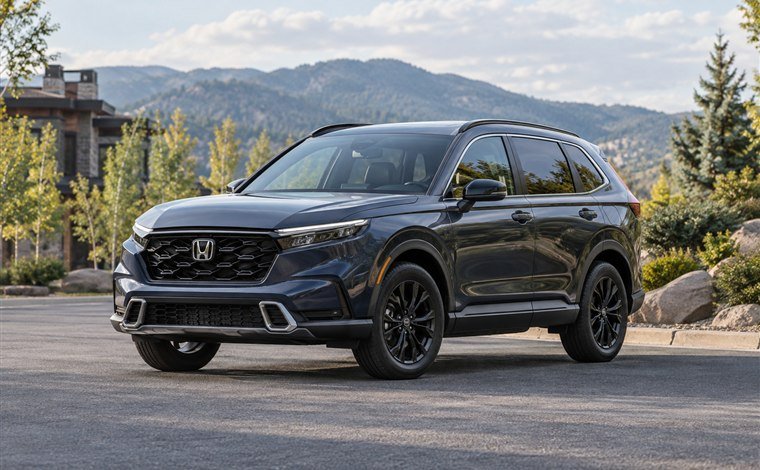
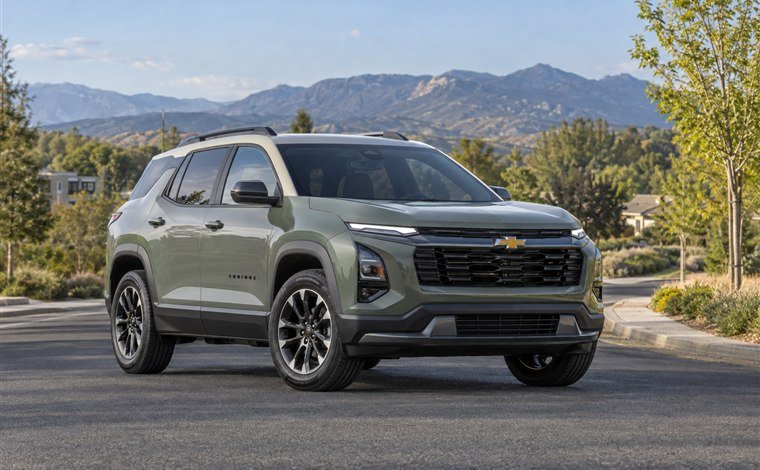
The 2026 Honda CR-V and Chevrolet Equinox are close enough in exterior size to belong on the same shopping list, but their published specifications point to different priorities. The CR-V offers gasoline and hybrid powertrains, more published cargo volume and unusually generous rear legroom. The Equinox starts at a lower base price, uses the same 175-hp turbo engine across its main trims and gives buyers a straightforward choice between front-wheel drive and all-wheel drive.
Start with these 2026 figures, then compare the exact trims on your shopping list. The window sticker will tell you which equipment comes with each vehicle; the manufacturer specifications will help you check space and capability. Older-generation measurements aren't substitutes for either.
Quick comparison
| Research field | 2026 Honda CR-V | 2026 Chevrolet Equinox |
|---|---|---|
| Starting MSRP | $30,920 LX, before destination | $28,800 LT, before destination |
| Gas engine | 1.5L turbo four-cylinder | 1.5L turbo four-cylinder |
| Gas output | 190 hp | 175 hp |
| Hybrid | 204-hp two-motor hybrid available | No hybrid in the current profile |
| Drivetrain | FWD or AWD, depending on trim | FWD or AWD |
| Front legroom | 41.3 in | 40.9 in |
| Rear legroom | 41.0 in | 39.9 in |
| Cargo behind rear seat | 39.3 cu ft gas; 36.3 cu ft hybrid | 29.8 cu ft |
| Maximum cargo volume | 76.5 cu ft gas; 71.8 cu ft hybrid | 63.5 cu ft |
| Maximum towing | 1,500 lb gas; 1,000 lb hybrid | 1,500 lb AWD; 800 lb FWD |
The table is most useful as a first pass. The CR-V's gas and hybrid cargo figures should not be mixed, and Equinox towing depends on drivetrain.
Price and powertrain differences
The Equinox LT starts below the CR-V LX in the published base prices used by SUVLook. That gives Chevrolet a lower entry point before destination, options, taxes and dealer charges.
Honda provides more powertrain variety. Gas CR-V models use a 190-hp 1.5-liter turbocharged four-cylinder with a CVT. Hybrid trims use Honda's two-motor system with 204 hp. Front-wheel drive is available on parts of the range, while AWD is standard on TrailSport Hybrid and Sport Touring Hybrid.
The Equinox uses a 175-hp 1.5-liter turbo engine across the main trim range. Front-drive models use a CVT, while AWD versions use an eight-speed automatic. You're therefore choosing traction, equipment and styling rather than stepping up to a more powerful engine as you move through the trims.
For the complete vehicle data, see the 2026 Honda CR-V research profile and 2026 Chevrolet Equinox research profile.
Fuel economy: the CR-V adds a hybrid option
Honda publishes up to about 28 mpg city and 33 mpg highway for gasoline CR-V configurations, while the most efficient hybrid configurations reach up to 43 city and 36 highway. The TrailSport Hybrid is rated lower than the most efficient CR-V hybrid setup because its AWD and equipment package changes the result.
The Equinox profile lists up to 22 mpg city and 29 mpg highway for its current configuration data. Fuel economy can change with drivetrain, tires and trim, so shoppers should compare the exact version they intend to buy rather than one headline number.
For high annual mileage, the availability of a CR-V hybrid is a meaningful difference. For buyers focused on initial purchase price, the Equinox's lower published starting MSRP may carry more weight.
Cabin space for adults and tall drivers
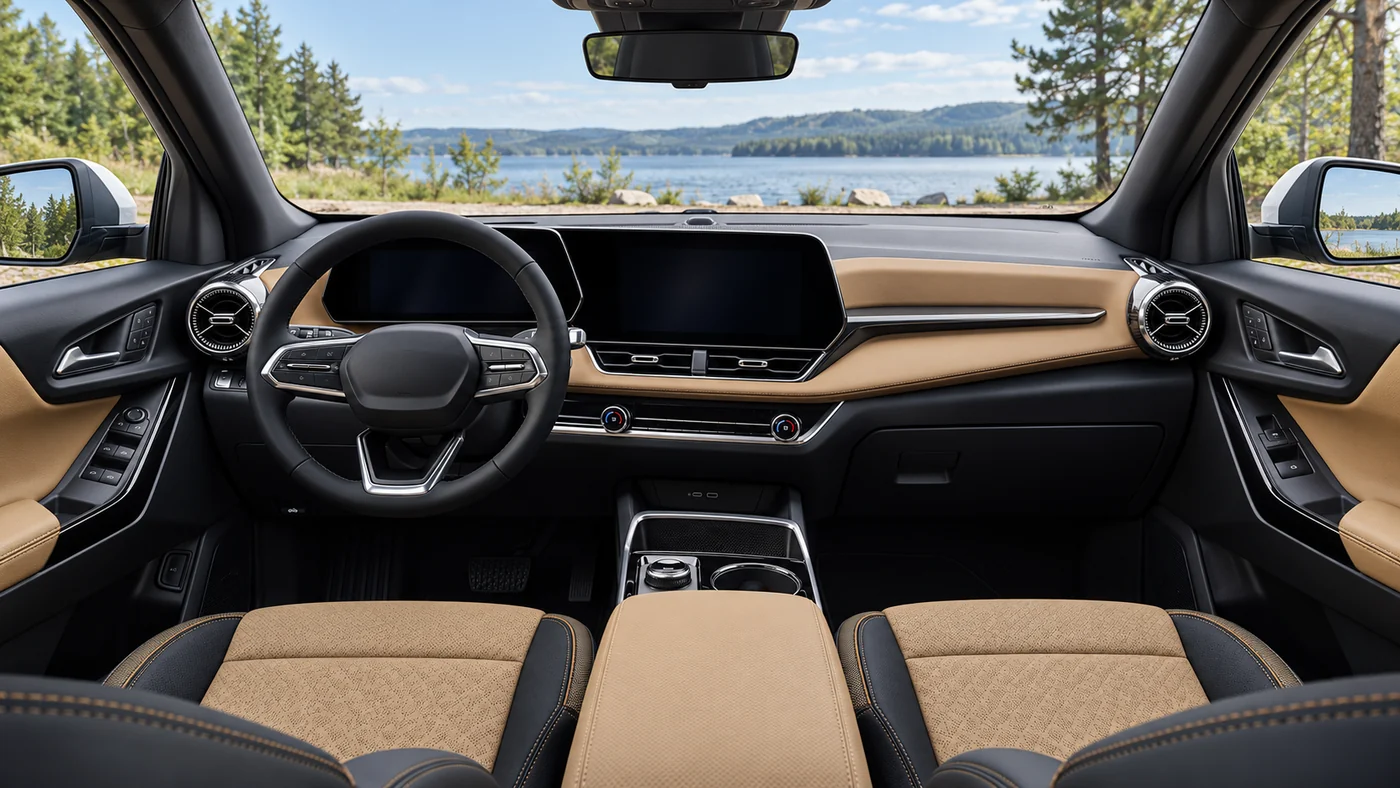
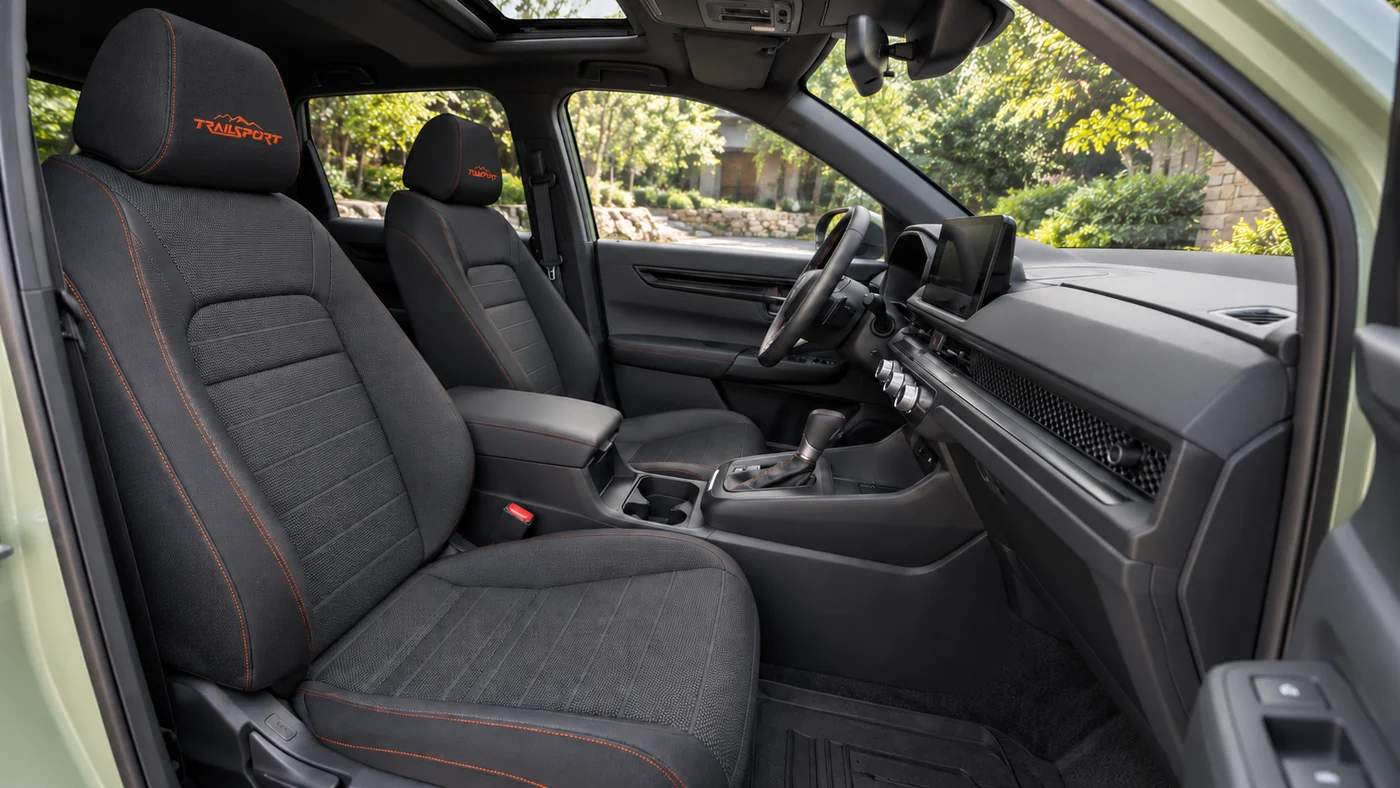
The CR-V has 41.3 inches of front legroom and 41.0 inches in the rear. The Equinox lists 40.9 inches in front and 39.9 inches in back. Those are both useful compact-SUV numbers, but the CR-V has the edge in the published legroom figures.
Headroom needs a trim-level check. Honda lists 40.0 inches of front headroom on the CR-V LX and 38.2 inches on many moonroof-equipped trims. Chevrolet likewise lists 40.0 inches in the Equinox without a sunroof and 38.2 inches with one. A panoramic or conventional sunroof can therefore matter more to a tall driver's fit than a small difference in exterior dimensions.
Seat shape, steering-wheel reach and seating posture still affect real-world comfort. Anyone close to the limits should sit in the exact trim and adjust the seat before deciding.
Cargo space: CR-V publishes more volume
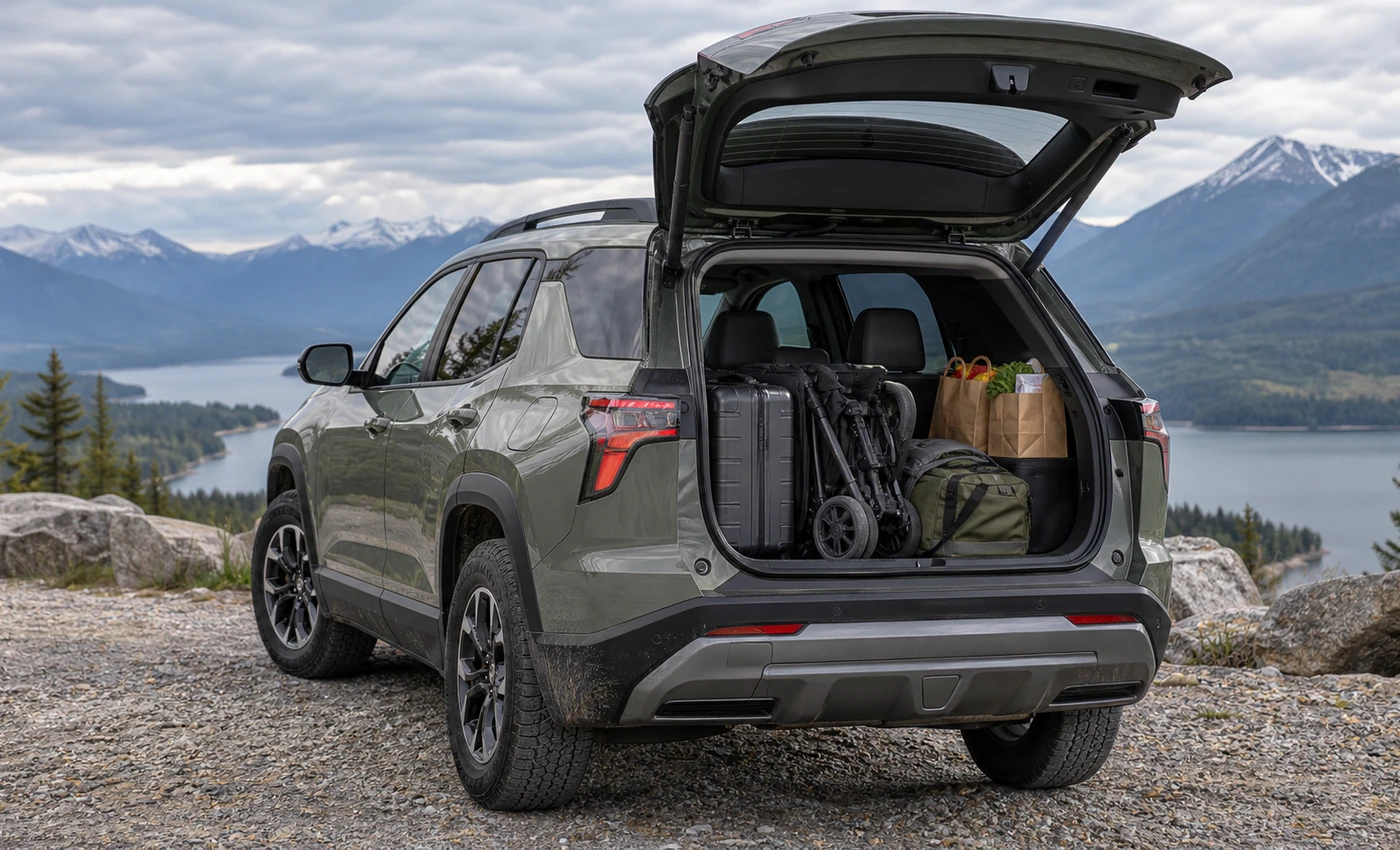
Cargo volume is one of the clearest differences in the factory figures. Gasoline CR-V models publish 39.3 cubic feet behind the second row and 76.5 cubic feet with it folded. Applicable hybrid trims publish 36.3 and 71.8 cubic feet.
The Equinox publishes 29.8 cubic feet behind the rear seat and 63.5 cubic feet with the seat folded. It also includes a hidden storage area beneath the cargo floor.
Those cubic-foot figures are useful for luggage and grocery comparisons, but they do not tell you whether a rigid item will pass through the hatch. SUVLook does not carry the old Equinox generation's 39.3-inch cargo-depth figure into the redesigned 2025-2026 body. If you need to fit a crate, mobility device, appliance or drawer system, measure the current Equinox's hatch opening and floor length directly.
The CR-V cargo dimensions guide and Equinox cargo dimensions guide keep those measurement limits visible.
Towing and AWD
Gasoline CR-V models are rated to tow up to 1,500 pounds when properly equipped, while hybrid CR-V models are rated up to 1,000 pounds. The Equinox reaches 1,500 pounds in properly equipped AWD form and 800 pounds with front-wheel drive.
For light trailers, bicycles or small utility loads, that makes configuration more important than the model badge. Check the tow rating for the exact powertrain and drivetrain before adding trailer weight, passengers and cargo.
Safety and driver-assistance context
Honda Sensing is standard across the 2026 CR-V lineup. The Equinox profile also documents a broad suite of standard or available driver-assistance systems, including automatic emergency braking, lane support, blind-zone assistance and rear cross-traffic features.
IIHS ratings are generation- and test-specific. SUVLook only carries a result into a model-year profile when the rating source explicitly supports that generation or year. Treat safety ratings as one part of the decision alongside visibility, tire choice, braking performance and the equipment fitted to the exact trim.
Which one fits which buyer?
The CR-V is the more natural shortlist choice for shoppers who want a hybrid, prioritize published cargo volume or regularly carry adults in the second row. Its rear-legroom figure and gas-versus-hybrid choices give it broad coverage across different use cases.
The Equinox makes sense for shoppers who want a lower published starting price, prefer Chevrolet's current cabin and technology package, or want 1,500-pound towing in an AWD configuration without moving to a higher-output engine trim.
Use the site's vehicle comparison tool to line up the full research fields side by side.
Exterior size and parking footprint
The CR-V and Equinox are physically close. Honda lists the CR-V at 184.8 inches long, 73.5 inches wide and on a 106.3-inch wheelbase. Chevrolet lists the Equinox at 183.2 inches long, 74.9 inches wide and on a 107.5-inch wheelbase.
That means the Equinox is slightly shorter but wider, while the CR-V is slightly longer but narrower. Those differences are small enough that both still behave like compact SUVs in normal parking spaces, but they can matter in a narrow garage or when mirrors must clear a tight entrance.
Ground clearance is also in the same broad range. Honda publishes 7.8 inches for FWD CR-Vs and 8.2 inches for AWD versions. Chevrolet lists about 8.1 inches for the Equinox, varying slightly by trim. These numbers are useful for basic clearance context but do not by themselves describe tire grip, approach angles or off-pavement capability.
Technology and cabin interface
Chevrolet gives the current Equinox an 11.3-inch center infotainment touchscreen and an 11-inch driver-information display. Wireless Apple CarPlay and Android Auto are supported, while Google built-in, wireless charging and additional camera or parking-assistance features depend on equipment.
Honda also supports wireless Apple CarPlay and Android Auto, with wireless charging on equipped CR-V trims. Sport Touring Hybrid adds Google built-in and a Bose premium audio system, and selected upper trims use a 10.2-inch digital instrument display.
The Equinox has the larger-screen story on paper, but screen size is only one part of daily usability. During a test drive, pair your phone, change common climate and audio settings, open the camera views and see whether the controls you use most are easy to reach without digging through menus.
Warranty and ownership basics
Honda lists a 3-year/36,000-mile new-vehicle limited warranty and 5-year/60,000-mile powertrain warranty for the CR-V. Hybrid-system coverage is documented separately and can vary by component and state.
Chevrolet also lists a 3-year/36,000-mile bumper-to-bumper limited warranty and 5-year/60,000-mile powertrain coverage for the Equinox, plus 5-year/60,000-mile roadside assistance in its current U.S. documentation.
The bigger ownership difference is likely to come from powertrain choice rather than the basic warranty terms. A CR-V hybrid, gas CR-V and gasoline Equinox can have meaningfully different fuel-use patterns even though all three occupy the same size class.
What to check before you choose a trim
- Set the driver's seat and sit behind yourself. The CR-V's extra rear-legroom figure is most meaningful when the front seat is in your real driving position.
- Compare the exact roof. Sunroofs reduce published headroom in both vehicles.
- Keep gas and hybrid CR-V cargo figures separate. The hybrid sacrifices some published cargo volume.
- Check Equinox drivetrain hardware. FWD and AWD use different transmissions and different tow ratings.
- Measure rigid cargo. The current Equinox does not have every useful factory linear cargo measurement published.
Frequently asked questions
Which is cheaper to start, the CR-V or Equinox?
In the current pricing used by SUVLook, the Equinox LT starts at $28,800 before destination and the CR-V LX at $30,920 before destination.
Which has more rear legroom?
Honda publishes 41.0 inches of rear legroom for the CR-V. The Equinox lists 39.9 inches.
Which has more cargo space?
The CR-V has the larger published cargo figures. Gas models list 39.3 cubic feet behind the rear seat and 76.5 maximum; applicable hybrids list 36.3 and 71.8. The Equinox lists 29.8 and 63.5 cubic feet.
Does the Equinox offer a hybrid?
Not in the current 2026 Equinox profile used for this comparison. Honda offers both gasoline and hybrid CR-V versions.
Which can tow 1,500 pounds?
Gasoline CR-V models and properly equipped AWD Equinox models both publish maximum tow ratings of 1,500 pounds. CR-V hybrids are rated to 1,000 pounds, while FWD Equinox models are listed at 800 pounds.
Research sources
- Honda, 2026 CR-V specifications: https://www.hondainfocenter.com/2026/CR-V/Feature-Guide/Specifications/
- Honda, CR-V model information: https://automobiles.honda.com/cr-v
- Chevrolet, 2026 Equinox model information: https://www.chevrolet.com/suvs/previous-year/equinox
- Chevrolet Newsroom, current-generation Equinox technical information: https://news.chevrolet.com/newsroom.detail.html/Pages/news/us/en/2024/jan/0123-equinox.html
- Chevrolet, fuel-economy information: https://www.chevrolet.com/fuel-economy