Dimensions · Space · Buying guides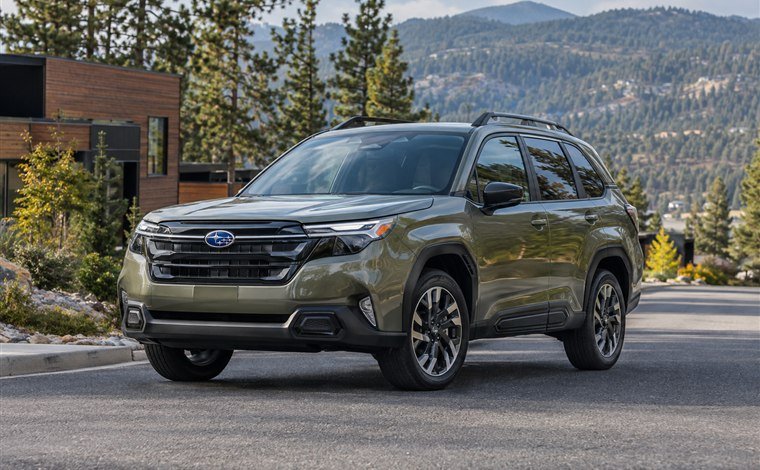
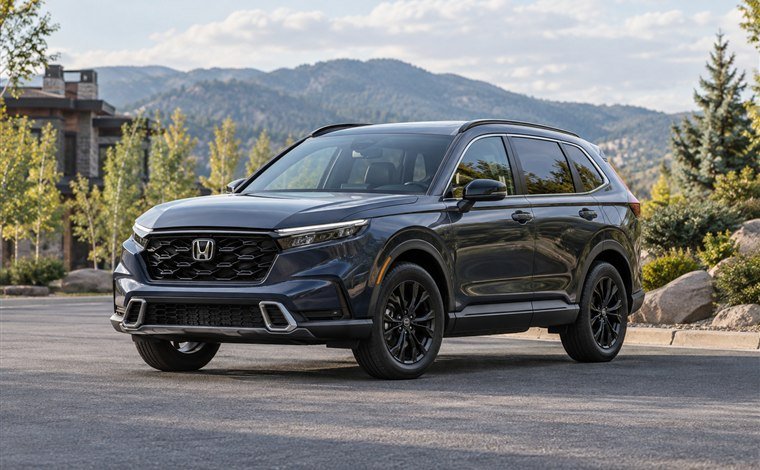
The 2026 Subaru Forester and Honda CR-V overlap closely in size and family use, but they solve the compact-SUV brief in different ways. The Forester makes all-wheel drive standard and offers unusually strong published headroom. The CR-V gives buyers front- or all-wheel drive, a high-efficiency hybrid option and more rear legroom.
Start with the choice that matters most to you: standard AWD and front-seat space, or extra rear legroom and the CR-V's powertrain options. Then compare the exact 2026 trims you can afford. Roof equipment, drivetrain and other options can change headroom, cargo capacity, fuel economy and towing, so the model badge alone doesn't settle those questions.
Quick comparison
| Research field | 2026 Subaru Forester | 2026 Honda CR-V |
|---|---|---|
| Starting MSRP | $29,995 base gas model | $30,920 LX, before destination |
| Gas output | 180 hp | 190 hp |
| Hybrid output | 194 hp | 204 hp |
| AWD | Standard | Available; standard on selected hybrids |
| Front legroom | 43.3 in | 41.3 in |
| Rear legroom | 39.4 in | 41.0 in |
| Front headroom | Up to 41.2 in | 40.0 in LX; 38.2 in many moonroof trims |
| Cargo behind rear seat | Up to 29.6 cu ft | 39.3 gas; 36.3 hybrid |
| Maximum cargo | Up to 74.4 cu ft | 76.5 gas; 71.8 hybrid |
| Maximum towing | 1,500 lb most trims; 3,500 lb Wilderness | 1,500 lb gas; 1,000 lb hybrid |
Subaru's cargo figures vary by trim and equipment. Many equipped Forester trims publish 27.5 cubic feet behind the rear seat and 69.1 cubic feet maximum, so the highest numbers should not be applied to every version.
AWD and powertrain layout
The Forester's biggest structural difference is standard all-wheel drive. Buyers do not have to move up a trim or add a drivetrain option to get AWD. The gasoline Forester produces 180 hp, while the hybrid is rated at 194 hp.
Honda gives shoppers a wider drivetrain mix. Gas models use a 190-hp turbo four-cylinder, while hybrid CR-V trims produce 204 hp. Front-wheel drive is available on parts of the lineup, and AWD is available or standard depending on trim.
That distinction matters for buyers who live in areas where AWD is a baseline requirement. The Forester builds it into every configuration, while the CR-V lets efficiency- and price-focused shoppers choose FWD on eligible trims.
See the complete 2026 Subaru Forester profile and 2026 Honda CR-V profile for trim-level fields.
Tall-driver space
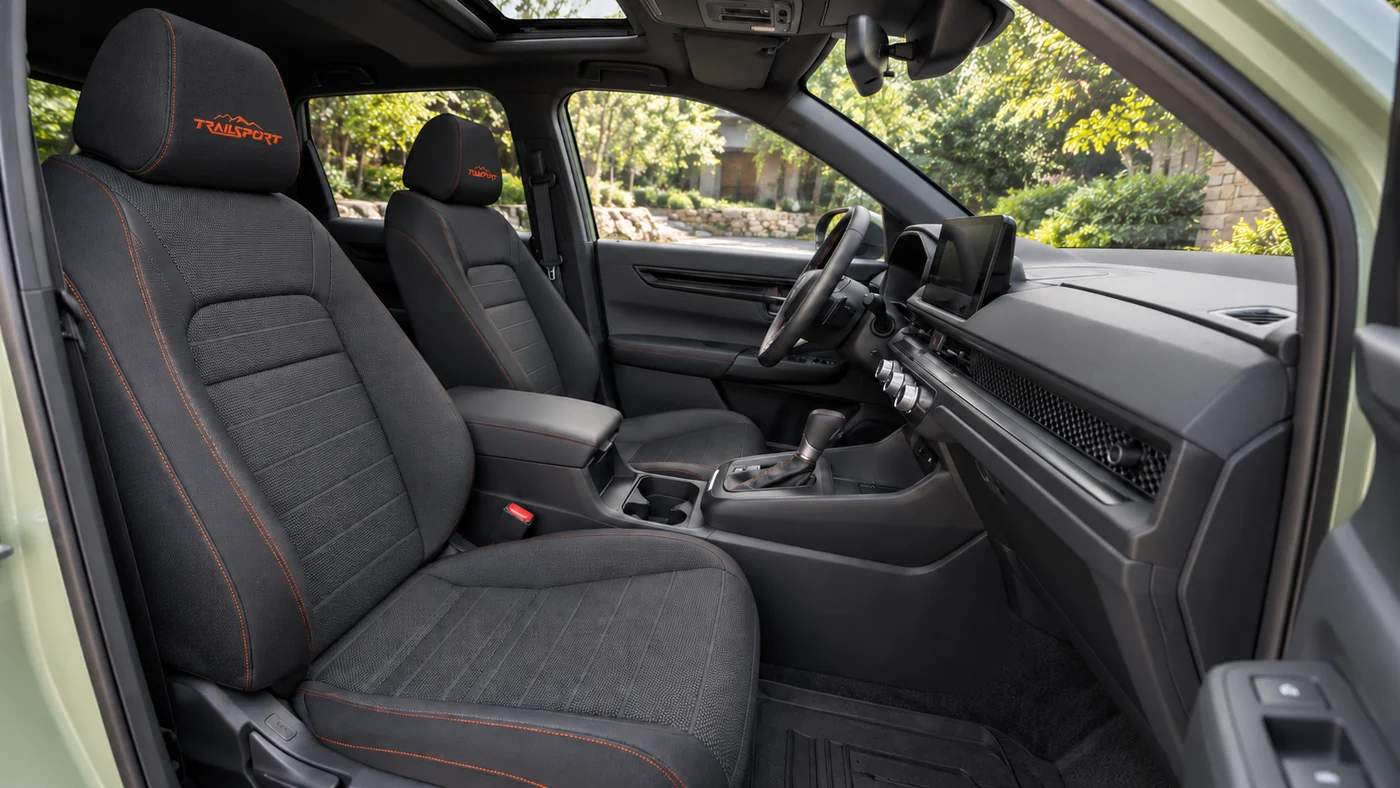
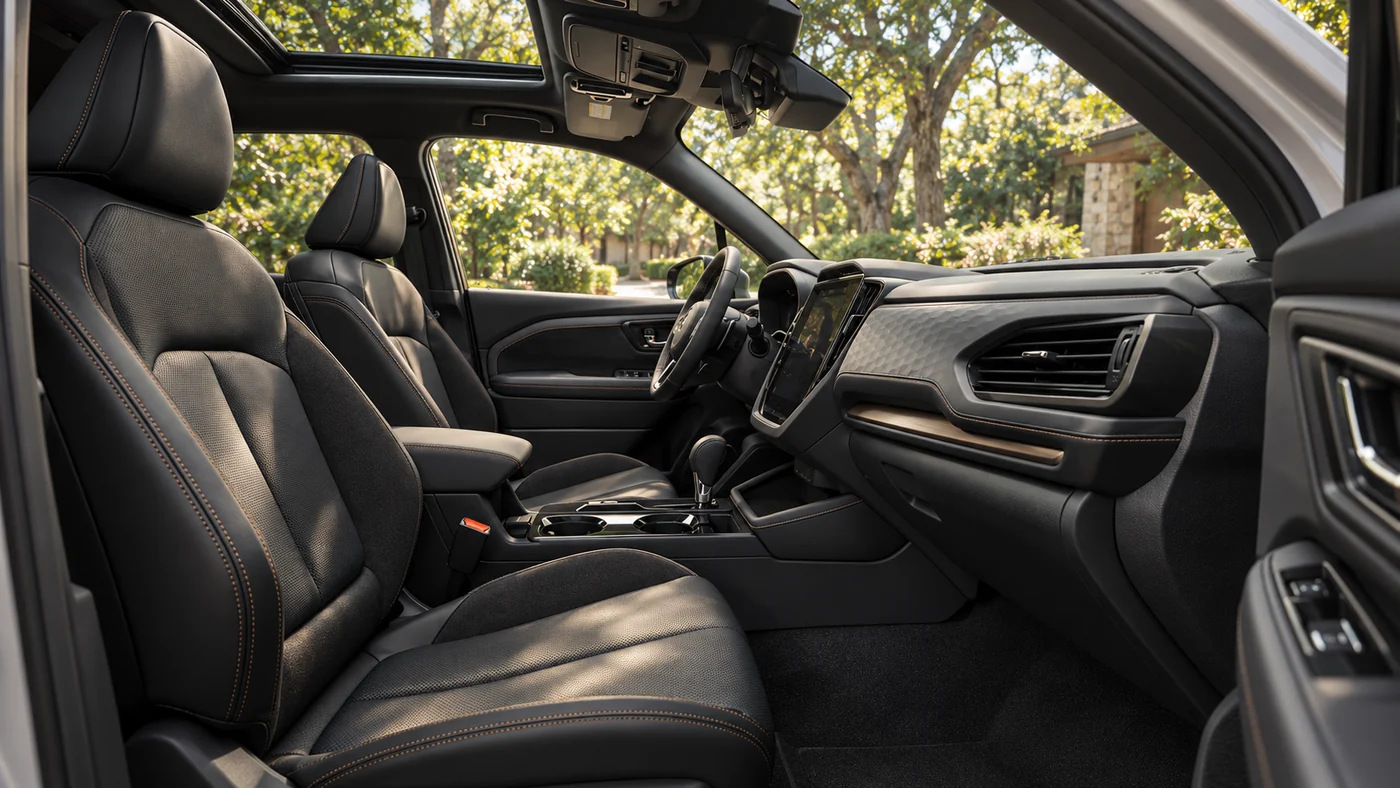
The Forester has one of the stronger published front-seat measurements in this group: 43.3 inches of front legroom and up to 41.2 inches of front headroom. The CR-V lists 41.3 inches of front legroom. Front headroom is 40.0 inches on the LX and 38.2 inches on many moonroof-equipped trims.
That gives the Forester a useful paper advantage for drivers who need extra knee and head clearance. The CR-V counters with more published rear legroom: 41.0 inches versus the Forester's 39.4 inches.
Numbers alone cannot describe seating posture. Tall shoppers should still check seat-cushion length, steering-wheel reach, door opening shape and whether a sunroof changes the roof liner around their head.
Cargo room
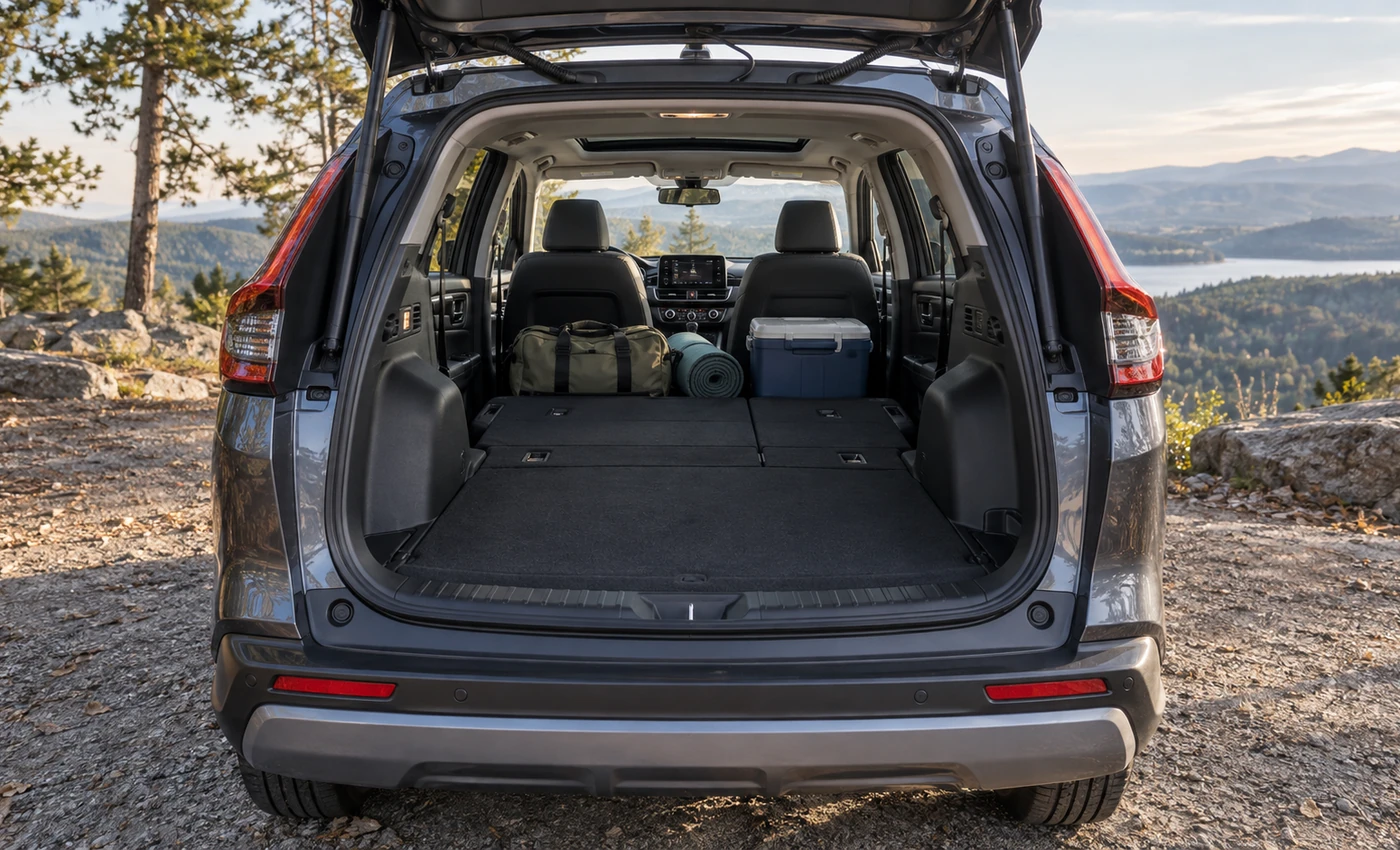
Honda publishes 39.3 cubic feet behind the rear seat and 76.5 cubic feet maximum for gasoline CR-V models. Applicable CR-V hybrids publish 36.3 and 71.8 cubic feet.
The Forester publishes up to 29.6 cubic feet behind the rear seat and up to 74.4 cubic feet with the rear seat folded. Many better-equipped trims are listed at 27.5 cubic feet and 69.1 cubic feet.
The maximum-volume figures are relatively close when the rear seats are folded, but Honda has the larger published seats-up volume. For strollers, weekly shopping and luggage with passengers aboard, that seats-up figure is often the more useful first filter.
For rigid gear, volume should be paired with floor and opening dimensions. Use the Forester cargo guide and CR-V cargo guide before assuming a long or wide item will fit.
Fuel economy and hybrid choices
Both models offer electrified options for 2026, but their lineups are organized differently. The Forester retains its standard-AWD identity in both gasoline and hybrid form. The CR-V gives buyers gas and hybrid trims with a mix of front- and all-wheel drive depending on configuration.
Honda's most efficient published hybrid figures reach up to 43 mpg city and 36 highway. The exact Forester result depends on the chosen powertrain and equipment, so compare the official rating for the trim on the dealer lot rather than assuming one number applies across the range.
If fuel use is the main priority, the CR-V hybrid's best published rating deserves close attention. If standard AWD is non-negotiable, the Forester simplifies the shopping process.
Towing and ground clearance
Most Forester trims are rated to tow up to 1,500 pounds, while the Wilderness increases that figure to 3,500 pounds. The Forester also lists 8.7 inches of ground clearance for most trims and 9.3 inches for Wilderness.
The CR-V is rated up to 1,500 pounds with the gasoline powertrain and 1,000 pounds with the hybrid. Ground clearance is listed at 7.8 inches for FWD and 8.2 inches for AWD.
Those numbers make the Forester Wilderness the more specialized choice for buyers who need extra trailer capacity or clearance. For ordinary commuting and family use, the more relevant question is whether the added capability is worth the trim and tire differences.
Safety context
The Forester profile includes IIHS 2026 model-year data, while the CR-V profile uses current-generation results only where IIHS applicability is clear. Both vehicles also include broad driver-assistance suites, but feature availability and behavior can vary by trim.
When comparing safety, use the current rating page for the exact body generation and confirm that the test result applies to the 2026 model you are considering.
Which configuration suits which use case?
The Forester is especially compelling for drivers who want standard AWD, more published front legroom and headroom, or the higher-capability Wilderness setup. The CR-V is strong for buyers who prioritize rear-seat legroom, seats-up cargo volume or the highest-efficiency hybrid configuration.
Use the SUVLook comparison tool to inspect the full profiles side by side.
Exterior size and parking footprint
The Forester and CR-V are close enough in overall size that neither belongs to a different class, but their packaging priorities are not identical. Subaru lists the Forester at about 183.3 inches long on most trims with a 105.1-inch wheelbase. Honda lists the CR-V at 184.8 inches long on a 106.3-inch wheelbase.
That roughly inch-and-a-half difference in body length is small compared with the differences in seating and cargo measurements. A buyer with a tight garage should still measure usable depth, especially if the liftgate must open while the garage door is closed. Mirror width, turning circle and the space needed behind an open hatch can matter as much as the bumper-to-bumper number.
Ground clearance creates a larger functional difference. Most Foresters list 8.7 inches, and Wilderness rises to 9.3 inches. Honda lists 7.8 inches for FWD CR-Vs and 8.2 inches for AWD. Those figures do not guarantee off-road ability by themselves, but they help explain why Subaru positions Wilderness differently from a mainstream compact-SUV trim.
Technology and everyday cabin use
Subaru offers an 11.6-inch STARLINK Multimedia touchscreen with wireless Apple CarPlay and Android Auto on higher Forester trims. DriverFocus distraction mitigation is included on selected upper grades, while features such as the power rear gate and panoramic moonroof depend on trim and package. Hybrid models also add electrified-power displays and energy-management information.
Honda supports wireless Apple CarPlay and Android Auto in the CR-V, with wireless phone charging available on equipped trims. Sport Touring Hybrid adds Google built-in and a Bose premium audio system, and selected upper trims use a 10.2-inch digital instrument display.
These systems should be judged by workflow rather than screen size. Pair your phone during the test drive, change audio and climate settings, open the camera views and see how many taps routine tasks require. A feature list can tell you what is present; it cannot tell you which interface you will prefer every day.
Ownership questions that change with trim
The Forester decision often starts with whether gas or hybrid makes sense while keeping AWD standard. Subaru's current profile also makes Wilderness a distinct ownership choice because its tires, clearance and tow rating trade some fuel economy for additional capability.
The CR-V decision has more drivetrain combinations. A buyer can choose gas or hybrid and, on eligible trims, FWD or AWD. That makes it easier to optimize for initial price or efficiency, but it also means two CR-Vs can have meaningfully different cargo, fuel-economy and towing figures.
Before comparing long-term cost, make sure the configurations are equivalent. A Forester Hybrid AWD should not be compared only with the most efficient CR-V Hybrid FWD number if AWD is a requirement, and a Wilderness should not be used as the fuel-economy stand-in for every Forester.
What to check on the test drive
- Set the driver's seat first, then test the second row. The Forester's stronger front-seat measurements and the CR-V's stronger rear-legroom number are most useful when tested together.
- Try a no-moonroof version if headroom is close. Roof hardware can reduce the usable space above a tall driver's head.
- Compare seats-up cargo with your real gear. Folded-seat maximum volume matters less if passengers usually occupy the rear seat.
- Confirm the exact tow rating. Wilderness is not representative of every Forester, and CR-V gas and hybrid ratings differ.
- Compare equivalent AWD configurations. Standard AWD is a Forester advantage only when AWD is something you actually need.
Frequently asked questions
Which has more front legroom, the Forester or CR-V?
Subaru publishes 43.3 inches of front legroom for the 2026 Forester. Honda publishes 41.3 inches for the 2026 CR-V.
Which has more rear legroom?
The CR-V has the larger published rear-legroom figure at 41.0 inches versus 39.4 inches in the Forester.
Which has more cargo space?
Honda publishes more seats-up cargo volume: 39.3 cubic feet for gas CR-V models and 36.3 for applicable hybrids. The roomiest Forester configuration lists up to 29.6 cubic feet. Maximum folded-seat volume is closer: up to 74.4 cubic feet in the Forester, 76.5 in a gas CR-V and 71.8 in applicable CR-V hybrids.
Is AWD standard on both?
No. Subaru Symmetrical AWD is standard across the current Forester lineup. Honda offers FWD or AWD depending on CR-V trim, with AWD standard on selected hybrids.
Which can tow more?
Most Foresters and gas CR-Vs are rated up to 1,500 pounds, while CR-V hybrids are rated up to 1,000 pounds. Forester Wilderness raises Subaru's maximum to 3,500 pounds when properly equipped.
Research sources
- Subaru, 2026 Forester trim comparison: https://www.subaru.com/services/vehicles/pdf/trimComparison/2026/FOR
- Subaru, 2026 Forester brochure: https://www.subaru.com/content/dam/subaru/downloads/pdf/brochures/2026/2026_Forester_Brochure_011326.pdf
- IIHS, 2026 Subaru Forester: https://www.iihs.org/ratings/vehicle/subaru/forester/2026
- Honda, 2026 CR-V specifications: https://www.hondainfocenter.com/2026/CR-V/Feature-Guide/Specifications/
- Honda, CR-V model information: https://automobiles.honda.com/cr-v