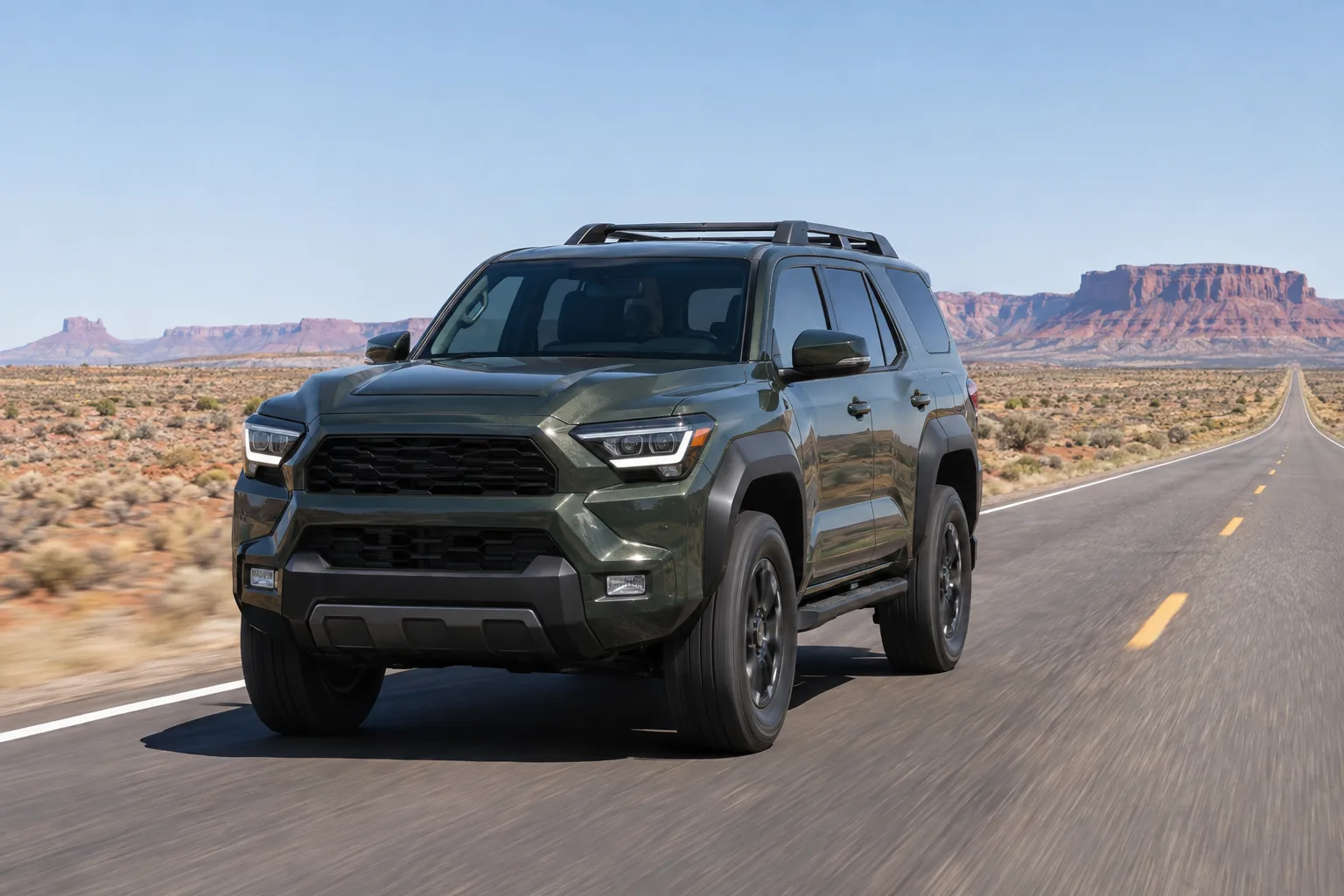
Dimensions · Space · Buying guides
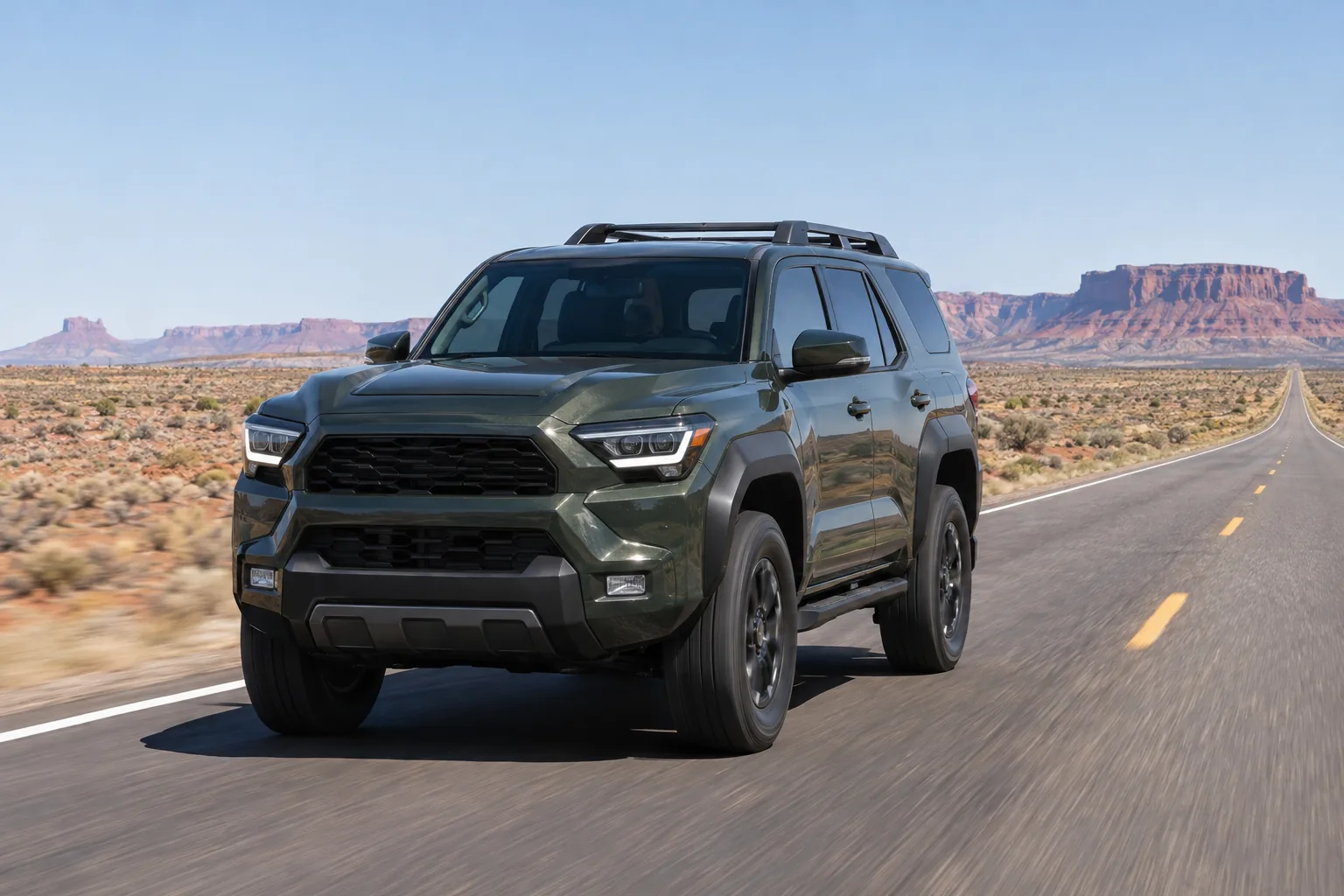
The sixth-generation Toyota 4Runner is EPA-rated at 21 to 23 mpg combined. The turbocharged i-FORCE gas models get 22 mpg combined with rear-wheel drive and 21 with 4WD. The i-FORCE MAX hybrid gets 23 combined. That's a big jump from the old 4.0-liter V6 4Runner, which EPA rated at just 17 mpg combined through 2024.
This guide lists the mileage for every 4Runner configuration, explains why the hybrid's advantage is smaller than you might expect, and shows what the numbers mean in range and fuel cost. Figures come from the EPA's fueleconomy.gov ratings and Toyota's 2027 4Runner specifications, checked 2026-11-14.
4Runner MPG by trim and drivetrain
Toyota lists these estimates for the 2027 4Runner. They match the EPA ratings for the 2025 and 2026 models, which use the same powertrains.
| 2027 4Runner configuration | Engine | Drive | MPG (city / hwy / combined) | Base MSRP |
|---|---|---|---|---|
| SR5 | i-FORCE 2.4L turbo | RWD | 20 / 26 / 22 | $43,490 |
| SR5 | i-FORCE 2.4L turbo | Part-time 4WD | 19 / 25 / 21 | $45,490 |
| TRD Sport | i-FORCE 2.4L turbo | RWD | 20 / 26 / 22 | $49,620 |
| TRD Sport | i-FORCE 2.4L turbo | Part-time 4WD | 19 / 25 / 21 | $51,620 |
| TRD Sport Premium | i-FORCE 2.4L turbo | RWD | 20 / 26 / 22 | $54,300 |
| TRD Sport Premium | i-FORCE 2.4L turbo | Part-time 4WD | 19 / 25 / 21 | $56,300 |
| TRD Off-Road | i-FORCE 2.4L turbo | Part-time 4WD | 19 / 25 / 21 | $51,560 |
| TRD Off-Road Premium | i-FORCE 2.4L turbo | Part-time 4WD | 19 / 25 / 21 | $56,660 |
| Limited | i-FORCE 2.4L turbo | RWD | 20 / 24 / 22 | $57,090 |
| Limited | i-FORCE 2.4L turbo | Full-time 4WD | 20 / 24 / 21 | $59,090 |
| TRD Off-Road i-FORCE MAX | 2.4L turbo hybrid | Part-time 4WD | 23 / 24 / 23 | $54,360 |
| TRD Off-Road Premium i-FORCE MAX | 2.4L turbo hybrid | Part-time 4WD | 23 / 24 / 23 | $59,460 |
| Limited i-FORCE MAX | 2.4L turbo hybrid | Full-time 4WD | 23 / 24 / 23 | $61,890 |
| Platinum | 2.4L turbo hybrid | 4WD | 23 / 24 / 23 | $64,850 |
| Trailhunter | 2.4L turbo hybrid | 4WD | 23 / 24 / 23 | $68,590 |
| TRD Pro | 2.4L turbo hybrid | 4WD | 23 / 24 / 23 | $68,870 |
The EPA's 2026 list also includes one hybrid 4WD rating of 22 / 24 / 23, without naming the trim. The combined figure is the same either way.
i-FORCE gas vs i-FORCE MAX hybrid
The hybrid's gain is real but modest: 23 mpg combined against 21 for a gas 4WD model. That's because the i-FORCE MAX is tuned for power, not maximum economy. It adds an electric motor between the engine and the 8-speed automatic, and Toyota rates it at up to 326 hp and 465 lb-ft. The gas i-FORCE is rated at up to 278 hp and 317 lb-ft.
Most of the hybrid's advantage shows up in city driving: 23 mpg against 19 to 20. On the highway, the gas models are as good or better, at 24 to 26 mpg against the hybrid's 24.
| 2026 4Runner (EPA) | MPG (city / hwy / combined) | Annual fuel cost (EPA) | Range on a full tank (EPA) |
|---|---|---|---|
| Gas 2WD | 20 / 24-26 / 22 | $2,750 | 418 mi |
| Gas 4WD | 19-20 / 24-25 / 21 | $2,850 | 399 mi |
| Hybrid 4WD | 22-23 / 24 / 23 | $2,600 | 437 mi |
On EPA's figures, the hybrid saves about $250 a year in fuel over a gas 4WD model. That alone won't repay the price difference. Choose the hybrid for its extra power and torque, and treat the fuel savings as a bonus.
Range and fuel tank
Every 2027 4Runner has a 19.0-gallon tank, according to Toyota. EPA estimates range on a full tank at 399 miles for gas 4WD models, 418 for gas 2WD and 437 for the hybrid.
 AI-generated editorial illustration of a 4Runner-style SUV at a rural fuel stop. It is not an official Toyota photo.
Those ranges assume combined driving. Off-road driving, low-range crawling, towing and big all-terrain tires all reduce them. On remote trips, plan fuel stops well before the gauge gets low.
New 4Runner vs the old V6
The 2024 and earlier 4Runner used a 4.0-liter V6 and a 5-speed automatic. EPA rated it at 16 city / 19 highway / 17 combined in both 2WD and 4WD form. Compared with that, the new gas 4WD model gains 4 mpg combined and the hybrid gains 6.
If you're trading in an older 4Runner and drive 15,000 miles a year, going from 17 to 21 mpg combined uses roughly 170 fewer gallons a year. Going to 23 mpg saves roughly 230 gallons.
Towing, seating and what affects mileage
Toyota lists a maximum tow rating of 6,000 lb for the 2027 lineup. See 4Runner towing capacity for year-specific limits and 4Runner trim levels for equipment. Towing a trailer near that limit will cut fuel economy sharply. Expect well below the EPA figures and plan shorter legs between fuel stops.
Toyota lists five seats as standard. The 2027 SR5 and Limited are listed with available seven-passenger seating; the TRD Pro is not.
Other things that lower 4Runner mileage:
- Larger or more aggressive tires than the factory fitment
- Roof racks, cargo boxes and lift kits, which add drag
- Driving in 4WD on pavement when it isn't needed (part-time 4WD models)
- Extended idling at trailheads and in camp
How the 4Runner compares
The 4Runner is a body-on-frame SUV built for off-road use, so it can't match the 35 mpg combined of the Highlander Hybrid. For Toyota's five-seat off-roader, compare Land Cruiser vs. 4Runner. For a family SUV that rarely leaves pavement, compare 4Runner vs. Highlander or see Highlander vs Grand Highlander or the Grand Highlander MPG guide. For Toyota's other off-roader with the same hybrid powertrain, see Land Cruiser MPG.
Toyota 4Runner MPG FAQs
What is the 4Runner's gas mileage? The 2025-2027 4Runner is rated 21 to 23 mpg combined: 22 for gas RWD, 21 for gas 4WD and 23 for the i-FORCE MAX hybrid.
Is the 4Runner hybrid worth it for mileage? Only partly. It gains 2 mpg combined and about $250 a year in EPA fuel cost over a gas 4WD model. Its main benefit is more power and torque.
What mpg did the old 4Runner get? The 2024 4Runner with the 4.0-liter V6 was rated 16 / 19 / 17 mpg.
How far can a 4Runner go on a tank? EPA estimates about 400 to 440 miles of combined driving from the 19.0-gallon tank, depending on the version.