Dimensions · Space · Buying guides
For U.S. vehicles; figures from Honda's 2026 HR-V specifications release and 2026 CR-V specifications, checked 2026-11-04.
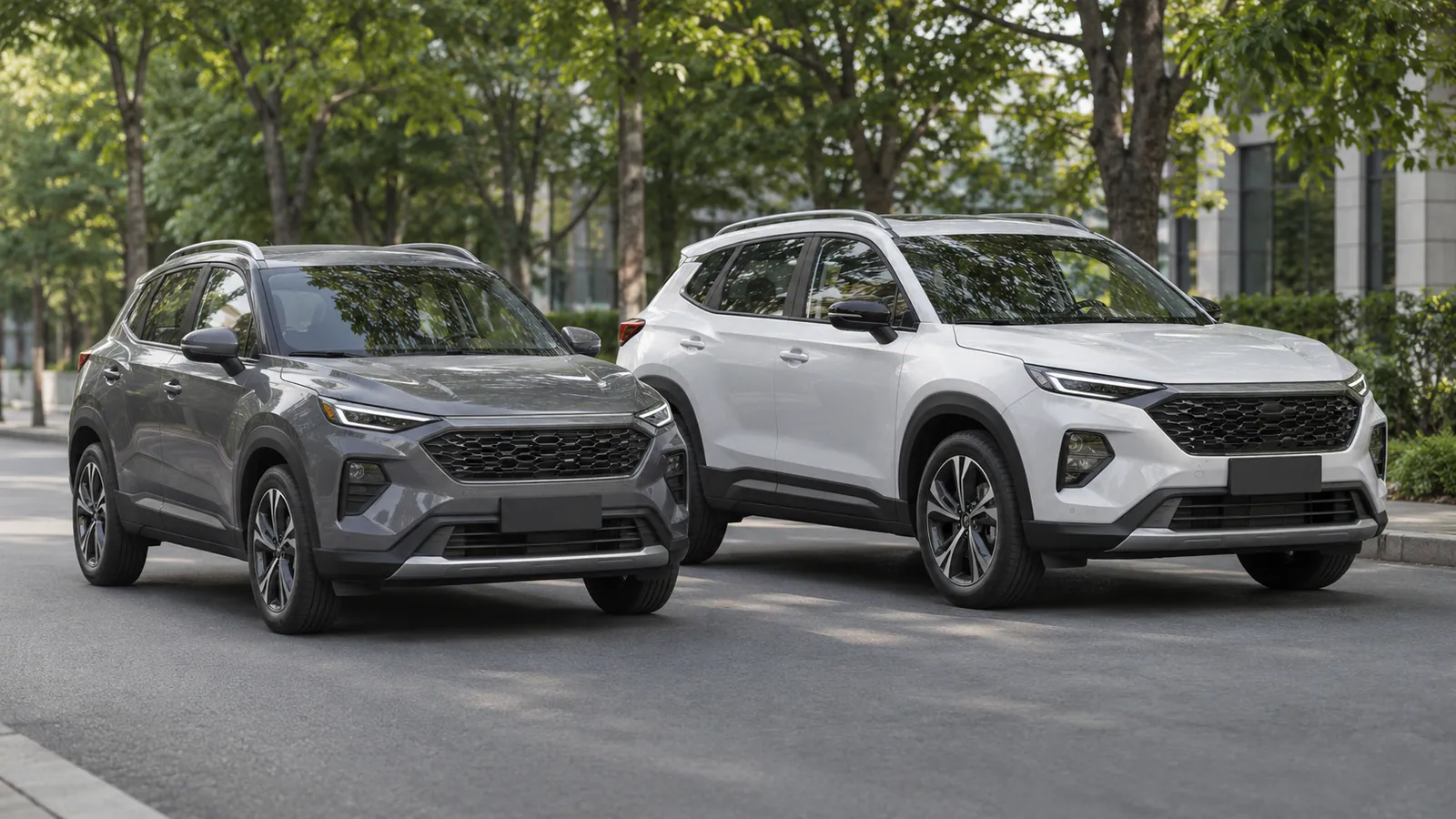
The HR-V is Honda's smallest SUV and the CR-V is the next size up. The gap is 5.0 inches in length, but it shows up most clearly in rear legroom, cargo space and engine choices. This guide uses Honda's published 2026 figures to show what you get for the extra size.
Quick comparison table
| 2026 spec | Honda HR-V | Honda CR-V |
|---|---|---|
| Length | 179.8 in | 184.8 in |
| Wheelbase | 104.5 in | 106.3 in |
| Width | 72.4 in | 73.5 in |
| Engine | 2.0L four-cylinder, 158 hp | 1.5L turbo, 190 hp (gas); two-motor hybrid, 204 hp |
| Drivetrain | FWD; AWD available | FWD or AWD; some hybrids AWD only |
| Cargo, seats up / max | 24.4 / 55.1 cu ft | 39.3 / 76.5 cu ft gas; 36.3 / 71.8 cu ft hybrid |
| Rear legroom | 37.7 in | 41.0 in |
| Towing | Not listed on Honda's page | 1,500 lb gas; 1,000 lb hybrid |
Size and dimensions
The CR-V is 5.0 inches longer, 1.1 inches wider and rides on a wheelbase 1.8 inches longer. Both are small enough for most garages, but the HR-V is the easier fit in tight parking.
| 2026 dimension | Honda HR-V | Honda CR-V |
|---|---|---|
| Length | 179.8 in | 184.8 in |
| Wheelbase | 104.5 in | 106.3 in |
| Width | 72.4 in | 73.5 in |
| Height | 63.4 to 63.8 in | 66.2 in FWD; 66.5 in AWD |
| Ground clearance | 7.0 in (7.3 in Sport) | 7.8 in FWD; 8.2 in AWD |
| Curb weight | 3,159 to 3,336 lb | 3,472 to 3,926 lb |
| Turning diameter | 35.1 ft (37.1 ft Sport) | Not shown on the CR-V page |
| The CR-V stands 2.4 to 3.1 inches taller, which helps with ground clearance and cabin volume. See Honda SUV models by size for where both sit in the full lineup. |
Powertrain and performance
The HR-V has one engine: a 2.0-liter four-cylinder with 158 hp and 138 lb-ft, paired with a CVT. Front-wheel drive is standard and Real-Time AWD is available.
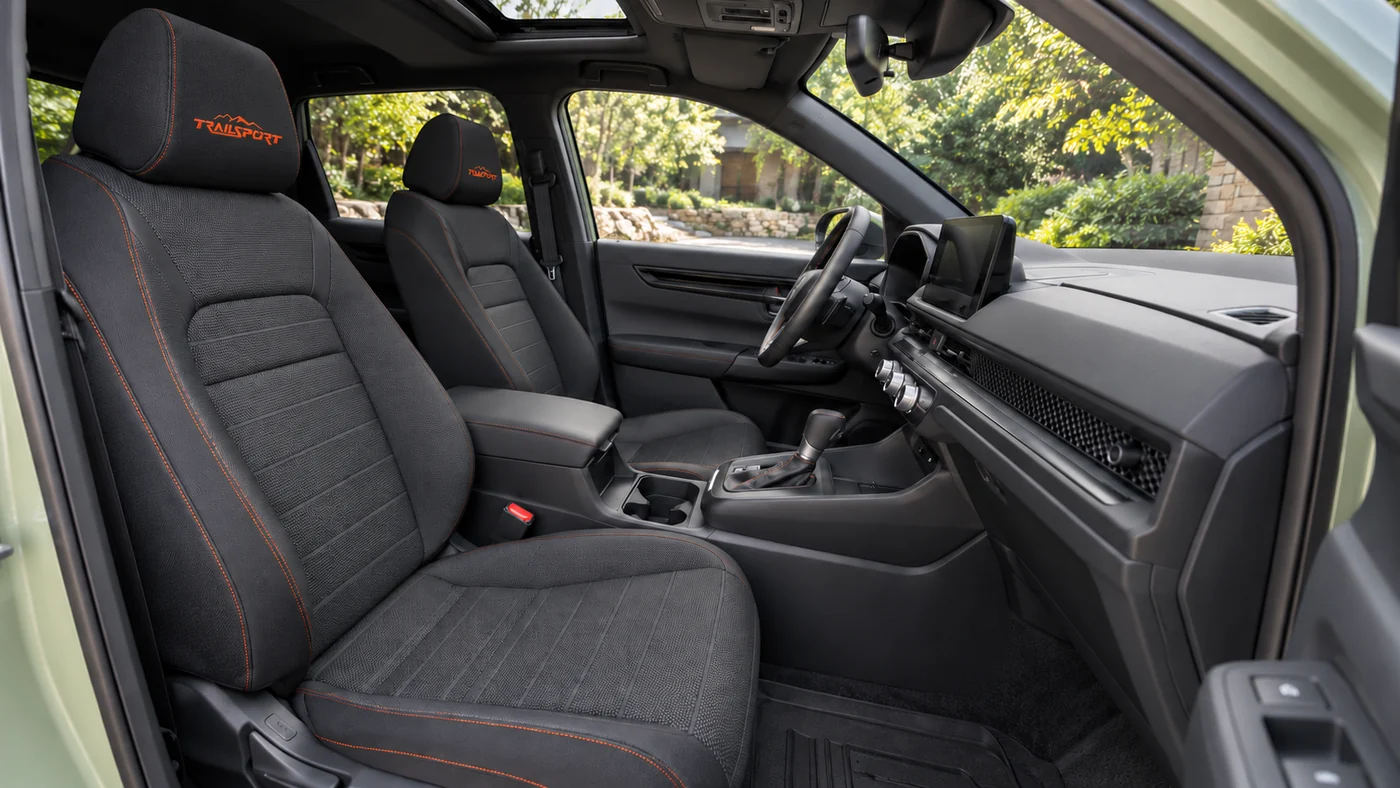
The CR-V has two. Gas LX, EX and EX-L models use a 1.5-liter turbo with 190 hp and 179 lb-ft. The Sport Hybrid, TrailSport Hybrid, Sport-L Hybrid and Sport Touring Hybrid use a 2.0-liter engine plus an electric motor for 204 hp total system output. TrailSport Hybrid and Sport Touring Hybrid are AWD only.
The CR-V therefore gives you 32 more horsepower than the HR-V in gas form, and 46 more with the hybrid. See the 2026 CR-V profile for the full powertrain list.
Fuel economy
| EPA mpg (city/hwy/combined) | HR-V | CR-V gas | CR-V hybrid |
|---|---|---|---|
| FWD / 2WD | 26/32/28 | 28/33/30 | 43/36/40 |
| AWD | 25/30/27 | 27/31/29 | 40/34/37 (TrailSport 38/33/35) |
| Even the gas CR-V beats the HR-V on the EPA figures above, and the hybrid is well ahead. Both tanks hold 14.0 gallons of regular unleaded. |
Pricing
The SUVLook CR-V profile lists a CR-V LX starting MSRP of $30,920 before destination, with EX at $33,150, EX-L at $35,400 and Sport Hybrid at $35,630. Honda's HR-V specification release does not include pricing, and we have no verified 2026 HR-V price, so none is shown here. Check Honda's current price list for the HR-V LX, Sport and EX-L.
Cabin and rear-seat room
| Interior room (2026) | Honda HR-V | Honda CR-V |
|---|---|---|
| Legroom, front / rear | 41.9 / 37.7 in | 41.3 / 41.0 in |
| Headroom, front | 39.4 in LX and Sport; 38.4 in EX-L | 40.0 in LX; 38.2 in other trims |
| Headroom, rear | 38.0 in | 38.2 in |
| Shoulder room, front / rear | 56.6 / 55.2 in | 57.9 / 55.9 in |
| EPA passenger volume | 98.7 cu ft LX, Sport; 97.3 cu ft EX-L | 106.0 cu ft LX; 103.5 cu ft other trims |
| Up front the two are close; the HR-V actually has 0.6 inch more front legroom. The difference is behind the driver: the CR-V's 41.0 inches of rear legroom is 3.3 inches more than the HR-V's 37.7. If adults sit in back often, that is the number to focus on. The CR-V interior dimensions guide covers fit in more detail. |
Cargo space
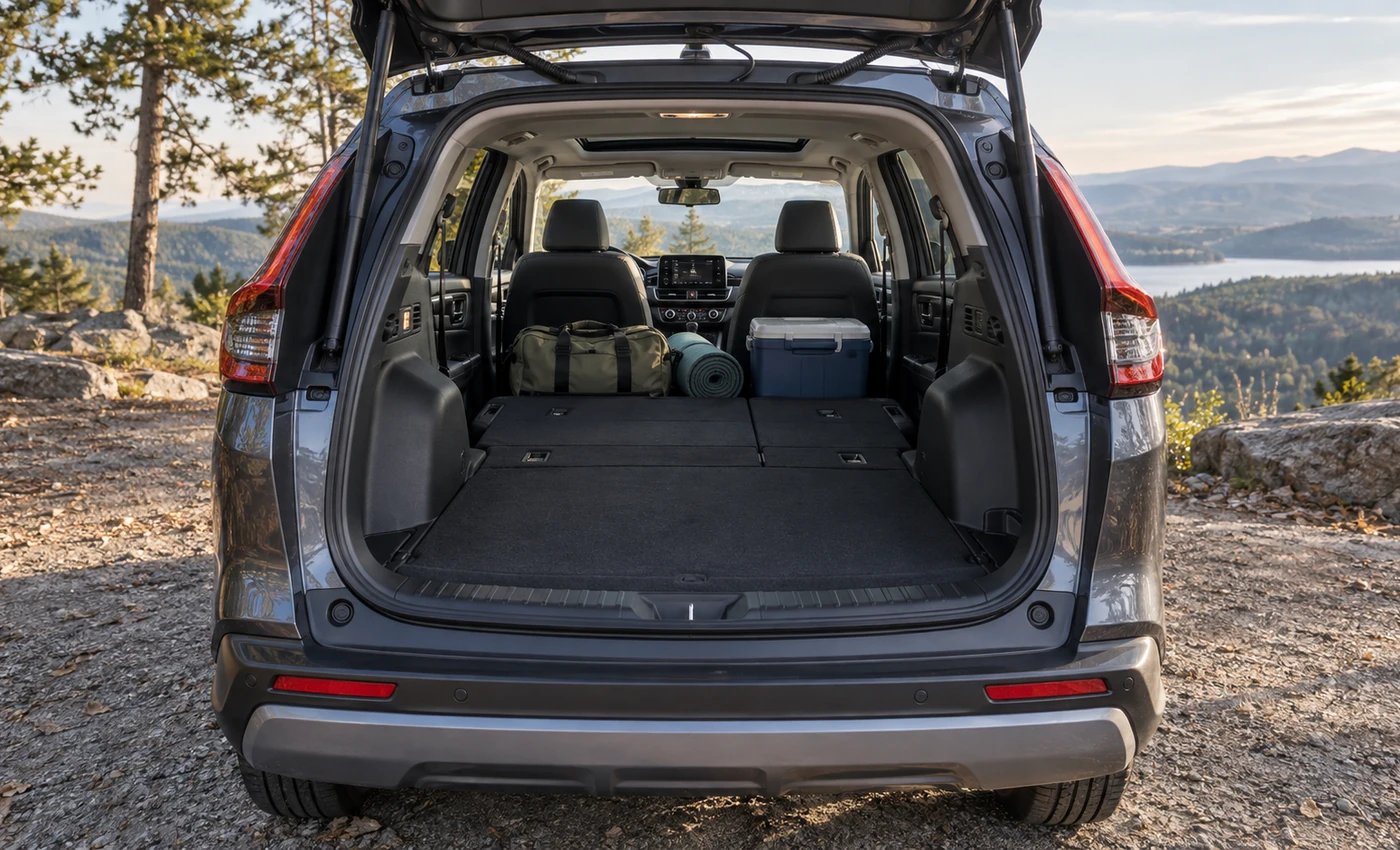
Honda lists 24.4 cubic feet of cargo for the HR-V, with 55.1 cubic feet maximum. The CR-V lists 39.3 and 76.5 cubic feet for gas models and 36.3 and 71.8 for hybrids.
That is 11.9 to 14.9 cubic feet more behind the rear seat and 16.7 to 21.4 cubic feet more at maximum in the CR-V. Both have 60/40 split-folding rear seats per Honda's pages. As always, cubic feet do not prove that a bulky item fits; measure the opening. See the CR-V cargo dimensions guide.
Towing and capability
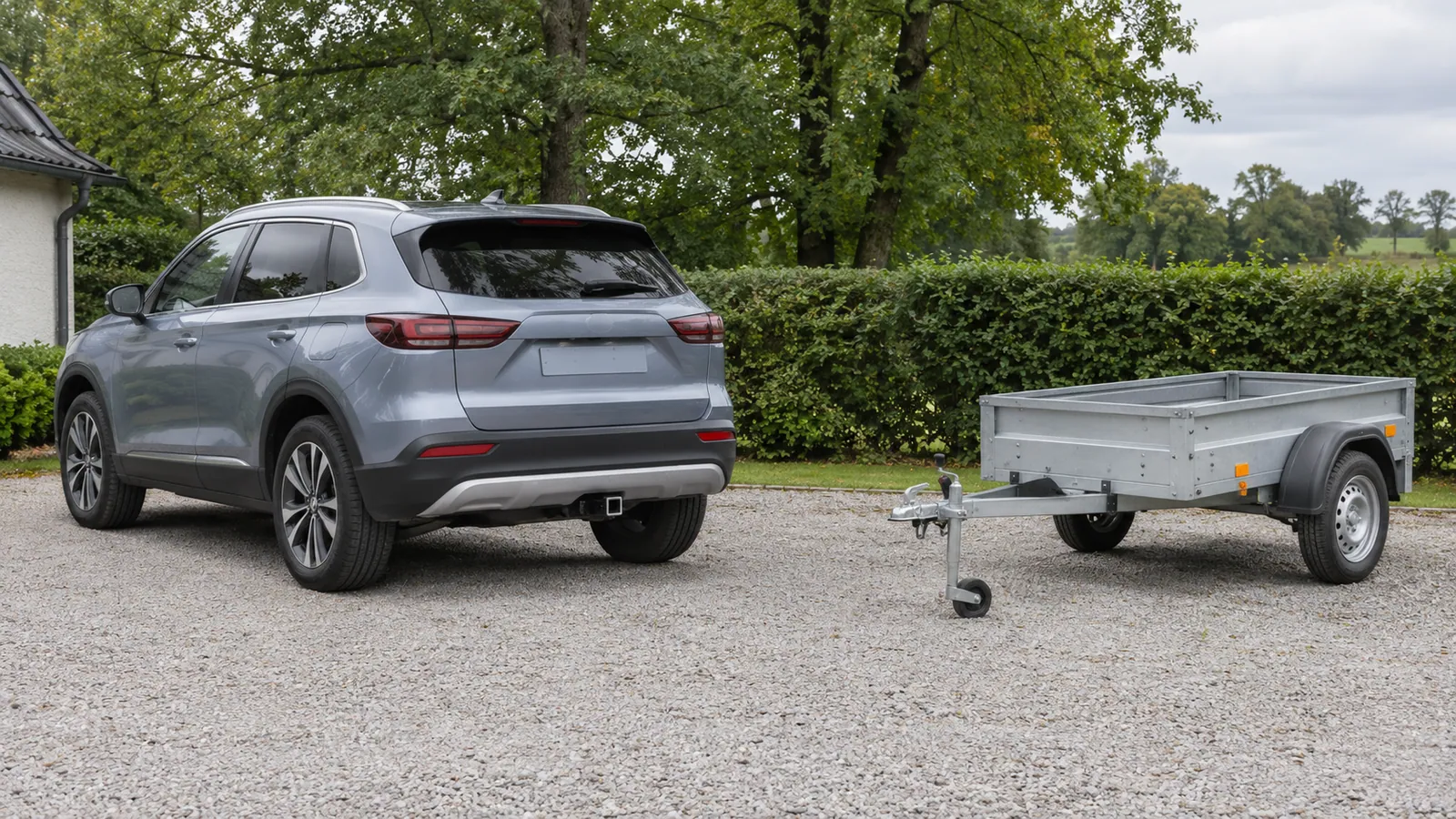
Honda's HR-V specification page does not list a towing capacity, so we cannot give one. The CR-V is rated at 1,500 lb for gas models and 1,000 lb for hybrids. Confirm the rating for your exact vehicle in the owner's manual and the door-jamb label before towing anything. If towing matters, see SUV towing capacity for larger options.
On ground clearance, the CR-V has 7.8 inches (FWD) or 8.2 inches (AWD), against 7.0 to 7.3 inches for the HR-V. The CR-V TrailSport Hybrid adds standard AWD and all-terrain tires.
Safety and technology
Honda lists Honda Sensing as standard on the HR-V, including collision mitigation braking, road departure mitigation, adaptive cruise control with low-speed follow and lane keeping assist. The HR-V also gets a 9-inch touchscreen, wireless Apple CarPlay and Android Auto, and a wireless charger on all trims. Blind Spot Information and Rear Cross Traffic Monitor start at the Sport.
The CR-V also lists Honda Sensing as standard and wireless Apple CarPlay and Android Auto; Sport Touring Hybrid adds Google built-in and Bose audio, per the CR-V profile. That profile also carries IIHS results where applicable to this generation; check IIHS for the current ratings before relying on any one.
Which should you choose?
Choose the HR-V if you mostly drive in the city, want the smaller footprint and the lighter 3,159 to 3,336 lb body, and rarely carry adults in back.
Choose the CR-V if you need real rear-seat room, 39.3 or 36.3 cubic feet behind the seat, or the hybrid's efficiency and 204 hp. Expect to pay more; check the exact trim price with Honda.
Check both if you need all-wheel drive: it is available on both, and standard on some CR-V hybrids.
Trims and equipment
The HR-V comes in LX, Sport and EX-L. All three share the same engine and have Honda Sensing, a 9-inch touchscreen and a 7-inch digital meter as standard. Sport adds Blind Spot Information, Rear Cross Traffic Monitor, remote start and heated front seats. EX-L adds leather-trimmed seats, an 8-way power driver's seat, dual-zone climate control and a one-touch power moonroof, per Honda's HR-V release.
The CR-V splits into gas LX, EX and EX-L and four hybrids: Sport, TrailSport, Sport-L and Sport Touring. Honda's CR-V specifications show curb weights from 3,472 lb for the LX FWD up to 3,926 lb for the Sport Touring Hybrid.
Wheels, spare tire and everyday details
The HR-V rides on 17-inch alloy wheels with 215/60R17 tires on the LX and 18-inch wheels with 225/55R18 tires on the Sport and EX-L. Honda lists a compact T135/90D17 spare. Tire size affects replacement cost and ride, so check the exact trim you are shopping.
Curb weight is the other everyday difference. The HR-V ranges from 3,159 lb (LX FWD) to 3,336 lb (EX-L AWD). The CR-V gas models run from 3,472 to 3,635 lb, and the hybrids from 3,752 to 3,926 lb. A lighter vehicle is easier to maneuver, but weight alone does not tell you how either one drives, so take both on the same test route.
What to check before you buy
- Sit behind yourself. Set the driver's seat for your height, then sit in the rear. The 3.3-inch rear legroom gap is the clearest difference between the two.
- Choose gas or hybrid. On the CR-V, the hybrid gains mpg but gives up 3.0 cubic feet behind the seat compared with gas.
- Check headroom with the roof. Moonroof trims list less headroom in both models.
- Confirm AWD availability. It depends on trim for both SUVs.
- Get the price in writing. We could not verify an HR-V price, so compare real quotes for the trims you want.
Frequently asked questions
Is the Honda CR-V bigger than the HR-V?
Yes. The 2026 CR-V is 184.8 inches long on a 106.3-inch wheelbase. The HR-V is 179.8 inches long on a 104.5-inch wheelbase.
Which has more cargo space, HR-V or CR-V?
The CR-V. Honda lists 39.3 cubic feet behind the seat (36.3 for hybrid) against 24.4 for the HR-V, and 76.5 (71.8 hybrid) against 55.1 at maximum.
Does the HR-V come with a hybrid?
Honda's 2026 HR-V specification release lists only a 2.0-liter gas engine. The CR-V offers a hybrid.
Which gets better gas mileage?
The CR-V. The gas CR-V is rated 28/33/30 mpg in FWD form against 26/32/28 for the HR-V, and the hybrid is rated up to 43/36/40.
Can the HR-V tow?
Honda's HR-V specification page does not publish a towing capacity. The CR-V is rated 1,500 lb (gas) or 1,000 lb (hybrid).
Do both have all-wheel drive?
Yes. AWD is available on the HR-V, and on most CR-V trims; TrailSport Hybrid and Sport Touring Hybrid are AWD only.
Sources
- Honda newsroom: 2026 HR-V specifications and features
- Honda Information Center: 2026 CR-V specifications
- Honda: 2026 CR-V overview
- IIHS: Honda CR-V ratings
- SUVLook: 2026 Honda CR-V profile (starting prices, shoulder room, technology)