Dimensions · Space · Buying guides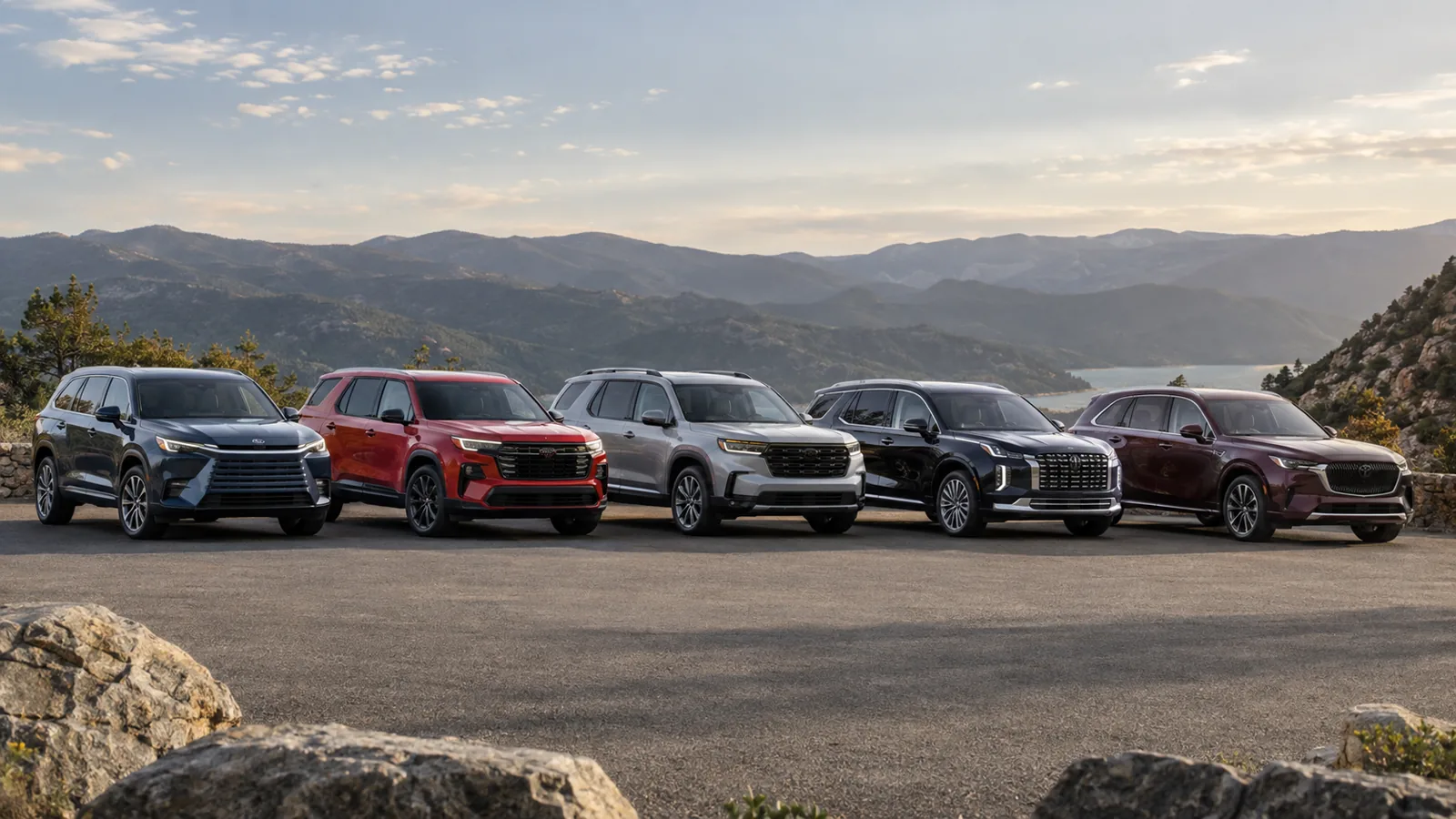
The real test of a three-row SUV is what happens when the family and the luggage need to travel together. A roomy third row isn't much help if using it leaves nowhere for your bags. For 2026, the choices below offer different answers to that problem, depending on how often you fill every seat.
For this guide, SUVLook compared current U.S.-market manufacturer specifications for third-row room, cargo capacity with the third row in use, maximum cargo space, seating layouts, towing capacity, powertrain choices and starting MSRP. We gave extra weight to measurements that matter when a family is actually using all three rows. Published dimensions can vary by trim and measuring method, so the numbers below are tied to each manufacturer's 2026 U.S. specifications.
The quick answer
If you want one 2026 three-row SUV that combines adult-friendly third-row space, useful cargo room and multiple powertrains, the Toyota Grand Highlander is the most balanced place to start. The Chevrolet Traverse is the cargo-space standout, the Honda Pilot has one of the most flexible second-row arrangements, the redesigned Hyundai Palisade packs a lot of family comfort into its price, and the Mazda CX-90 is the choice here for buyers who value standard all-wheel drive and a more driver-focused powertrain layout.
Start with the trip you make most often. If seven people travel together regularly, look closely at luggage space with every row upright. If the third row is mainly for weekend visitors, folded-seat space may matter more. The table shows both, so you can compare the arrangement you'll actually use.
2026 three-row SUV comparison
| Model | Starting MSRP | Seats | Cargo behind 3rd row | Maximum published cargo | 3rd-row legroom | Max towing | Best fit |
|---|---|---|---|---|---|---|---|
| Toyota Grand Highlander | $42,260 | Up to 8 | 20.6 cu ft | 97.5 cu ft | 33.5 in | 5,000 lb | Balanced family space |
| Chevrolet Traverse | $40,800 | 7 or 8 | 22.9 cu ft | 98.0 cu ft | 32.3 in | 5,000 lb | Cargo with all rows in use |
| Honda Pilot | $42,395 | 7 or 8 | 18.6 cu ft standard | 87.0 cu ft standard; up to 113.7 max published | 32.5 in | 5,000 lb AWD | Flexible seating |
| Hyundai Palisade | $39,435 | 7 or 8 | 19.1 cu ft | 86.7 cu ft | 32.1 in | Up to 5,000 lb gas | Comfort and value |
| Mazda CX-90 | $39,300 | 7 or 8 | 14.9-15.9 cu ft | 74.2-75.2 cu ft | 30.4 in | 5,000 lb properly equipped | Standard AWD and driving feel |
MSRPs exclude destination charges, taxes and options. Cargo figures are manufacturer-published numbers and are not always measured with identical methods. Honda, in particular, publishes both standard and maximum cargo measurements, so its highest number should not be treated as a direct one-number win over every rival.
How we picked the five SUVs
The main question was not simply which SUV is biggest. We looked first at third-row usefulness and cargo space behind the third row, because those are the two measurements that expose the compromise in many three-row vehicles. A huge maximum cargo figure is less helpful if the vehicle has almost no luggage room when seven passengers are aboard.
We then checked seating flexibility, starting price, towing capability and powertrain choice. We also favored vehicles whose current 2026 specifications are clearly published by the U.S. manufacturer. That matters because model-year changes can alter engines, dimensions and standard equipment even when a nameplate looks similar to the previous year.
This is a specifications-based buying guide. SUVLook has not physically tape-measured these five vehicles side by side, so we do not present manufacturer dimensions as our own measurements. Before buying, test the exact trim with your child seats, passengers and normal cargo.
1. Toyota Grand Highlander: best all-around family space
The 2026 Toyota Grand Highlander is the easiest recommendation here for a family that expects to use all three rows often. Toyota lists 33.5 inches of third-row legroom, which is generous for the class, and the cabin can be configured for seven with second-row captain's chairs or eight with a bench. Toyota also publishes 20.6 cubic feet of cargo space behind the third row and up to 97.5 cubic feet with the rear seats folded.
That combination is more useful than a maximum-cargo number by itself. With all seats up, 20.6 cubic feet leaves meaningful room for groceries, backpacks or a few travel bags. The third-row legroom figure is also the largest among the five models in this comparison.
Toyota gives the Grand Highlander another advantage: powertrain choice. The 2026 lineup offers gas, Hybrid and Hybrid MAX versions. Buyers who prioritize fuel use can look at the regular hybrid, while Hybrid MAX shifts the emphasis toward stronger acceleration. Toyota rates gas and Hybrid MAX versions for up to 5,000 pounds of towing, while the regular hybrid is rated lower at 3,500 pounds.
The tradeoff is price. At a published starting MSRP of $42,260, it is not the least expensive SUV in this group, and upper hybrid trims move well beyond the entry figure. But the basic packaging is strong before adding expensive options.
Toyota's current U.S. specifications are available on the 2026 Grand Highlander page and Toyota's 2026 model-year newsroom release.
Who should buy it?
Choose the Grand Highlander if you regularly carry adults or growing teenagers in the third row, want useful cargo room with that row raised, or want a hybrid without dropping to a smaller two-row SUV.
2. Chevrolet Traverse: best cargo space with all three rows in use
The 2026 Chevrolet Traverse makes the strongest cargo case in this group. Chevrolet publishes 22.9 cubic feet behind the third row, 56.6 cubic feet behind the second row and 98 cubic feet of maximum cargo volume. The first number is the one that matters most for a road trip with a full cabin: among these five, the Traverse has the most published space left for luggage when the third row is in use.
The Traverse can seat eight in LT form with the available second-row bench; Z71, RS and High Country configurations seat seven. Third-row legroom is about 32.3 inches, which puts it close to the Honda Pilot and behind the Grand Highlander, but still in the usable range for this class.
Chevrolet uses a 2.5-liter turbocharged four-cylinder and rates the Traverse to tow up to 5,000 pounds when properly equipped. The cabin also centers on a 17.7-inch infotainment display, and Super Cruise is available on selected trims.
The Traverse starts at $40,800 before destination and options. That places it below the Grand Highlander and Pilot while delivering more published behind-third-row cargo room than either.
See Chevrolet's current figures on the 2026 Traverse page.
Who should buy it?
The Traverse is the practical pick for families who fill the third row and still need stroller, sports-gear or suitcase space. It also makes sense for buyers who want a roomy three-row SUV without stepping up to a Tahoe- or Suburban-size body.
3. Honda Pilot: best seating flexibility
Honda's 2026 Pilot earns its place here through flexible packaging. Most trims can seat eight, while TrailSport uses second-row captain's chairs for seven. On trims with Honda's removable second-row center seat, the center section can be taken out and stored in the vehicle, letting the owner switch between a bench-style layout and a more open path to the third row.
Third-row legroom is 32.5 inches across the lineup. Honda lists 18.6 cubic feet of standard cargo volume behind the third row and a larger maximum figure of 21.8 or 22.4 cubic feet depending on trim. Behind the first row, Honda lists 87.0 cubic feet standard and up to 113.7 cubic feet maximum depending on trim and measurement conditions. Because Honda publishes two definitions, compare its 87.0-cubic-foot standard figure with rivals' conventional maximum-cargo figures cautiously.
Every 2026 Pilot uses a 285-horsepower V6 and a 10-speed automatic. Front-wheel-drive versions are rated to tow up to 3,500 pounds; AWD versions can reach 5,000 pounds. The starting MSRP is $42,395.
The Pilot is not the cargo leader with all rows raised, but the second-row arrangement is unusually adaptable. That can matter more than a few cubic feet if your routine switches between child seats, adult passengers and easy third-row access.
Honda publishes trim-by-trim dimensions on the 2026 Pilot specifications page and current pricing on the Pilot model page.
Who should buy it?
The Pilot works especially well for families that need eight seats some days and easier third-row access on others. It is also a straightforward choice for buyers who still prefer a naturally aspirated V6.
4. Hyundai Palisade: best comfort and feature value
The redesigned 2026 Hyundai Palisade grew in useful places. Hyundai lists 19.1 cubic feet of cargo space behind the third row, 46.3 cubic feet behind the second row and 86.7 cubic feet behind the first row. Third-row legroom is 32.1 inches. An eight-passenger bench is available, while seven-seat layouts use second-row captain's chairs.
The gas Palisade starts at $39,435, the second-lowest entry price in this group, and uses a 3.5-liter V6 rated at 287 horsepower. Hyundai also added a Palisade Hybrid for 2026 with a turbocharged 2.5-liter hybrid system rated at 329 horsepower. The hybrid gives shoppers another way to reduce fuel use without giving up a three-row body, although its price starts above the gas model.
Hyundai has pushed the Palisade toward a more premium cabin with large displays and available comfort features, which makes the lower trims worth comparing against more expensive versions of the Grand Highlander and Pilot rather than judging it only by base price.
One practical detail: towing differs by powertrain. The gas model is the better choice if your target is the highest Palisade tow rating, while Hyundai rates the hybrid at up to 4,000 pounds with trailer brakes. Check the exact trim, hitch equipment and owner's manual before planning around trailer weight.
Current U.S. pricing and equipment are on Hyundai's 2026 Palisade page, with trim specifications on Hyundai's comparison page.
Who should buy it?
The Palisade is a strong value for a family that wants a comfortable, upscale-feeling cabin, seven- or eight-seat flexibility and the option of either gas or hybrid power.
5. Mazda CX-90: best for standard AWD and driving feel
The Mazda CX-90 takes a different approach. Its long hood, longitudinal powertrain layout and standard i-ACTIV AWD give it a more rear-biased, driving-focused character than the typical family crossover. The 2026 inline-six model starts at $39,300, the lowest published base MSRP among these five, and the entry 3.3 Turbo makes 280 horsepower.
The space tradeoff is clear. Depending on the third-row seating configuration, Mazda publishes 14.9 to 15.9 cubic feet behind the third row and 74.2 to 75.2 cubic feet with the second and third rows folded. Third-row legroom is about 30.4 inches. Those figures trail the other four vehicles here, so a buyer who carries seven people plus luggage every week should look closely at the Traverse or Grand Highlander first.
The CX-90 can seat seven or eight depending on the second-row layout. Upper inline-six trims can tow up to 5,000 pounds when properly equipped, while the plug-in hybrid is rated lower. Mazda also offers a stronger Turbo S inline-six and a PHEV, giving the CX-90 one of the broadest performance choices in the class.
Mazda's current 2026 CX-90 page lists pricing and towing, while its CX-90 gallery specifications detail the two cargo-volume configurations.
Who should buy it?
Pick the CX-90 if you want standard AWD, care about steering and powertrain feel, and only need the third row or full passenger-and-cargo load occasionally. It is less convincing when maximum family space is the first priority.
Which 2026 three-row SUV is best for your use?
| Priority | Best starting point | Why |
|---|---|---|
| Most cargo behind the third row | Chevrolet Traverse | 22.9 cu ft published behind row three |
| Most third-row legroom here | Toyota Grand Highlander | 33.5 in published third-row legroom |
| Flexible second-row seating | Honda Pilot | Available removable/stowable center seat on applicable trims |
| Lower-price premium family feel | Hyundai Palisade | $39,435 starting MSRP with a roomy redesigned cabin |
| Standard AWD and driver focus | Mazda CX-90 | i-ACTIV AWD standard on inline-six models |
| Hybrid choice with strong family space | Toyota Grand Highlander | Regular Hybrid and Hybrid MAX options |
The right answer can change with trim. A panoramic roof can change headroom. Captain's chairs reduce seat count but improve the walkway to row three. Wheel size can affect ride quality. Towing packages and hitch hardware can change the usable tow rating. Always compare the exact configuration you plan to buy.
What to check before you buy a three-row SUV
Bring the people who will actually use the third row. A legroom number does not tell you seat-cushion height, foot room under the second row or how easy it is to climb in. An adult who fits comfortably in one 32-inch third row may dislike another with a lower cushion.
Test cargo space with the third row raised. If you normally travel with six or seven people, the maximum cargo figure is almost irrelevant. The useful number is the space remaining behind row three, plus the shape and height of that cargo area.
Install your child seats before signing. Second-row captain's chairs can make row-three access easier, but a bench may be better when you need eight seats. A child seat can also block the folding or sliding motion you expected to use for third-row entry.
Check the towing configuration, not just the headline rating. The advertised maximum may require AWD, a specific trim, factory or dealer-installed hardware, or a particular powertrain. Payload also falls as passengers and luggage are added.
Compare out-the-door prices. The MSRPs in this guide exclude destination, taxes, registration and options. A vehicle with a lower base price can become more expensive once AWD, captain's chairs or the technology package you want is added.
Frequently asked questions
What is the best 3-row SUV for cargo space in 2026?
Among the five midsize three-row SUVs compared here, the 2026 Chevrolet Traverse has the largest manufacturer-published cargo volume behind the third row at 22.9 cubic feet and up to 98 cubic feet maximum. If you routinely use all three rows, the behind-third-row figure is the more useful one.
Which 3-row SUV has the most third-row legroom?
In this comparison, the 2026 Toyota Grand Highlander has the largest published third-row legroom figure at 33.5 inches. The Honda Pilot follows at 32.5 inches and the Chevrolet Traverse is about 32.3 inches. Seat height, foot room and access still matter, so sit in the exact vehicle before buying for tall adults.
Which 2026 three-row SUVs seat eight?
All five models in this guide can be configured for eight passengers in at least some trims or seating layouts. The exact availability differs: captain's-chair versions generally reduce capacity to seven, while a second-row bench provides the eighth seat.
Which 3-row SUVs have captain's chairs?
The Toyota Grand Highlander, Chevrolet Traverse, Honda Pilot, Hyundai Palisade and Mazda CX-90 all offer a seven-seat layout with second-row captain's chairs in at least part of their 2026 lineups. Availability depends on trim, so check the configuration rather than assuming every version has the same second row.
Is the Honda Pilot or Toyota Grand Highlander roomier in the third row?
By published legroom, the Grand Highlander has the advantage: 33.5 inches versus 32.5 inches in the Pilot. The Pilot counters with a flexible available second-row center seat and strong headroom. For adult passengers, the better fit can still depend on seating posture and the position of the second row.
Is a three-row SUV a good replacement for a minivan?
It can be, especially if you need AWD, extra ground clearance or higher towing capacity. A minivan usually has easier sliding-door access and more efficient interior packaging, though. Families with three child seats or frequent third-row use should compare both body styles before deciding.
Final buying note
For most shoppers, the best 2026 three-row SUV is the one that still works when every seat is occupied. The Grand Highlander gives the strongest overall balance of third-row room, cargo capacity and powertrain choice. The Traverse is the space specialist. The Pilot is the flexible one. The Palisade makes a strong comfort-and-value case. The CX-90 gives up some cargo room in exchange for standard AWD and a more distinctive driving layout.
Use the numbers to narrow the list, then test the exact trim with the people and cargo you carry most often. That final fit check is more valuable than any single ranking.