Dimensions · Space · Buying guides
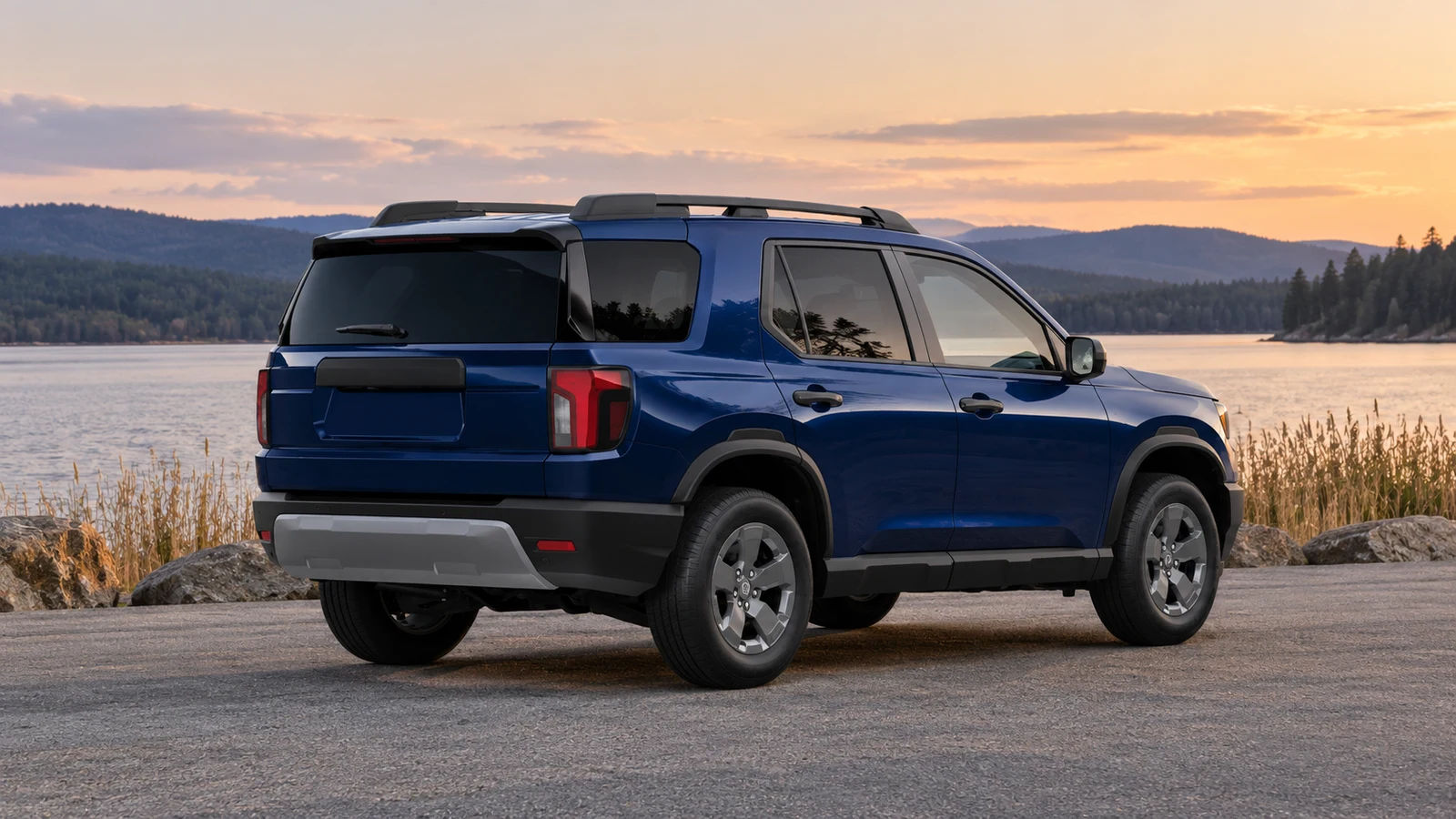
The 2026 Honda Passport has 44.0 cubic feet behind its second row, according to Honda's U.S. specifications. With that row folded, Honda publishes both standard and maximum figures. Do not treat 83.8 and 104.6 cubic feet as interchangeable descriptions of an ordinary rectangular cargo floor.
The important buying question is what can fit with the passengers and front-seat positions you will actually use. This guide explains Honda's labels, the trim exception, and the measurements still needed for a stroller, crate or bulky box.
Sources were reviewed October 24, 2026. This is a document-based guide to U.S. 2026 models; SUVLook has not physically measured the vehicle or tested luggage in it.
The 2026 cargo table, with Honda's labels preserved
| 2026 U.S. trim family | Behind second row | Behind first row: standard / max |
|---|---|---|
| RTL and TrailSport, including listed package variants | 44.0 cu. ft. | 83.8 / 104.6 cu. ft. |
| TrailSport Elite, including its listed package variant | 44.0 cu. ft. | 83.2 / 104.4 cu. ft. |
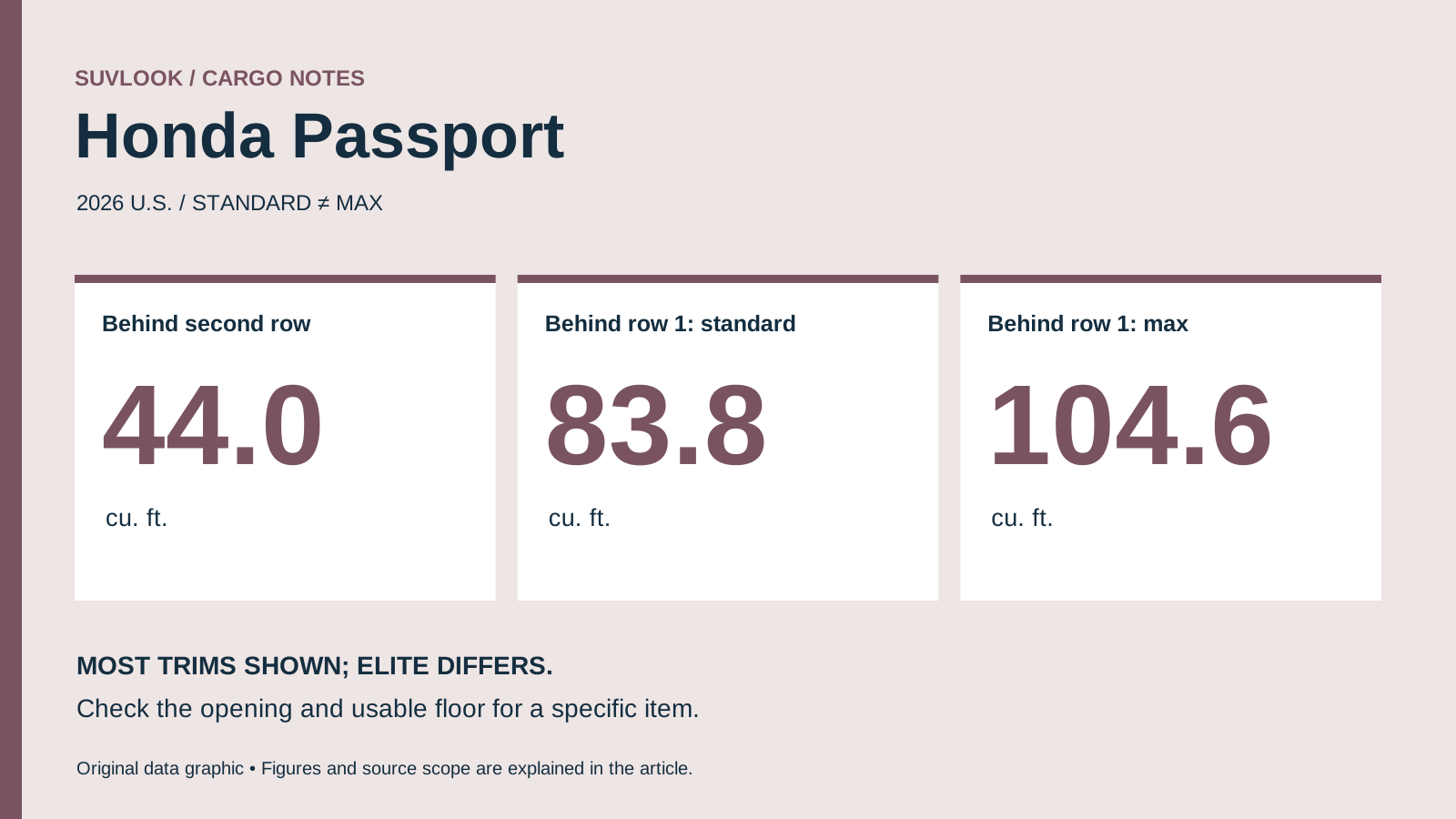 |
Summary graphic of the 2026 Passport cargo volumes for most trims in the table above (TrailSport Elite differs); figures come from the sources cited in this guide.
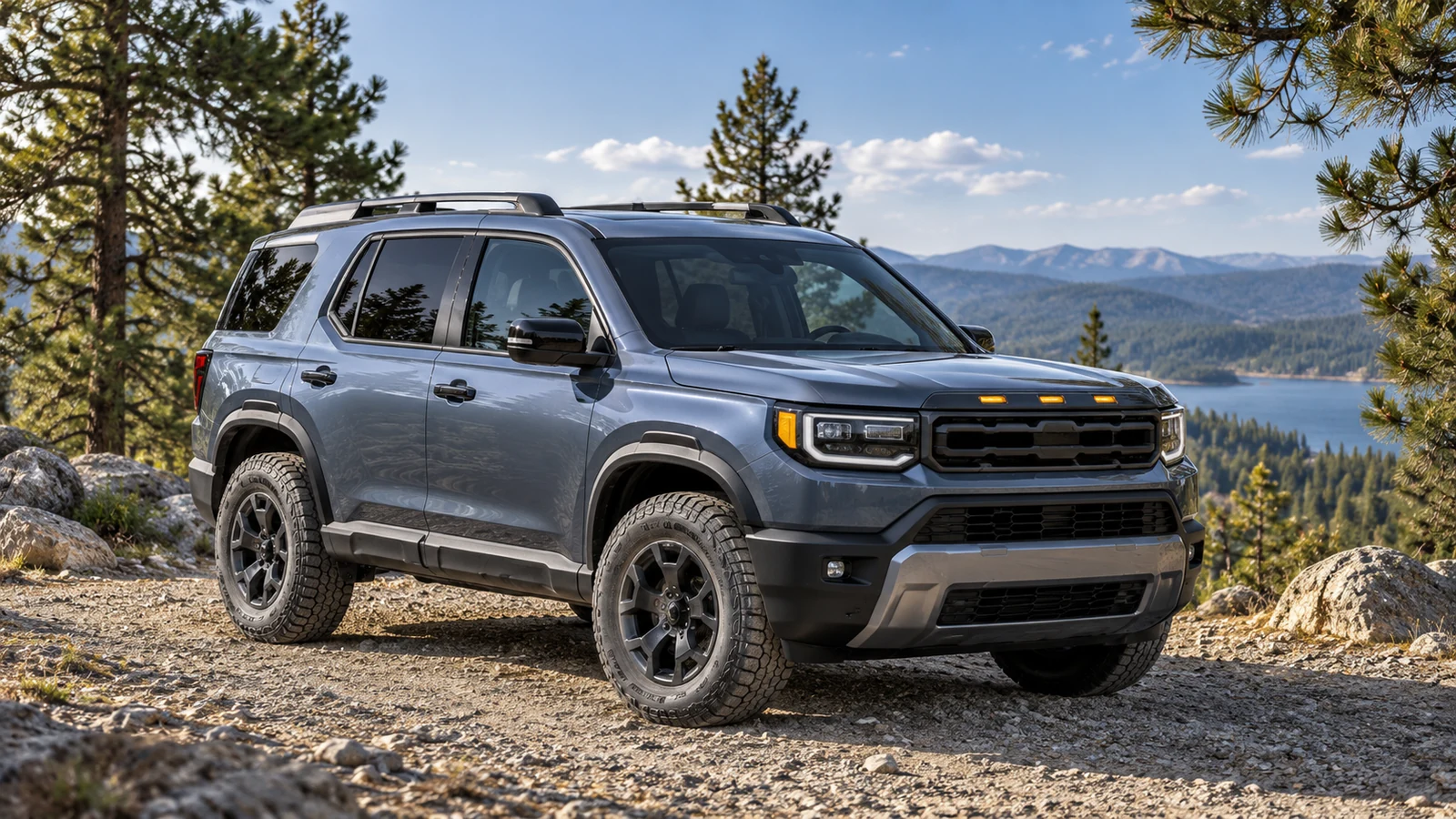
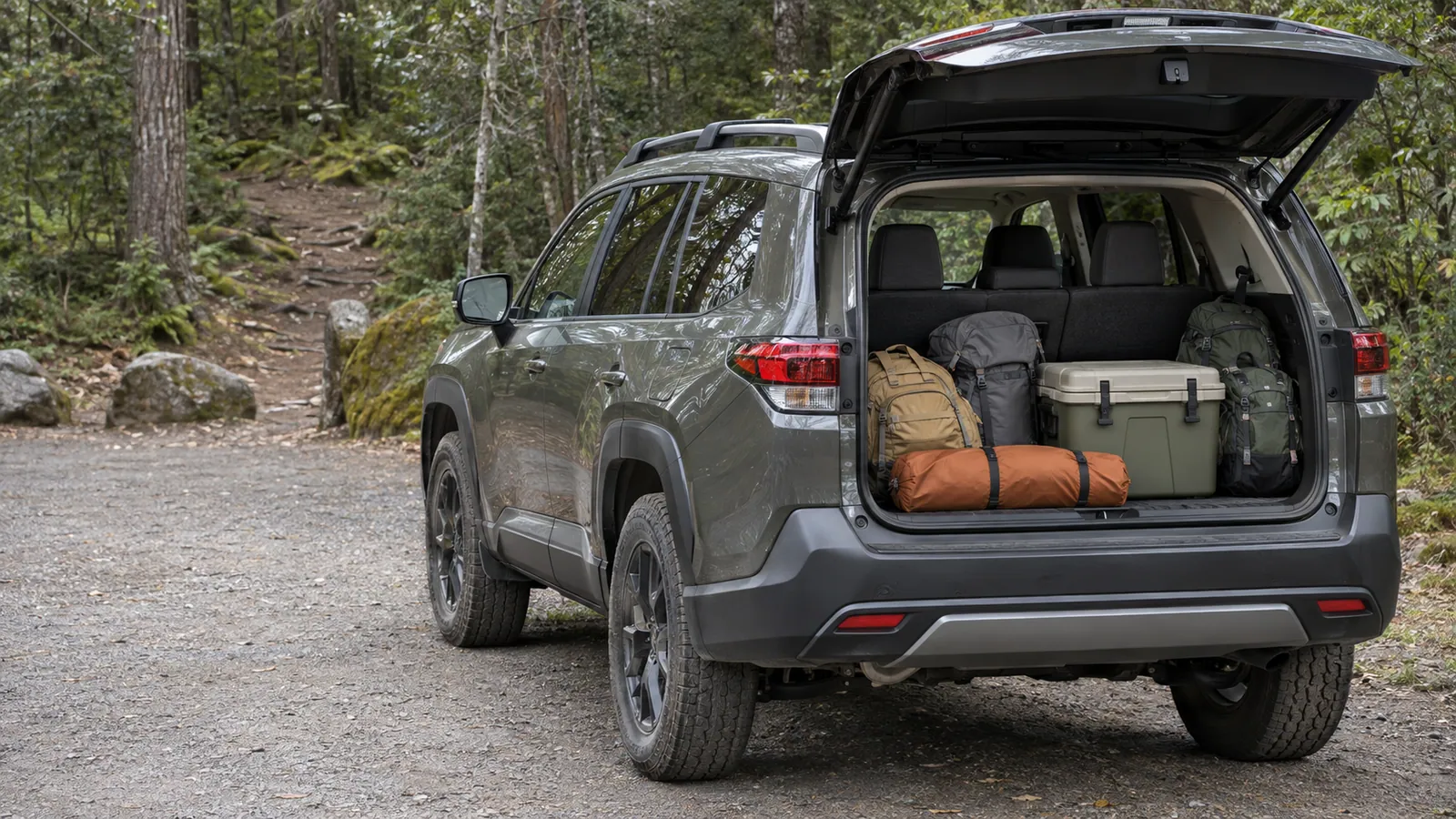 AI-generated illustration of the cargo area of a Passport-style midsize SUV loaded with camping gear for visual reference; not an official Honda photo or evidence of measurements.
Keep those conditions with the figures. Maximum accounting does not promise that one rigid object can occupy all of the counted space, or that the driving position used to obtain a maximum will suit you. When comparing another SUV, check its measurement definitions as well as its numbers.
The Elite exception also matters when an advertisement simply says “Passport.” Use the full trim and model year. A generic model summary may reasonably quote an “up to” number while still failing to answer the question for the specific vehicle in front of you.
Why the bigger figure is not a longer cargo floor
Cargo volume includes three dimensions and can involve differently shaped spaces. A floor measurement describes a particular distance between two endpoints. Neither number can be reliably calculated from the other without the geometry and measurement conditions.
Imagine a long, rigid carton. Space beside a seat or above a shorter object may contribute to a total volume but be unavailable to that carton. Conversely, a thin item may use a narrow space that does not noticeably change an overall volume comparison. The shape of your load determines which measurement is useful.
For shopping purposes, use Honda's standard figure as a clearly labeled reference and keep the max figure separately identified. Then measure the real cargo area with the front seats in their normal positions. Do not select the larger value simply because it creates a stronger headline.
If two websites quote different figures, first check whether they are using the same trim and the same standard/max label. A difference is not automatically an error. Changing the label while retaining the number, however, makes a comparison misleading.
Seats up: start with the load you carry every week
The second-row-up arrangement matters if you routinely travel with rear passengers. Set their seats as they will be used before testing luggage. Include child restraints where applicable and respect their installation and vehicle instructions.
Try the least flexible object first. For some households that is a stroller; for others it is a crate, a hard cooler or a work-equipment case. Measure its actual exterior, including the pieces that protrude, rather than relying on a product category such as “large stroller.”
Then add the accompanying items. Check whether a suitcase handle blocks a stroller wheel, whether a tall bag approaches the hatch glass and whether everything can be reached in the order you need it. A realistic family load tells you more than a neatly arranged single-item photograph.
Use a separate test if traveling with different people changes the seat arrangement. Do not count on a folded seating position that someone needs for the journey. The best packing demonstration is the one you can reproduce without rearranging passengers.
Seats folded: measure with a usable driving position
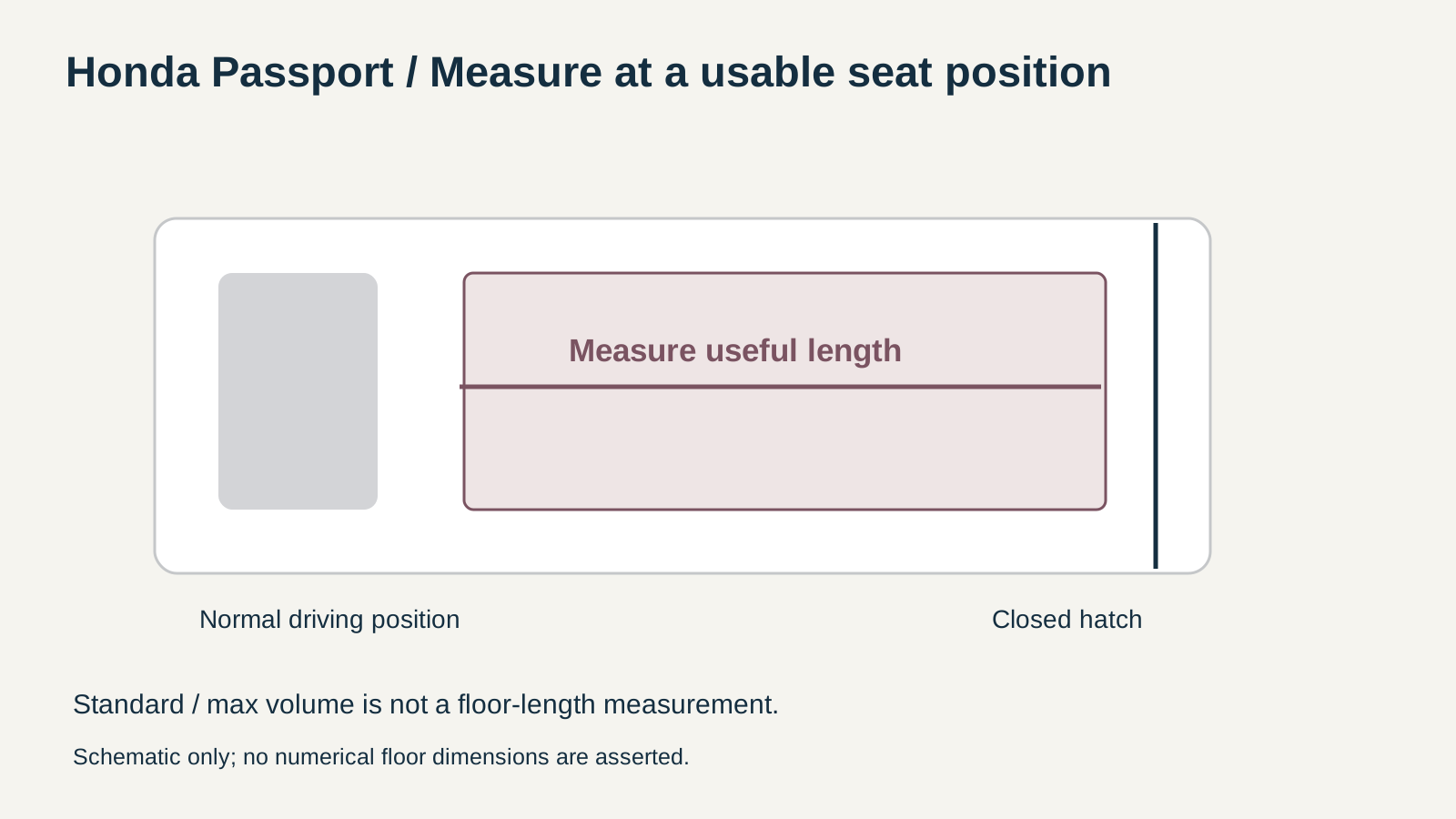
Original fit-planning diagram, not a measured Passport floor plan. It illustrates checks for the actual vehicle.
Set the driver's seat for normal driving before measuring the available length. Set the front passenger's position too if someone will occupy it. A long object that fits only with a front seat unusually far forward may not be practical for your trip.
Follow the exact vehicle's manual to fold the rear seating and inspect the resulting load surface. Check for transitions between surfaces and any accessory installation that changes where an object can rest. A rigid box should be evaluated in its supported position, not only held over an open space.
Measure the useful length to the inside of the closed-hatch envelope. The visible floor edge is not always the limiting point for a tall item. Check both the lower part of the load and the point nearest the rear glass, without allowing the liftgate to press against either.
If only part of the row is folded, repeat the check in that arrangement. Do not calculate a partial-load capacity by splitting the full folded-seat figure in proportion to the seat sections. The remaining opening, floor and passenger clearance need their own assessment.
Cargo dimensions in inches: what remains to be checked
The sources used for this guide establish the published volumes and definitions. They do not provide a complete verified table of floor length, wheel-well width and hatch opening for every 2026 trim. Rather than importing a different year or presenting an internet estimate as a factory measurement, use these checks on the actual vehicle:
| Need | Measurement that answers it |
|---|---|
| A long box | Useful floor length at the required seat positions |
| Two rigid items side by side | Narrow floor width at their resting height |
| A tall crate | Entry height and closed-hatch clearance |
| A stroller | Opening plus the folded stroller's resting footprint |
| Frequent loading | Sill height and the way you can handle the actual item |
Record the reference points in a photograph or sketch. Add the trim and seat positions to the note. That prevents a later comparison from treating a wide opening measurement as a narrow floor measurement or comparing a short driver's setup with a taller driver's arrangement.
Bikes and cargo accessories
Honda's 2026 Passport press kit describes room for two adult mountain bikes with their front wheels removed. That is a manufacturer example, not a test SUVLook performed or a promise for every frame size and accessory combination.
If bikes are your deciding load, measure the specific bikes in the transport configuration you intend to use. Include handlebars, pedals and the removed wheels, and plan how each piece will be supported and secured. A demonstration with a different bicycle may not answer your question.
The same press kit describes an available cargo shelf that can also serve as a picnic table. Before choosing an accessory, consider whether it improves organization or occupies space needed by your main load. Confirm compatibility, installation and loading instructions for the particular vehicle and accessory.
For equipment decisions beyond the load area, see our Passport trim guide and Passport interior guide. Their scope and model-year notes still apply; a trim comparison should not become evidence for an unmeasured cargo dimension.
What to confirm before buying
Bring a short list of the things the vehicle must carry. Mark each as flexible, rigid or orientation-sensitive. Decide which passengers must remain seated, and test that arrangement before trying the largest possible cargo configuration.
Inspect the exact vehicle's load floor and any fitted accessories. Review its loading limits separately from the volume table; fitting physically does not establish acceptable carried weight or a suitable restraint arrangement. Finish by checking whether you can retrieve frequently used items without dismantling the entire load.
Related SUVLook research
- Honda CR-V Cargo Length and Width: 2021–2026 Dimensions
- Cargo Fit Check: test a rigid item against published cargo measurements
Frequently asked questions
Why do I see both 83.8 and 104.6 cubic feet for the Passport?
Honda publishes standard and max figures with different measurement conditions. Preserve those labels, and check the trim exception in the table above. Neither number establishes a single rectangular floor measurement.
Is cargo capacity identical on every 2026 Passport trim?
No. Honda lists a small difference in the behind-first-row standard/max figures for TrailSport Elite. The cited table lists the same behind-second-row volume across its trim columns.
Can I use this table for a 2025 Passport?
No. This guide uses 2026 U.S. documentation. A previous model year needs its own specifications and physical fit check; the numbers should not be carried backward by model name alone.
Will my stroller fit without folding the rear seats?
Check the stroller's exterior folded dimensions, hatch opening, resting position and closed-liftgate clearance. Test it with the passengers and other bags you need. Volume alone cannot establish that fit.