Dimensions · Space · Buying guides
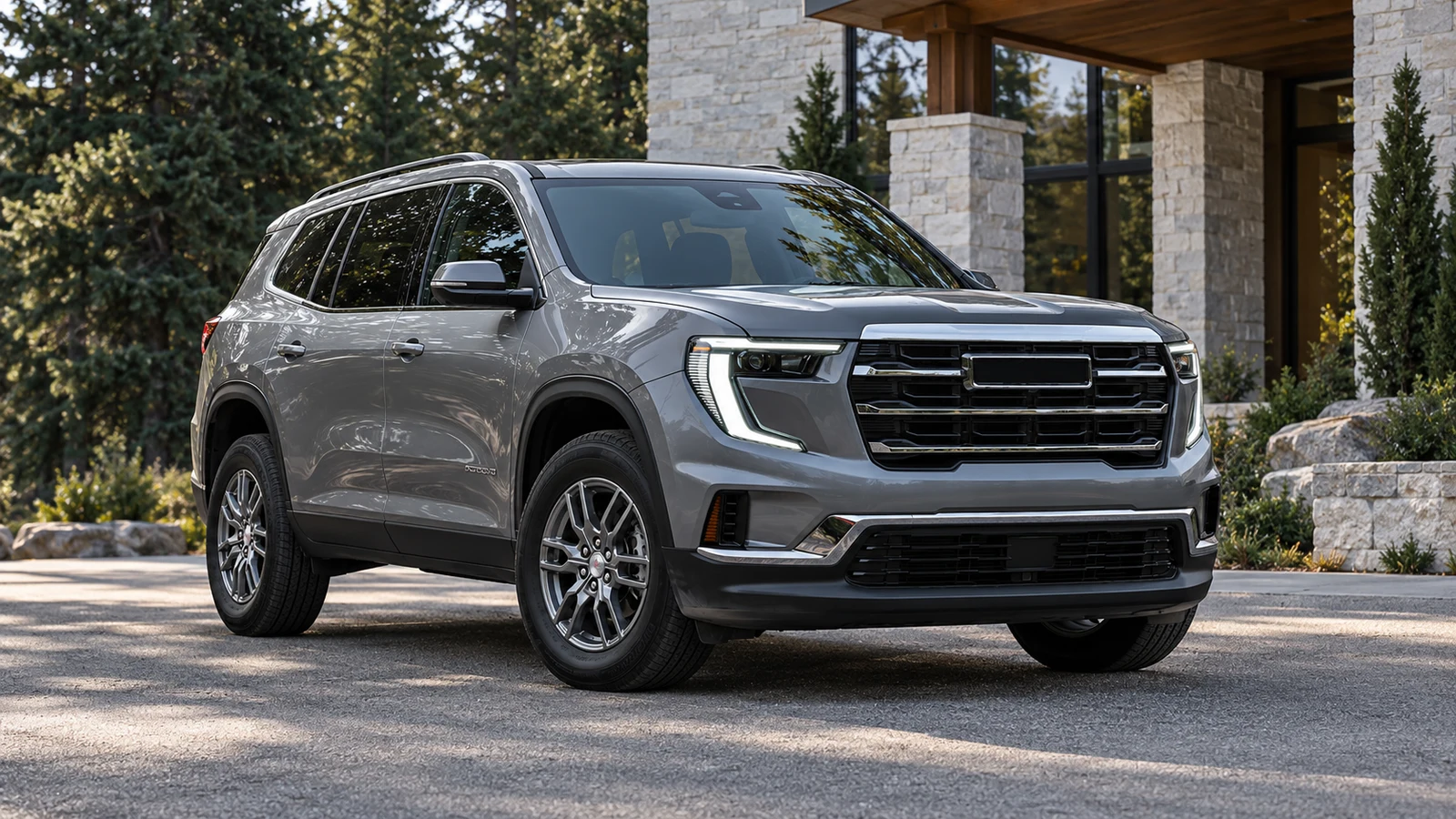
The 2026 GMC Acadia Elevation has 23.0 cubic feet behind the third row, 57.3 behind the second row and 97.5 behind the first row, according to GMC's model-year-specific specifications. For a family using every seating row, the first number is the starting point. The maximum figure describes a different passenger arrangement.
This guide uses U.S. 2026 Elevation manufacturer data checked October 24, 2026. It explains how to evaluate a stroller, luggage or a bulky load without confusing volume with usable floor measurements. We have not physically measured or load-tested this Acadia.
The three cargo numbers answer different questions
| 2026 Acadia Elevation configuration | Manufacturer volume | Relevant trip |
|---|---|---|
| Behind third row | 23.0 cu. ft. | All seating rows remain available |
| Behind second row | 57.3 cu. ft. | Third-row area is used for cargo |
| Behind first row | 97.5 cu. ft. | Both rear-row areas are used for cargo |
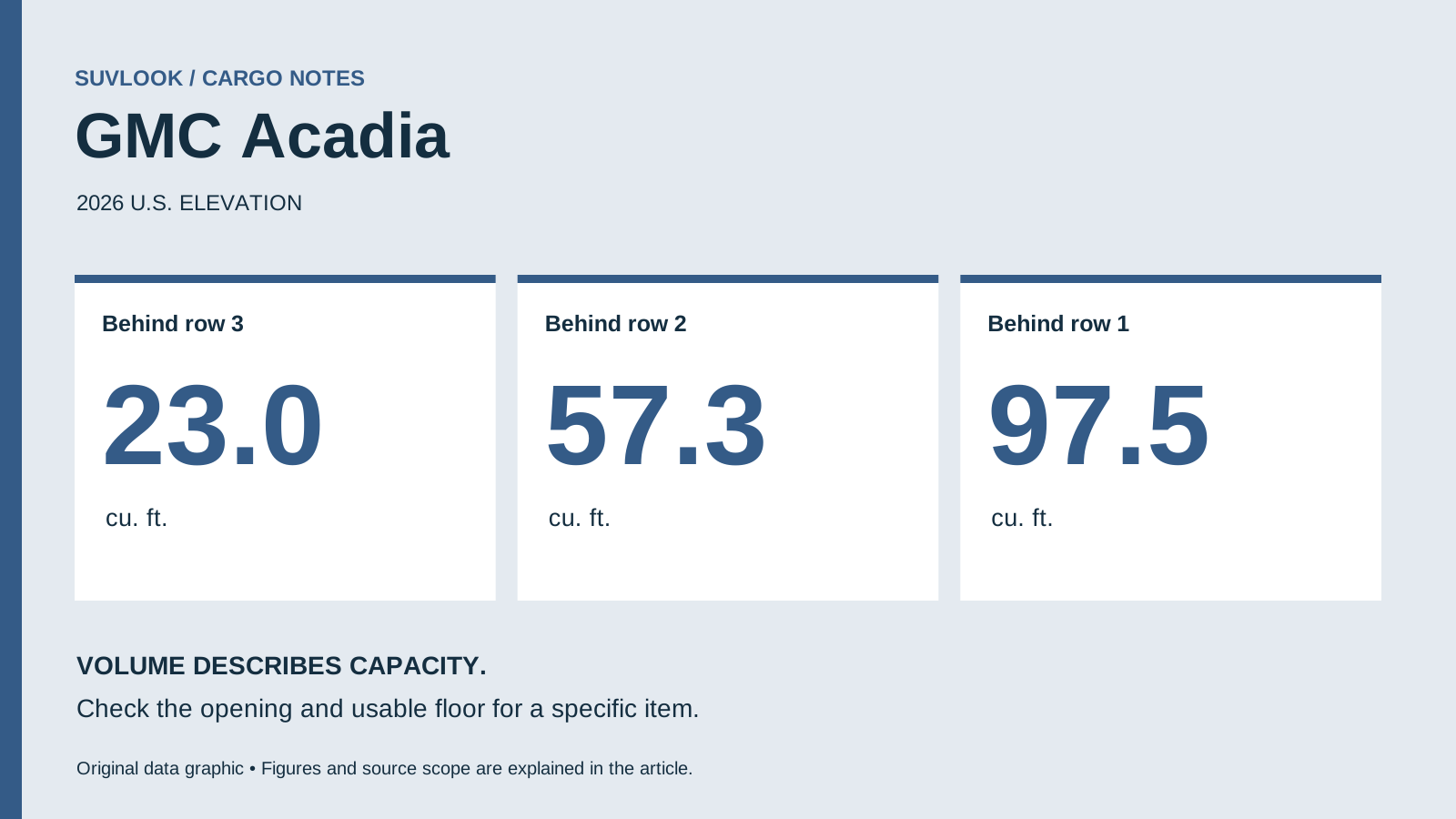 |
Summary graphic of the 2026 Acadia Elevation cargo volumes in the table above; figures come from the sources cited in this guide.
For a school run followed by groceries, consider the configuration that preserves the seats your family occupies. For a two-person furniture pickup, the larger arrangements may be relevant. Comparing a vehicle's maximum space against another vehicle with all seats occupied produces an unfair answer before either vehicle has been measured.
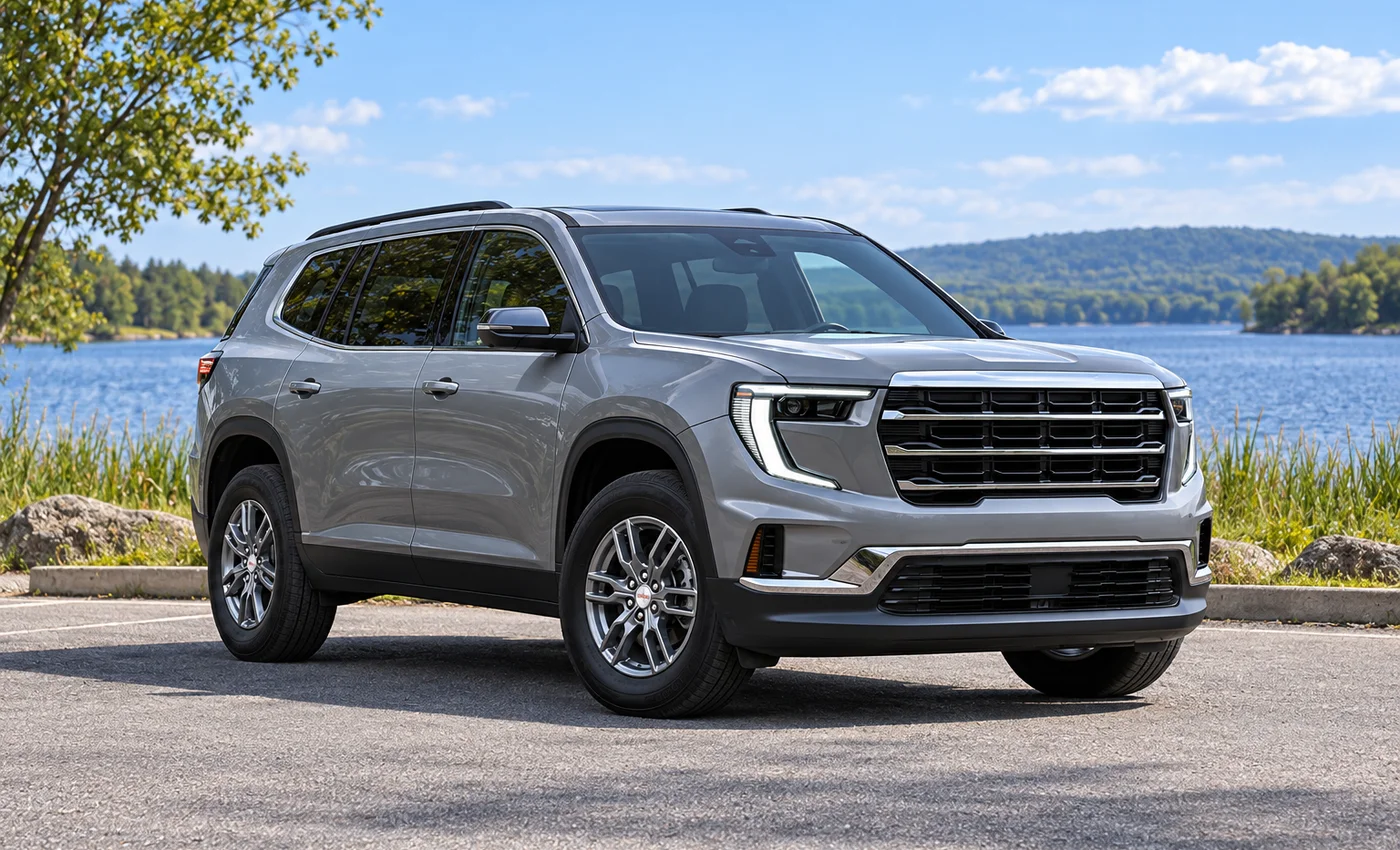
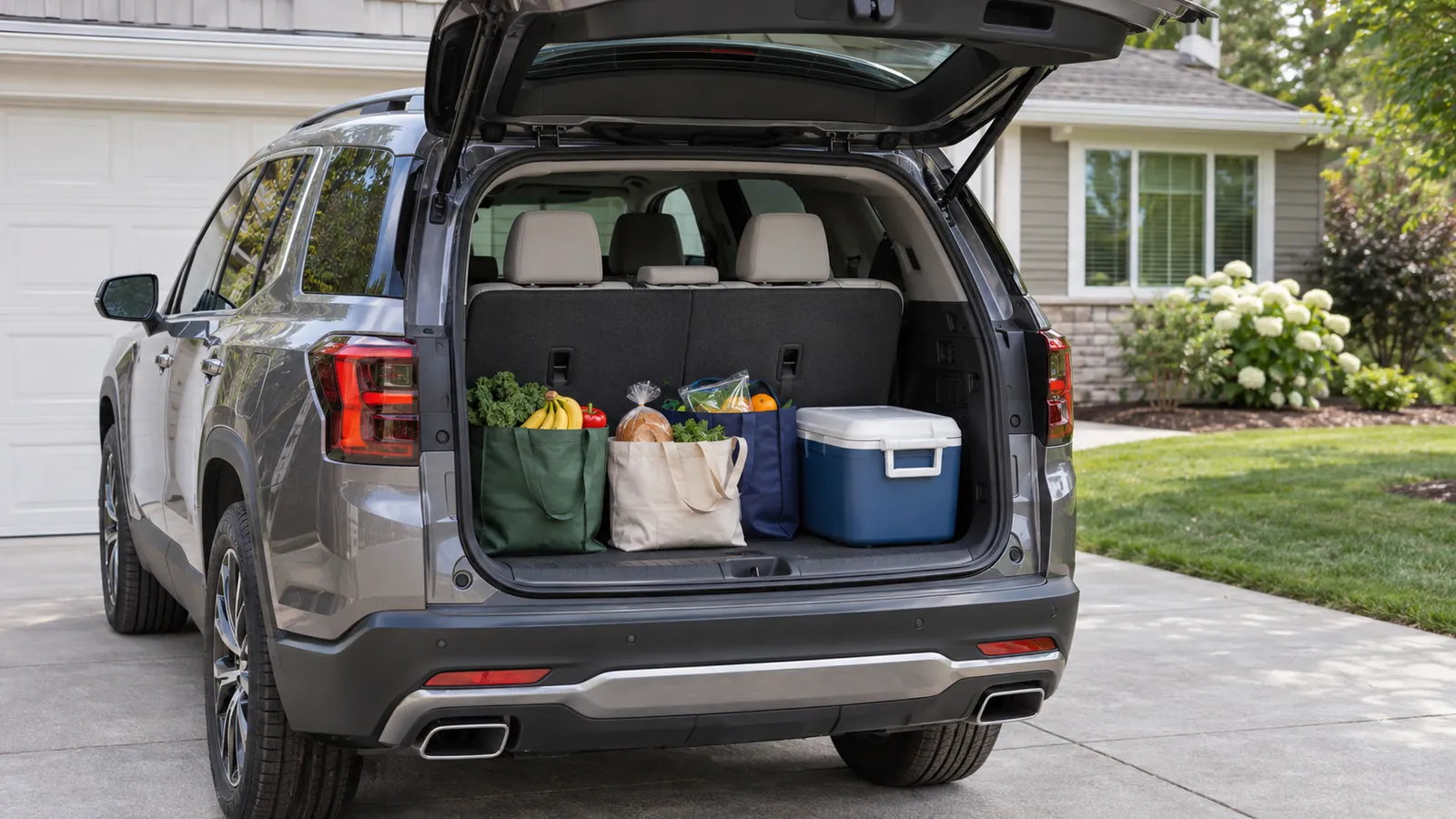 AI-generated illustration of the cargo area behind the third row of an Acadia-style SUV for visual reference; not an official GMC photo or evidence of measurements.
Also ask what you mean by “room.” You may need a long flat area, enough height for an upright object, or the ability to retrieve one bag while leaving the others in place. A bigger total volume does not automatically improve every one of those tasks.
All three rows in use: test the family load first
Begin with the least flexible trip you regularly make: the people who must travel together and the equipment that must come with them. Put every required seat into its normal passenger position. Account for child restraints and their instructions before considering any seat movement.
Bring the stroller in its everyday folded state. Include the attachments you leave on it, and note whether its wheels or handle change the shape of the package. Check whether you can place the stroller without using the space a rear occupant needs or relying on a seat position that is uncomfortable for that person.
Then add the other unavoidable items. A stroller-only demonstration may look convincing while omitting backpacks, a diaper bag or groceries. Packing the combined load also reveals whether the first item must be removed to reach everything behind it.
For luggage, compare actual exterior dimensions, including wheels and handles. A claimed number of suitcases needs a defined set of cases and a documented packing test. SUVLook has not conducted such a test for this guide, so we do not turn the published volume into a suitcase count.
Folding the third row: measure the new floor
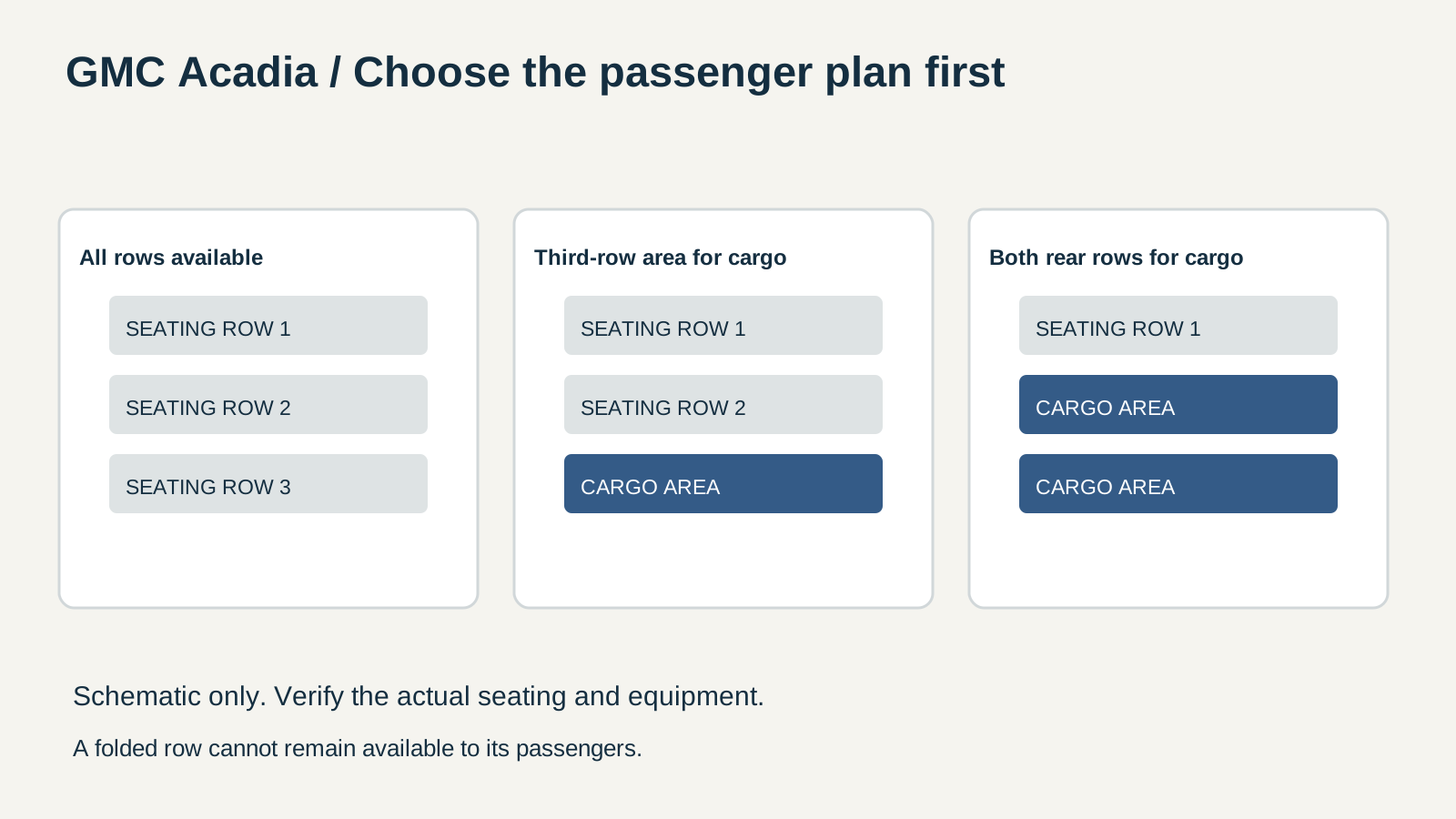
Original seating-planning schematic, not a scale representation or an equipment illustration for a specific trim.
The space behind the second row is the useful comparison when you will not carry third-row passengers. It changes which objects might be considered, but it does not establish that the load surface is a perfect rectangle or level at every point.
Before testing an object, follow the exact vehicle's owner's manual for moving the seats. Inspect the junction between the folded seatbacks and the rear cargo floor. A rigid item may bridge a step or slope differently from a soft bag. If keeping an object level matters, check its own transport instructions rather than assuming that “seats folded” means an approved support surface.
Measure from the part of the second-row seat or seatback that actually limits the load to the inside of the closed hatch. Write down the seat position used. A longer measurement taken with a seat moved forward is not automatically usable when someone needs to sit there.
If only part of a rear row will be folded, test that arrangement separately. Cargo cannot occupy an adjoining passenger's belt path, foot space or necessary access simply because its base rests on the folded section.
Maximum cargo space: useful for a different trip
The maximum figure is relevant when both rear seating areas are available to carry the load. It is a useful specification for shopping, but the object still has to pass through the opening and rest securely without interfering with the people in front.
Set the driver's seat for normal driving before checking a long item. Avoid a demonstration that requires driving uncomfortably close to the steering wheel. Keep the front passenger's needs in view too; leaving a seat technically usable is different from leaving adequate space around its occupant.
An especially long or tall object can meet the hatch glass or interior trim even after it appears to be inside. Inspect the closing path gently. Do not use a powered liftgate to squeeze an oversized package into place or assume a soft bag is harmless if it presses against the glass.
Consider the object's weight separately from its size. The manufacturer's loading instructions and the individual vehicle's labels determine what can be carried with the people and other equipment aboard. An empty-looking cargo bay is not a statement about remaining weight capacity.
What are the Acadia cargo dimensions in inches?
The retrieved 2026 GMC page establishes volume by seating row. It does not establish the floor length, wheel-well width or hatch-opening dimensions needed for a particular rigid item. We have not filled those gaps with another generation's dimensions or an estimate from a photograph.
For a useful inch-based record, take these measurements on the actual vehicle:
| Measurement to take | Reference points to record |
|---|---|
| Usable floor length | Limiting seat surface to closed-hatch envelope |
| Narrow floor width | Between wheelhouse trim or other fixed obstructions |
| Entry width | Opening at the height your item must pass |
| Entry height | From the loading surface to the restrictive opening point |
| Loaded clearance | Space around the object after positioning and before closing |
Repeat only the measurements affected by a change in seat configuration. Label the notes “third row up,” “third row folded,” or the exact partial-fold arrangement. That small detail prevents a misleading comparison when reviewing photographs later.
Bench seating and captain's chairs: inspect the actual car
Do not infer the passenger arrangement from the model name alone. GMC's 2026 Elevation page describes seating for up to eight and also lists a seven-passenger Elevation Premium configuration. Confirm the equipment on the particular vehicle you are considering.
For cargo planning, a passage between seats is not automatically the right place for a long object. Think about passenger access, the load's support and how it will be secured. A bag placed in a passage during a showroom demonstration may prevent someone from entering or leaving their seat normally.
Our Acadia trim guide discusses equipment choices. Use it with the cargo checks here, and compare the Traverse trim guide if you are considering another three-row SUV. An equipment comparison should not quietly become a claim that two different models have the same cargo geometry.
A realistic test before buying
Make a simple packing list for your hardest routine trip. Mark which items must stay upright, which can be compressed, and which need to be reached during the journey. Bring their actual dimensions and, where practical, the objects themselves.
At the vehicle, start with the seats you need for passengers. Load the least flexible item first, then check the remaining pieces without assuming that empty air above one object can hold another securely. Review the owner's manual for loading and seat instructions rather than treating a successful arrangement as the final step.
Finish by unloading one commonly needed item. This exposes a problem that a static photograph misses: a packing plan may fit, yet be frustrating every time someone needs a jacket or the stroller. Ease of use belongs in the buying decision alongside volume.
If you are also shopping a full-size SUV, the 2026 Chevrolet Suburban cargo guide separates space behind each row and provides a measurement worksheet. Compare the arrangement that keeps your required passenger seats available.
Frequently asked questions
How much room is behind the Acadia's third row?
GMC lists 23.0 cubic feet for the U.S. 2026 Acadia Elevation. That is the relevant published volume when retaining all three seating rows. The amount is not a suitcase count or a hatch measurement.
What is the Acadia's maximum cargo space?
The cited 2026 Elevation page lists 97.5 cubic feet behind the first row. Reaching that configuration uses the rear seating areas for cargo, so it is not the available space with all passenger rows occupied.
How much space is available with the third row folded?
GMC lists 57.3 cubic feet behind the second row for this 2026 configuration. Measure the floor and opening if you are checking a rigid item rather than comparing published volumes.
Will a stroller fit with the third row up?
Check the stroller's actual folded dimensions against the vehicle's opening, floor and closed-hatch clearance. Test it alongside the other bags you need. This guide does not claim a physical stroller-fit test.