Dimensions · Space · Buying guides
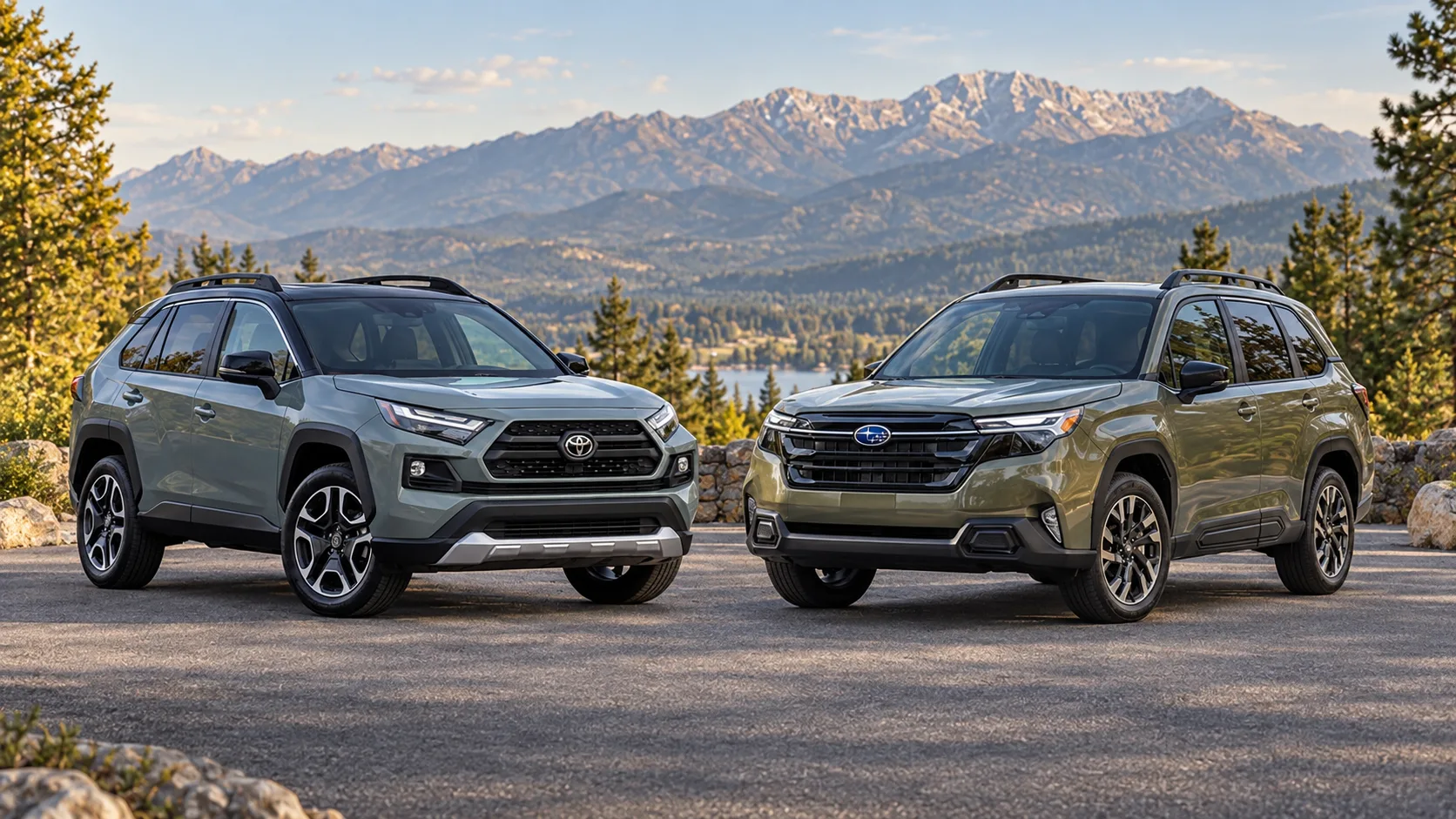
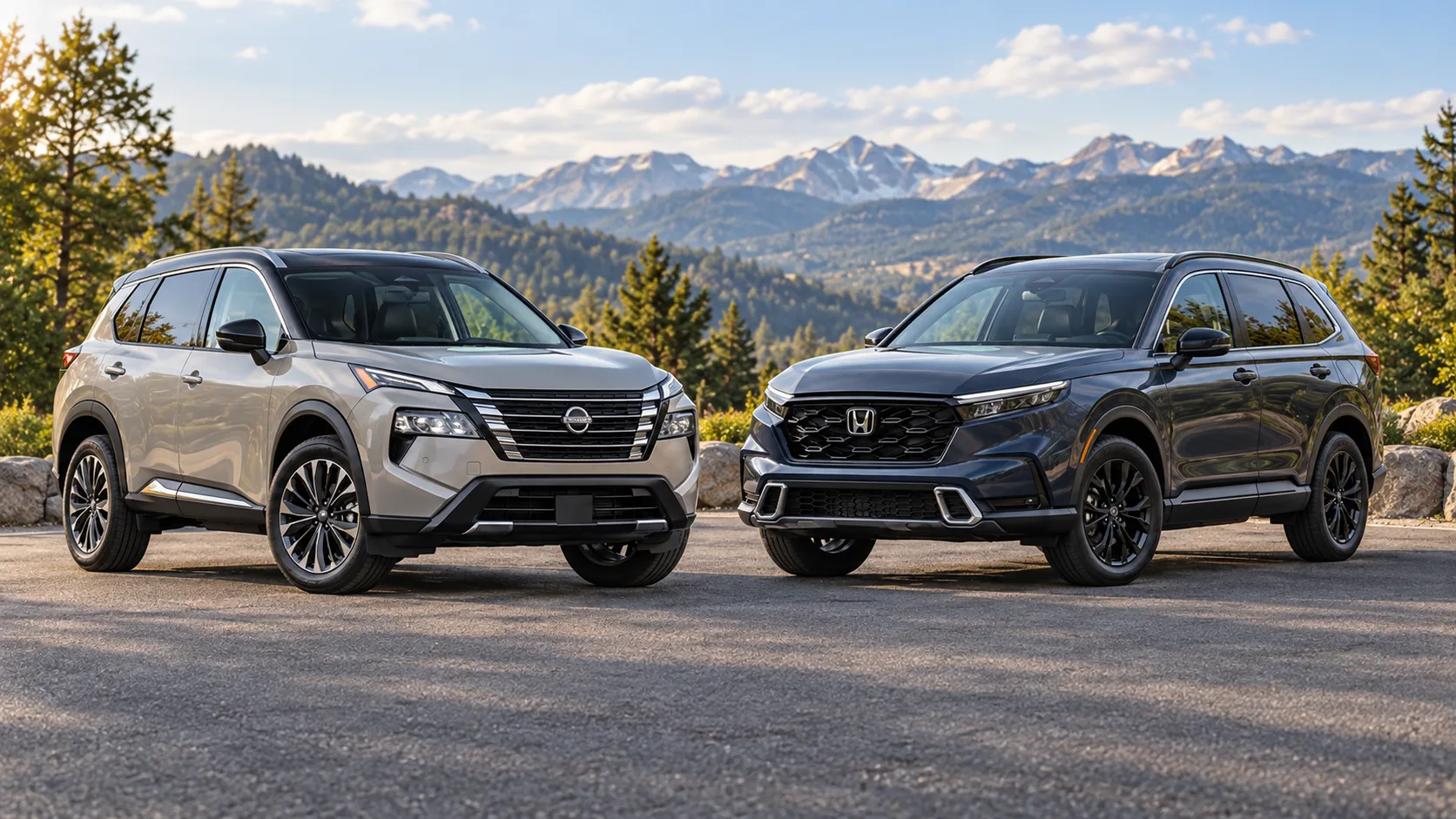
The 2026 Kia Niro Hybrid LX is the fuel-economy leader in this four-model shortlist, with a published 53 mpg combined rating. For shoppers who want all-wheel drive, the 2026 Toyota Corolla Cross Hybrid pairs standard AWD with a published 42 mpg combined rating. The Toyota RAV4 Hybrid and Honda CR-V Hybrid add two alternatives worth comparing when passenger space and everyday utility matter alongside gasoline use.
Don't stop at the highest MPG. Check the rating for the trim, drivetrain and wheels you'd buy, then compare the fuel savings with the price difference. Saving $100 a year at the pump may not justify spending thousands more up front, especially if you don't drive many miles.
This guide compares selected U.S. 2026 non-plug-in hybrids. It is a researched shortlist, not a claim that these are the four highest-rated SUVs across every size and price class. Figures below come from manufacturer material; Toyota's RAV4 launch estimates are labeled separately. SUVLook has not road-tested these vehicles. The cost comparisons are our calculations, with assumptions shown.
At a glance: fuel-efficient SUVs and the configurations that matter
| 2026 vehicle and configuration | City MPG | Highway MPG | Combined MPG | Evidence and buying caveat |
|---|---|---|---|---|
| Kia Niro Hybrid LX | 53 | 54 | 53 | Kia-published EPA estimate; do not apply the LX rating to SX Touring |
| Toyota RAV4 Hybrid FWD | 47 | 40 | 43 | Toyota manufacturer estimate in the linked launch release; confirm the exact car's EPA label |
| Toyota Corolla Cross Hybrid AWD | 46 | 39 | 42 | Toyota's brochure gives the full triplet as a projected EPA estimate; its model page now identifies 42 combined as EPA-estimated |
| Honda CR-V Sport Hybrid or Sport-L Hybrid 2WD | 43 | 36 | 40 | Honda-published EPA rating; AWD versions have separate ratings |
The underlying references are Kia's 2026 Niro specifications, Toyota's RAV4 launch release, Toyota's 2026 Corolla Cross brochure, the Corolla Cross model page and Honda's 2026 EPA-rating table.
These are U.S. miles per U.S. gallon. An MPG number from a UK review is not directly interchangeable. Likewise, a manufacturer projection and a final EPA label should not be presented as equally settled evidence. Use this table to choose vehicles to investigate, then check the label attached to the exact trim you intend to buy.
Kia Niro Hybrid: start here when gasoline use is the priority
The Niro LX's 53 combined figure puts it ahead of the other configurations shown above. Kia's model material lists the SX Touring at 49 combined, illustrating why a model-wide “up to” figure can mislead someone shopping a specific trim. Kia's Niro model information is a rolling page that can move to the next model year; use the dated 2026 specifications when comparing remaining 2026 stock.
At our example mileage and gasoline price, moving from 49 to 53 mpg saves about $65 a year. That is useful perspective before choosing equipment purely to chase the higher rating. If the less efficient trim has a feature you will use every day, the fuel penalty may be smaller than you expected.
Start a Niro shopping visit with the practical questions that an efficiency table cannot answer. Can you get into the driver's seat comfortably? Does your usual stroller or folded mobility device fit through the hatch? Can a passenger sit behind your driving position? Bring the objects you actually carry rather than estimating from their photographs.
Choose it for: prioritizing fuel economy in this shortlist. Compare something else first if: all-wheel drive is a firm requirement, or your seating and luggage needs rule it out during a physical fit check. A fuel-saving vehicle that cannot do the household's regular journeys is the wrong purchase.
Toyota RAV4 Hybrid: compare the drivetrain before comparing MPG
Toyota's 2026 RAV4 launch release lists 43 mpg combined for the front-wheel-drive hybrid as a manufacturer estimate. It gives separate figures for AWD grades, including 42 combined for LE and SE AWD and 38 for Woodland HEV. Those launch numbers establish that equipment choice matters; they are not a substitute for checking final EPA information on the vehicle for sale.
For a shopper deciding whether AWD is worth having, the useful comparison is between two otherwise acceptable configurations. Start with the drivetrain you need, then compare fuel use within that group. A front-wheel-drive headline does not describe the cost of owning the AWD trim parked on the dealer's lot.
The same discipline applies to the plug-in RAV4. A plug-in model has a different charging use case and should not inherit the regular hybrid's numbers. Check its gasoline-mode rating, electric range and charging requirements separately.
Choose it for: a hybrid shortlist where you want to compare FWD and AWD configurations. Look more carefully if: you are using a launch estimate to budget for a specific car, or assuming every grade reaches the best advertised MPG.
Our RAV4 versus CR-V comparison covers the broader buying decision. For bulky equipment, use the RAV4 cargo guide alongside a check of the actual vehicle; total cargo volume alone will not establish whether your load fits.
Toyota Corolla Cross Hybrid: an AWD option at 42 combined MPG
The Corolla Cross Hybrid is worth investigating when AWD is part of the brief from the beginning. Toyota identifies standard AWD across its three 2026 hybrid grades and publishes a 42 combined figure. Its current model page labels that combined result EPA-estimated, while the dated brochure retains projection language for the full city/highway/combined sequence.
That distinction matters when old brochures and newer web pages coexist. The figure you use should have both a model year and a source status attached. Do not silently replace a projected value with a supposedly verified one simply because the number happens to match.
For shopping, the Corolla Cross gives you a useful comparison point against the larger-name alternatives in this guide. Sit in the rear seat with the front seat in your normal position, then load your usual luggage. You may find that it meets your needs without moving to a different model, or that a recurring passenger-space requirement settles the decision immediately.
Choose it for: a shortlist that requires AWD and prioritizes fuel economy. Choose a different vehicle if: the cabin or hatch fails your real loading test. Paying a little more for gasoline can be preferable to buying a vehicle that forces compromises every weekend.
Honda CR-V Hybrid: keep 2WD, AWD and TrailSport separate
Honda's 2026 table gives Sport Hybrid and Sport-L Hybrid 2WD a 40 mpg combined rating. The usual AWD hybrid rating is 37 combined, while TrailSport Hybrid is listed at 35. The correct comparison is therefore trim against trim, not “CR-V Hybrid” against another model's best possible figure.
There is a useful budget consequence. At 12,000 miles and $3.50 per gallon, 40 mpg costs approximately $1,050 in gasoline; 35 mpg costs $1,200. That $150 annual gap is an example calculation, not a forecast of what a particular driver will spend.
Honda also publishes 41.0 inches of rear legroom and 36.3 cubic feet of seats-up cargo volume for the hybrids in its 2026 specification table. Those figures help screen the vehicle for family use, but neither proves that a rear-facing child seat or a rigid crate will fit with your preferred seating position.
Choose it for: a family shortlist where passenger fit deserves as much attention as the fuel bill. Check another configuration if: you are buying an AWD or TrailSport model while budgeting with the 2WD figure. Our CR-V cargo guide explains the difference between cargo volume and usable loading measurements.
What the MPG differences cost in dollars
The table below assumes 12,000 miles per year and gasoline at $3.50 per gallon. The fuel price is an example, not today's national average. Figures are calculated from the displayed combined MPG and rounded only at the end. They exclude financing, insurance, depreciation, maintenance and purchase-price differences.
| Combined MPG | Gallons per 100 miles | Annual gallons | Annual gasoline cost | Saving versus 30 MPG |
|---|---|---|---|---|
| 30 | 3.33 | 400.0 | $1,400 | — |
| 35 | 2.86 | 342.9 | $1,200 | $200 |
| 37 | 2.70 | 324.3 | $1,135 | $265 |
| 40 | 2.50 | 300.0 | $1,050 | $350 |
| 42 | 2.38 | 285.7 | $1,000 | $400 |
| 43 | 2.33 | 279.1 | $977 | $423 |
| 49 | 2.04 | 244.9 | $857 | $543 |
| 53 | 1.89 | 226.4 | $792 | $608 |
Annual gasoline cost equals annual miles ÷ MPG × dollars per gallon. To adapt the table, multiply its unrounded costs by your annual mileage divided by 12,000, then by your local gasoline price divided by $3.50.
Notice the modest difference between 42 and 43 mpg: about $23 a year under these assumptions. That is unlikely to outweigh a substantial difference in purchase price or everyday comfort. The gap from 30 to 40 mpg saves $350, making it more meaningful for the household budget.
MPG is not a linear measure of money saved. Ten additional miles per gallon do not deliver the same dollar saving at every starting point. Gallons per 100 miles make that relationship easier to compare, which is why they are included here.
Will a hybrid repay its higher purchase price?
Use the difference between actual comparable purchase quotes, not two advertised starting prices with different equipment. Then divide that premium by the annual fuel saving.
For example, suppose a hybrid costs $2,500 more, returns 40 mpg, and the alternative returns 30 mpg. At the example mileage and fuel price above, it saves $350 annually. The simple fuel-only payback is approximately 7.1 years. At 6,000 miles a year it becomes about 14.3 years; at 18,000 miles it becomes about 4.8 years.
This is a hypothetical comparison, not a quoted premium between two trims. It deliberately leaves out resale value, interest, taxes, servicing and insurance. Include those in a full ownership budget rather than treating the fuel-only result as a complete recommendation.
If you normally keep a vehicle for three years, a seven-year fuel payback is a different proposition than it is for a ten-year owner. The hybrid may still be your preference, but the purchase should not depend on fuel savings that arrive after you expect to sell it.
City driving, highway driving and your own route
Use the combined rating as a starting point. If almost every mile is on the highway, inspect the highway column before making the shortlist. If your travel is mostly local, give the city figure more attention. Neither is a guarantee of your result.
The DOE/EPA explanation of mileage variation identifies driving conditions, vehicle condition and other factors that can change fuel economy. Standardized ratings help compare vehicles; they cannot reproduce every household's weather, traffic or journey pattern.
For an example route estimate, suppose 70% of your miles are city miles and 30% are highway miles. Using the CR-V 2WD hybrid's published 43 city and 36 highway ratings gives 1 ÷ (0.70 ÷ 43 + 0.30 ÷ 36), or about 40.6 mpg. This is a calculation using your hypothetical mileage mix, not a new EPA rating or a real-world prediction.
The reciprocal formula matters because you are adding fuel consumed over distances. Simply averaging the two MPG numbers gives the wrong basis for a fuel-cost calculation. Even a correctly calculated estimate still needs a margin for your actual conditions.
Why plug-in hybrids and electric SUVs need a separate comparison
A plug-in hybrid can be attractive when regular charging fits your routine. But its MPGe figure is not the number of miles it travels on a gallon of gasoline. The DOE/EPA plug-in label explanation distinguishes electricity-related efficiency, gasoline operation and electric range.
Before comparing a PHEV with a regular hybrid, record the gasoline-mode MPG, electrical consumption, electric range and the cost of electricity you can actually access. A calculation based on inexpensive home charging is not representative if you would rely on a different charging tariff.
For a simple illustration, a vehicle consuming 30 kWh per 100 miles at $0.16 per kWh costs $4.80 per 100 miles for electricity. At $0.40 per kWh, the same consumption costs $12. A 40-mpg gasoline vehicle at $3.50 per gallon costs $8.75 per 100 miles. These are hypothetical consumption and tariff inputs, not claims about any model above.
Use wall-energy consumption consistently if your figure includes charging losses. Do not add a second loss allowance to a value that already includes them. Also check time-based fees or session charges where applicable. Electric range alone cannot answer which vehicle is cheaper for your routine.
A practical shortlist before you visit a dealer
- Write down the non-negotiables. Required seats, drivetrain, parking space and the largest regularly carried item come first. None of the four vehicles here is a three-row recommendation; use our three-row SUV guide if you need more seats.
- Choose the exact configuration. Record model year, trim, drivetrain and any package affecting the economy rating. Save the listing and compare it with the window sticker.
- Calculate the annual difference. Use your mileage and fuel price. Compare the answer with the purchase-price gap rather than paying a large premium for a tiny MPG increase.
- Test passenger and cargo fit. Leave the driver's seat in position when checking the rear seat. Bring your usual bulky load. Tall drivers can use our headroom and legroom guide to plan the visit.
- Compare written purchase quotes. Match included equipment and fees. Keep optional accessories separate so they do not obscure the underlying vehicle-price difference.
For this shortlist, the Niro LX is the first efficiency-focused candidate. The Corolla Cross Hybrid is a useful AWD starting point. The RAV4 and CR-V deserve consideration when their configurations and cabin fit better match your household. The final choice should survive both the fuel calculation and the practical loading test.
Frequently asked questions
Which SUV in this guide has the highest combined MPG?
The 2026 Kia Niro Hybrid LX has the highest published combined rating among the four selected configurations, at 53 mpg. This guide does not rank every SUV sold in the United States.
Do these hybrids need to be plugged in?
The non-plug-in hybrid configurations in the main table do not require external charging. Plug-in hybrids are different versions with a separate charging and fuel-use calculation.
Is 43 MPG much cheaper than 40 MPG?
At 12,000 miles per year and $3.50 per gallon, the calculated difference is about $73 annually. At higher mileage or fuel prices it grows; at lower mileage it shrinks. Compare that saving with the actual purchase-price difference.
Can I use the best advertised MPG for any trim?
No. Match the vehicle's year, trim and drivetrain. Honda's CR-V hybrid table, for example, distinguishes 2WD, ordinary AWD and TrailSport AWD ratings.
Are the figures road-test results from SUVLook?
No. They are published ratings or explicitly labeled manufacturer estimates. The cost and route examples are SUVLook calculations. Manufacturer references and the DOE/EPA explanations are linked beside the relevant claims so readers can check the evidence.