Dimensions · Space · Buying guides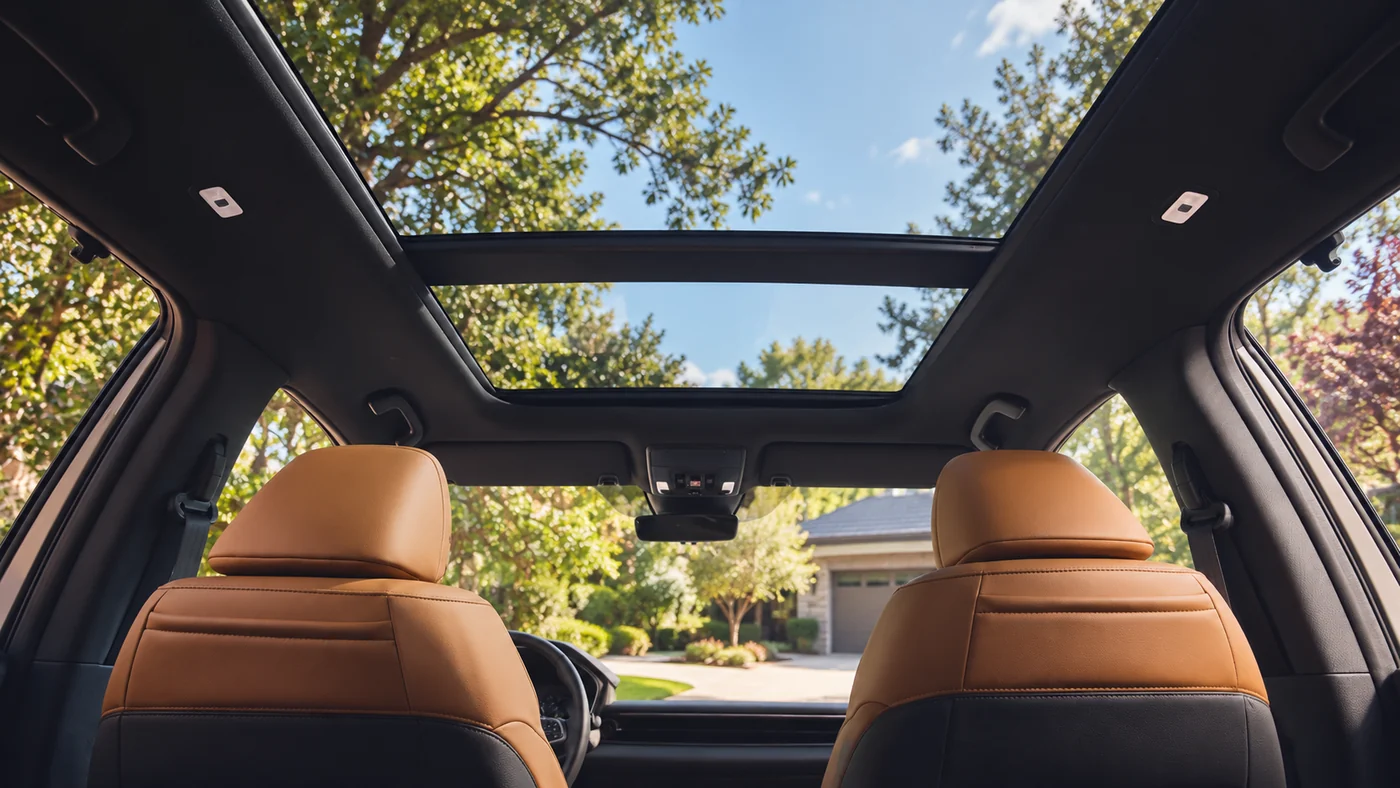
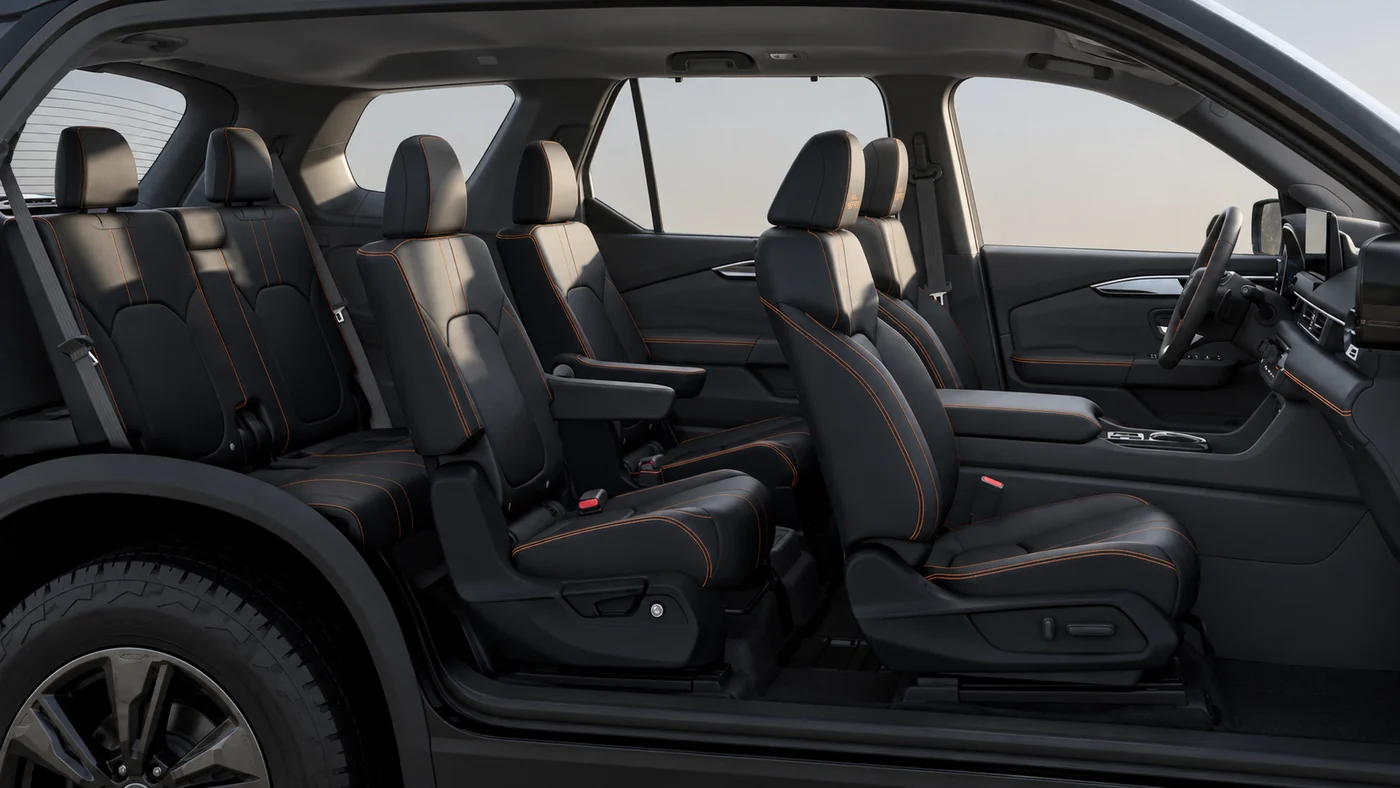
The Honda Passport interior is a five-seat, two-row cabin, not a smaller three-row Pilot. For U.S. 2026 models, Honda lists 41.1 inches of front legroom and 40.9 inches in the rear. Headroom depends on the trim: the RTL group lists 40.5 inches in front and 40.7 in back; the TrailSport groups list 39.1 and 39.6. Honda's 2026 specifications.
Passport makes sense if two passenger rows are enough for your household. Compare the roof and seats in the trim you want, then try it with the people who'll travel with you. If you need a third row, look at Pilot or another three-row vehicle instead. There isn't an extra passenger row hiding behind the Passport's rear seats.
This guide covers U.S. 2026 passenger space and selected cabin equipment, with a separate 2025 table. It does not carry older dimensions into the redesigned vehicle. Sources were checked October 6, 2026; SUVLook has not physically measured this cabin.
2026 Honda Passport interior dimensions
| Manufacturer-published measurement | Front row | Rear row | 2026 trim scope |
|---|---|---|---|
| Headroom | 40.5 in | 40.7 in | RTL / RTL Towing / RTL Blackout |
| Headroom | 39.1 in | 39.6 in | TrailSport and TrailSport Elite groups, including Blackout variants |
| Legroom | 41.1 in | 40.9 in | All listed trims |
| Shoulder room | 61.9 in | 61.7 in | All listed trims |
| Hip room | 58.3 in | 57.4 in | All listed trims |
Evidence: Interior Measurements in Honda's U.S. 2026 table. These are manufacturer specifications, not measurements obtained by SUVLook from a test vehicle.
Use each row for its own question. Headroom helps identify a roof configuration worth trying. Legroom helps shortlist vehicles for front-and-rear passenger space. Shoulder and hip room describe cabin dimensions at particular locations; neither establishes the width available on an individual cushion or beside a child restraint.
Passenger volume is also a different measure from usable seat width. A cabin's overall cubic-foot figure cannot prove a three-person rear-seat arrangement comfortable. Bring the people who will occupy it and check their positions together, including access to each person's belt buckle.
Does the Honda Passport have a third row?
No third row is listed for either model year covered here. Honda's 2026 table identifies five-person seating, and its 2025 table also lists five. Passport's rear seat is the second row. 2026 specifications and 2025 specifications.
That should settle your shortlist early. If you regularly carry more than five people, Passport isn't the right seating solution. Folding the rear seats creates cargo room, not more passenger places. Don't buy it expecting to add a third row later; start with a vehicle whose listed seats meet your needs.
If five seats are enough, have your usual rear passengers try the bench together. Ask everyone to get in, sit normally and buckle up. Does the middle person have to lean into a neighbor? Are the buckles easy to reach? For child seats, bring the exact models and follow the vehicle and restraint instructions; we haven't tested a particular combination.
For a three-row alternative, our Honda Pilot interior guide separates seven- and eight-seat layouts. Compare seating requirements first, then comfort and equipment. Do not let the resemblance between two Honda cabins obscure that basic difference in their jobs.
RTL versus TrailSport headroom: test the roof configuration
If you're short of headroom, compare RTL with TrailSport in person. The published 2026 figures favor the RTL group, but the difference on paper isn't a guaranteed amount of extra space above your own head. Your torso length, seat setting and posture all affect where you sit beneath the roof.
Adjust the seat so you can use the pedals comfortably, see clearly and reach the steering wheel. Then check the room above your head. Lowering or reclining the seat just to avoid the roof isn't a good answer if it leaves you stretched out, poorly supported or struggling to see.
Repeat the exercise on the passenger side. Adjust that seat independently and inspect the door opening as well as the seated position. A cabin that is comfortable once inside can still be inconvenient to enter regularly; both observations matter.
Finally, check the rear row. Front headroom does not establish clearance where a second-row passenger's head sits. Record the actual trim, roof equipment and seat position in your notes. Our Cabin Fit Check can help organize the comparison, but it does not issue a height-based guarantee.
Rear-seat room behind your normal driving position
Leave the driver's seat where the driver needs it, then inspect the passenger behind it. Look at knee contact, foot placement beneath the seat ahead and cushion support. Check whether the rear passenger can change posture comfortably rather than only sit still for a photograph.
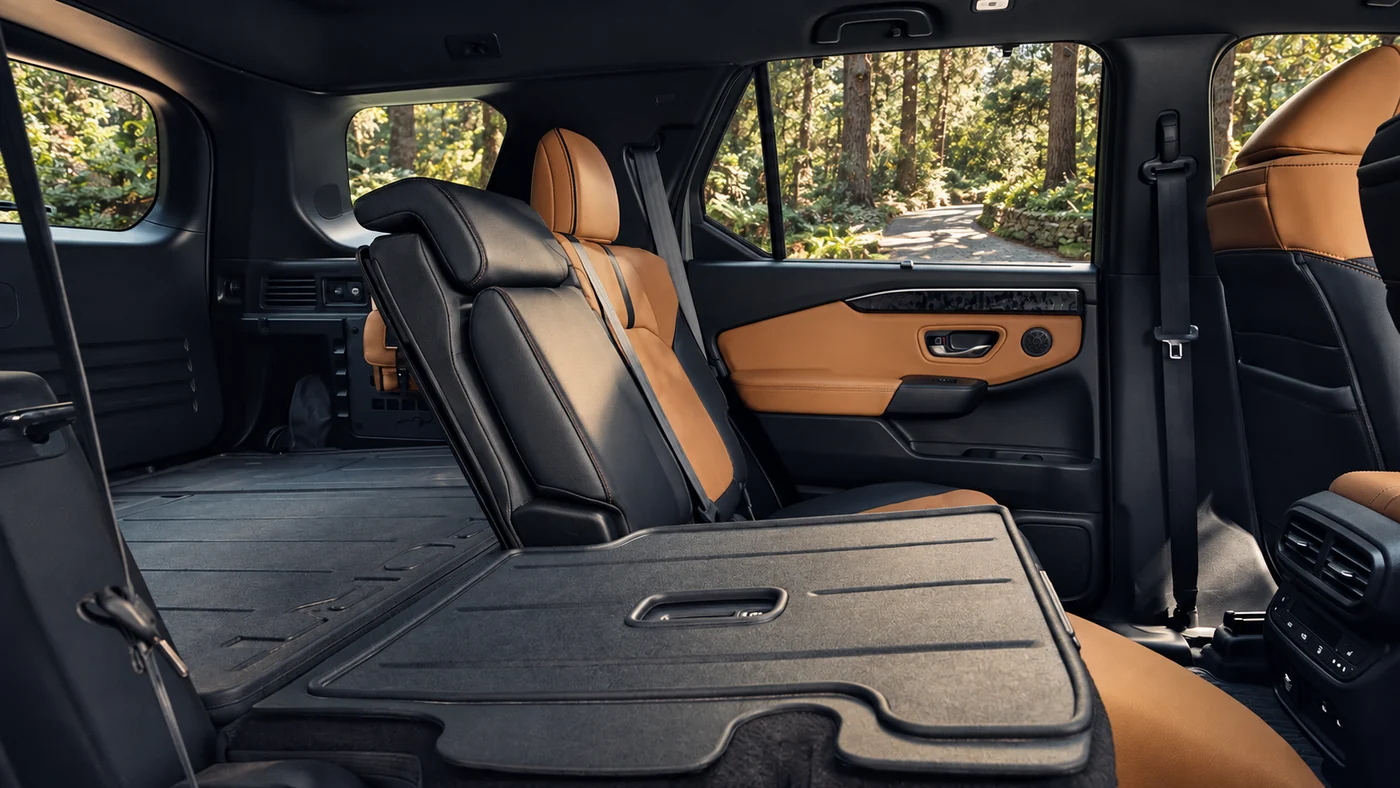
AI-generated editorial illustration based on Honda's 2026 rear-cabin reference, with part of the second-row bench folded. It is not an occupied-seat layout, a child-seat installation test, a three-across fit demonstration or measured knee-space clearance.
If two people share driving, check the back seat with each driver's seat position. A rear passenger may be comfortable behind one driver but cramped behind the other. The published legroom figure isn't the distance that will remain between their knees and the seatback in every arrangement.
For a child seat, inspect the permitted installation and the relationship to the front occupant using the restraint and vehicle instructions. Do not infer approval from a visible gap. If the installation changes the front seat's usable position, that condition belongs in your buying decision.
If the rear bench carries adults side by side, inspect buckle access and the ability to sit normally without leaning into a neighbor. The best evidence is the intended arrangement, not an isolated rear passenger surrounded by empty seating positions.
Honda Passport TrailSport interior materials and comfort equipment
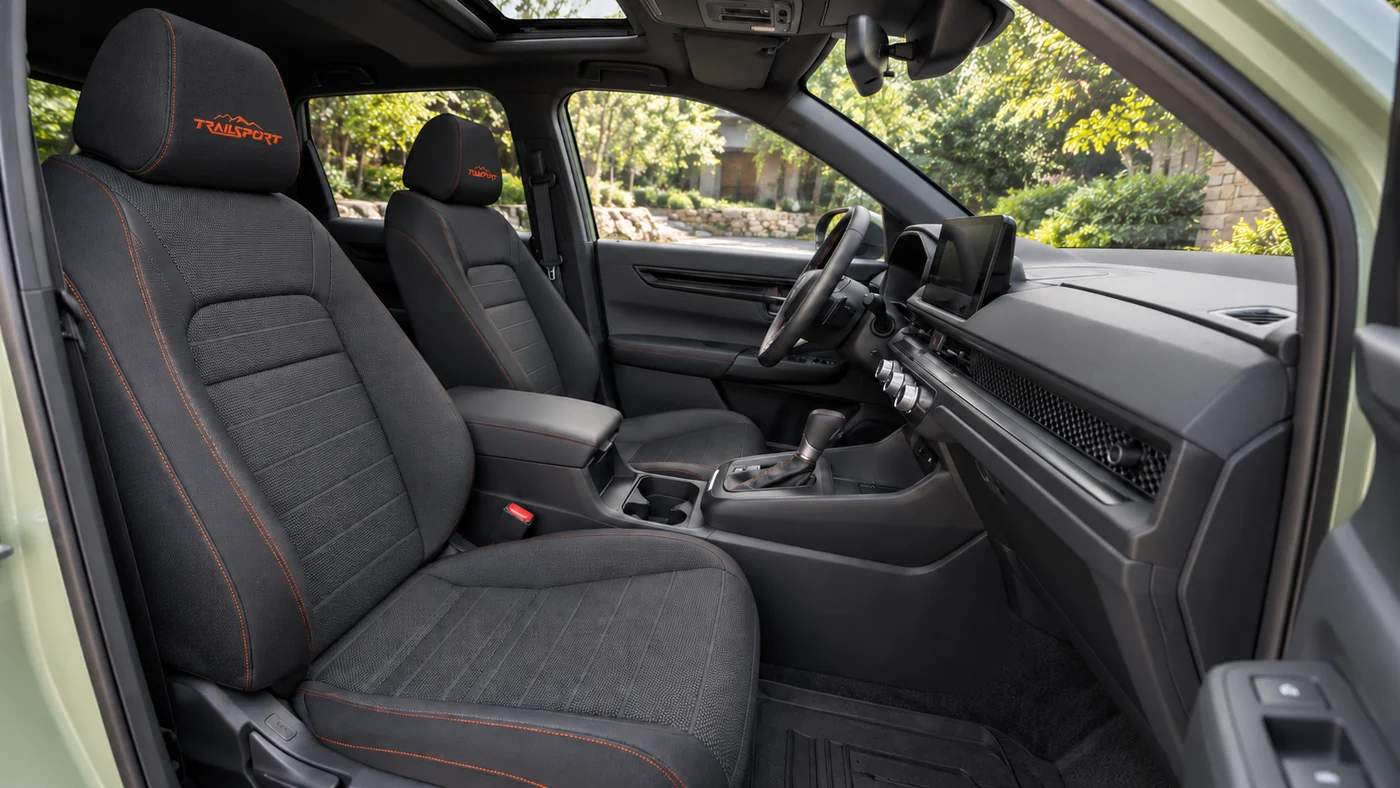
Honda's 2026 matrix separates three seating treatments: RTL uses a leather-and-cloth combination; TrailSport uses leatherette and cloth with orange accents; TrailSport Elite uses perforated leather. Elite also has front-seat ventilation listed. Those are equipment distinctions, not a universal ranking of seat comfort. Honda's 2026 seating matrix.
If the TrailSport interior interests you, inspect the texture and seams in the exact vehicle. Check the cushion and backrest before deciding on the stitching or color. A finish that looks attractive in a gallery may not be the one you prefer for everyday contact, and a different seat treatment should be tried rather than judged only from its name.
Try the seat heating or ventilation if it's fitted, and give it enough time to judge from your normal sitting position. An equipment list tells you the feature is there, not whether you'll like it. Likewise, check care instructions for the upholstery rather than assuming the most expensive finish will suit your routine best.
Use the 2026 manufacturer color guide for Honda Passport interior colors and permitted trim combinations. Check the window sticker before ordering or placing a deposit. Our illustrations are layout aids, not verified swatches; no AI image establishes that a finish is offered on every trim.
The site's Passport trim guide currently covers 2027. Treat it as a separate model-year article rather than importing its names or equipment into this 2026 cabin table.
Dashboard, screen and daily storage checks
Honda lists a 12.3-inch touchscreen and 10.2-inch digital instrument cluster across its 2026 Passport table. Confirm equipment on the exact vehicle, then test the tasks that matter to you while parked. Screen size is not a usability verdict. Honda's 2026 audio and connectivity specifications.
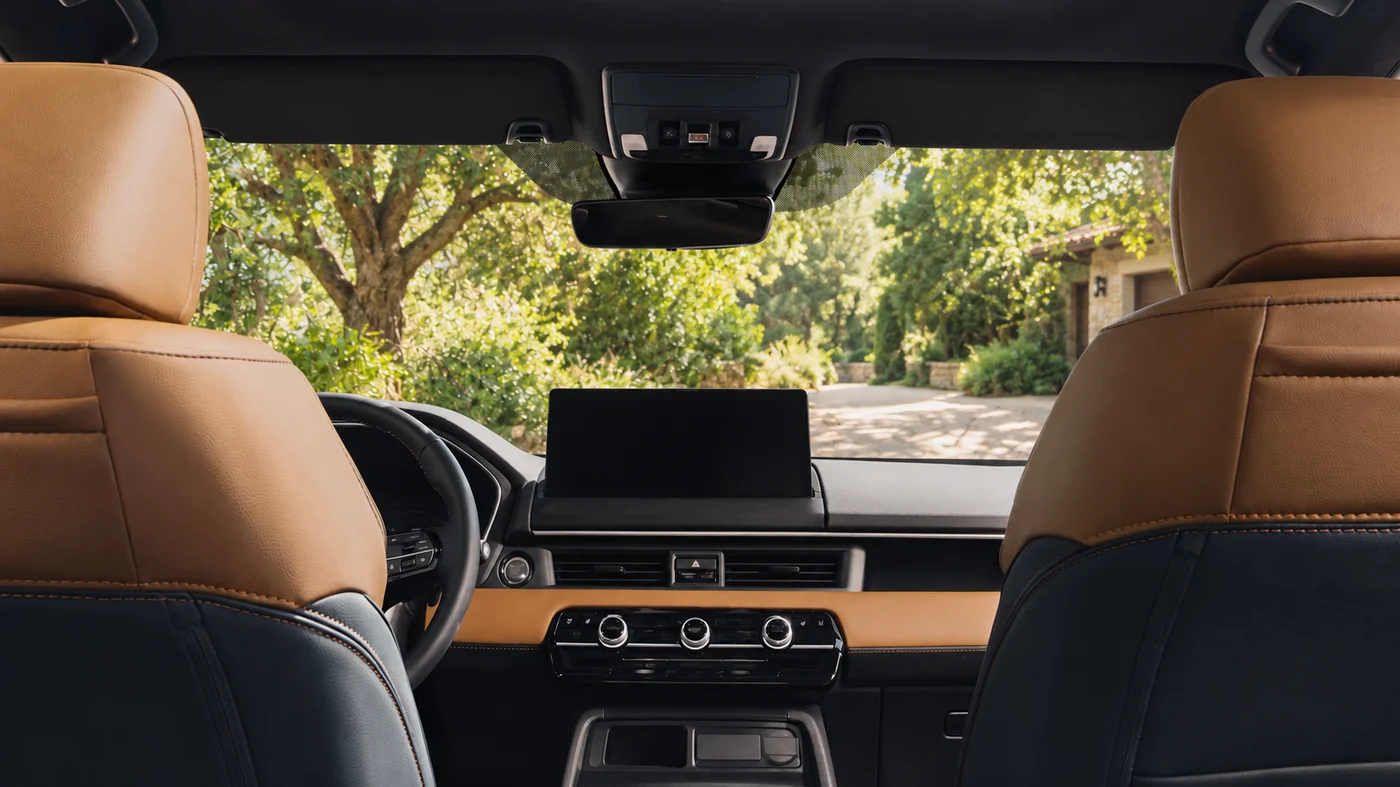
AI-generated editorial illustration based on Honda's 2026 dashboard reference. Screen content is not a verified interface, software version or demonstration of available connected services.
Try changing the cabin temperature, selecting a familiar audio source and connecting your own phone. Check reflections and readability from your normal driving position. A convincing screen demonstration from the passenger side may not represent what the driver sees.
Bring the things you keep up front: your phone in its case, your usual drink bottle and the bag that travels beside the passenger. Try them in the storage spaces. Check that nothing gets in the way of controls or presses against your knees. A useful-looking compartment isn't necessarily the right shape for your belongings.
For rear passengers, inspect access to the controls and storage that they will actually use. A younger passenger may reach a feature differently from the adult demonstrating it. Keep practical observations separate from manufacturer claims about connectivity or convenience.
2025 versus 2026 Honda Passport interior dimensions
| Passenger measurement | 2025, front / rear | 2026, front / rear |
|---|---|---|
| Legroom | 40.9 / 39.6 in | 41.1 / 40.9 in |
| Shoulder room | 62.0 / 61.9 in | 61.9 / 61.7 in |
| Hip room | 59.1 / 57.3 in | 58.3 / 57.4 in |
| Headroom | 39.5 / 40.0 in, all listed 2025 trims | RTL group: 40.5 / 40.7 in; TrailSport groups: 39.1 / 39.6 in |
Evidence: independently checked 2025 and 2026 U.S. tables. Do not combine the greatest values from different trims into a fictional single configuration.
The comparison is useful precisely because the cabins are not interchangeable. A higher rear-legroom entry does not prove that every occupant will prefer the newer vehicle, and a slightly different width entry does not settle side-by-side comfort. Try the same passengers in both with a consistent front-seat setting routine.
The 2025 table lists EX-L, TrailSport and Black Edition. Those names should not be mapped automatically onto the 2026 RTL and TrailSport groups. Screens, upholstery, roof equipment and adjustment details must be checked by year and trim, not inferred from a reused name.
Looking at a used 2019 Passport? Use its own specifications rather than this redesigned 2026 model's table. Check the year on any cabin photograph or accessory listing too. A familiar model name doesn't confirm that dimensions, roof equipment or fitted accessories are interchangeable.
Passenger dimensions do not establish cargo or sleeping fit
A folded rear row changes the job from passenger seating to loading. The sum of front and rear legroom does not give floor length, and rear shoulder room does not give wheel-housing width. For a crate or parked sleeping arrangement, identify the endpoints and measure the exact configuration.
Check the usable front-seat position, the folded surfaces, the narrowest interior point and the hatch-closing boundary. A comfortable rear-seat experience is not evidence that a rigid object will enter through the opening. Our measurement-method guide explains those evidence boundaries.
Passport is worth a look if five seats and a two-row cabin suit your everyday trips. When choosing between RTL and TrailSport, try the roof clearance and seats before getting caught up in finishes or technology. If you need another passenger row, cross that requirement off first by choosing a different vehicle.
Frequently asked questions
Does the Honda Passport have third-row seating?
The checked U.S. 2025 and 2026 tables list five seats in two rows. This guide does not identify a factory third-row configuration.
How much rear legroom does the 2026 Passport have?
Honda lists 40.9 inches across the checked 2026 trims. The separately checked 2025 value is 39.6 inches. Neither guarantees knee clearance behind your particular driver.
Which 2026 Passport group has more published headroom?
RTL variants list 40.5 inches in front and 40.7 in the rear. TrailSport variants list 39.1 and 39.6 respectively. Check the exact roof and seat position before choosing.
Are the 2025 and 2026 Passport interiors the same?
No. Their separately checked measurements and trim structures differ. Keep cabin dimensions, images and equipment specific to the model year being considered.