Dimensions · Space · Buying guides
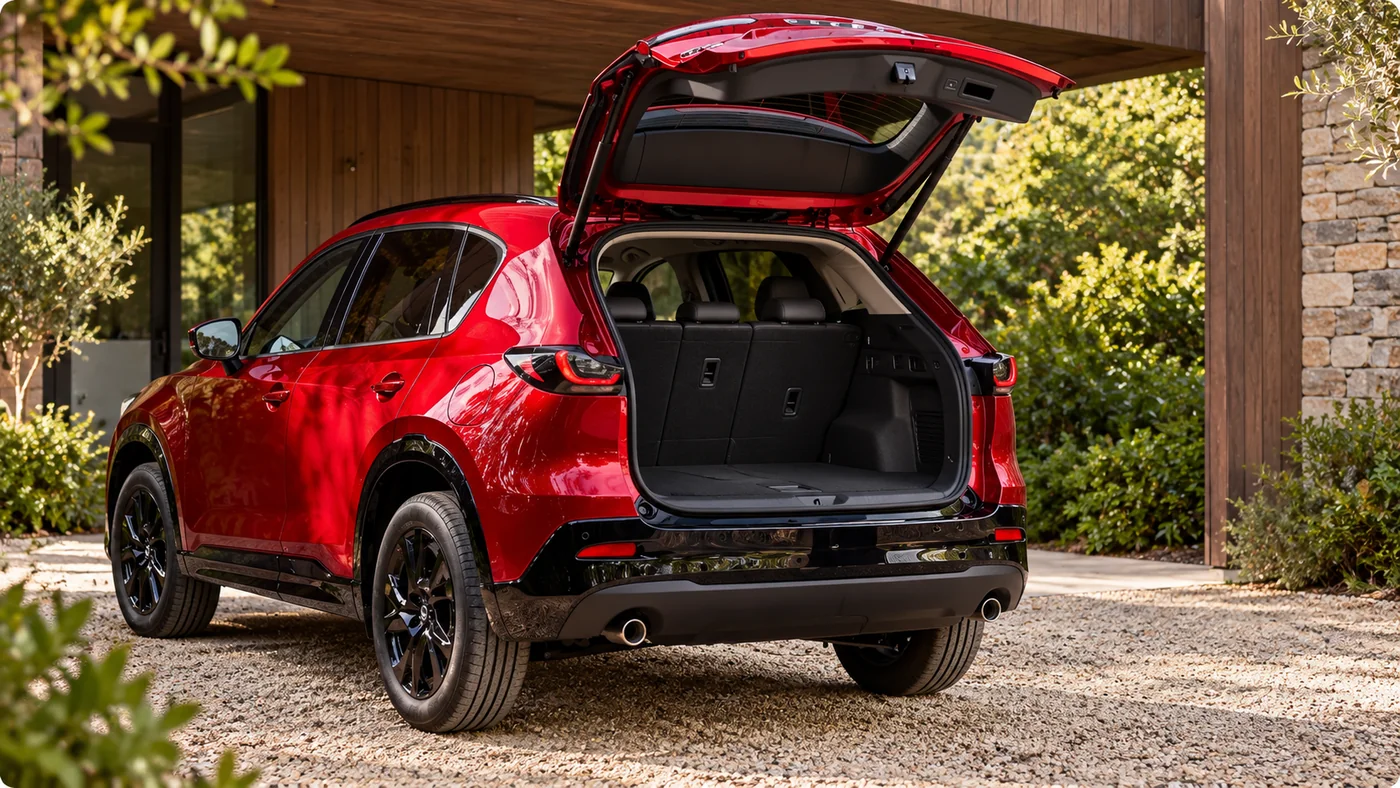
For the U.S. 2026 Mazda CX-5, Mazda publishes 39.1 inches from the trunk end to the back of the second row, 41.3 inches between the rear wheel housings, and a 42.8-inch-wide by 30.7-inch-high tailgate opening. Those are useful starting points for a stroller, crate or box, but the shape of the load and the path through the hatch still matter. Mazda's 2026 specification sheet, PDF page 8 supplies these figures.
Don't use that table for every CX-5. The redesigned 2026 model has its own measurements, while the 2025 floorboard can sit at different levels. This guide also includes a separate 2019 table for used-car shoppers. All dimensions below are manufacturer-published; SUVLook hasn't physically measured or load-tested these vehicles.
2026 Mazda CX-5 cargo dimensions in inches
Read each measurement's label before comparing it with your item. Mazda lists separate lengths at the floor and above the floor; a tall object doesn't necessarily get the same space as a low one.
| Manufacturer measurement | 2026 CX-5 |
|---|---|
| Trunk end to back of second row | 39.1 in |
| Length behind second row, above floor | 30.6 in |
| Width between rear wheel housings | 41.3 in |
| Width at floor | 57.5 in |
| Tailgate-opening width | 42.8 in |
| Tailgate-opening height | 30.7 in |
| Height from floor to roof | 33.7 in |
For a wide rigid load, start with the narrow space between the wheel housings and then check the opening. The wider floor areas beside those housings may accommodate smaller bags without providing a continuous surface for a large box.
For something tall, check clearance where its top will sit. Seatbacks lean, trim projects into the space and the liftgate curves inward. A measurement near the floor can be accurate while still giving the wrong answer for a tall suitcase.
Seats down: which cargo length should you use?
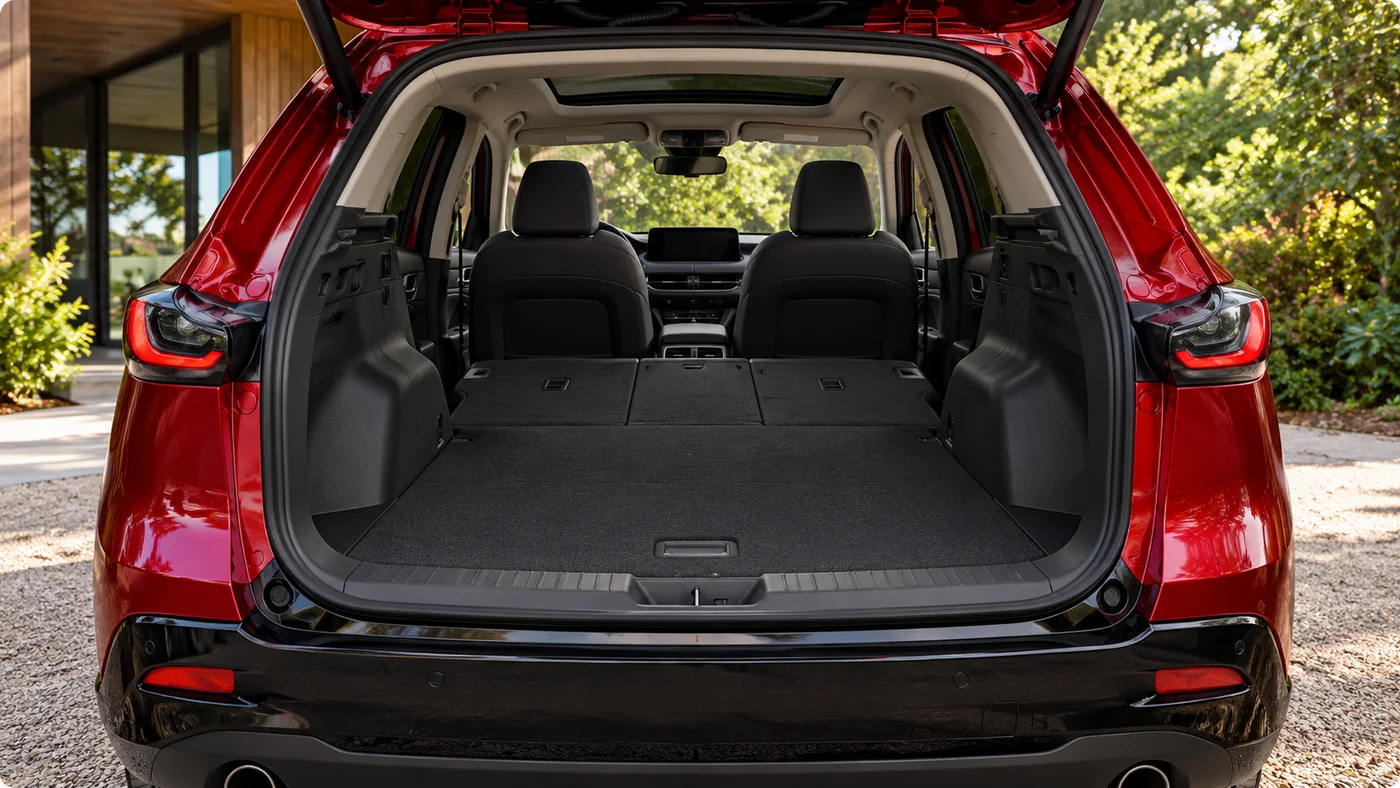
AI-generated folded-seat concept using 2026 visual references. Seat seams, floor level and apparent length are illustrative. Use the specification labels and measure the actual vehicle for a close fit.
The 2026 sheet lists 75.0 inches behind the first row at the floor and 65.2 inches above the floor. It also has a separate hatchback cargo-length entry of 72.2 inches behind the first seat. These are different definitions, not three interchangeable promises about an item's usable length.
For a long box, keep the driver's seat in its normal position, fold the rear seats according to the vehicle instructions, then check length at the height of the box. The specification sheet doesn't establish your particular driving position or the room needed to turn the object inside.
Be cautious with a maximum measured after moving a front seat forward. Mazda separately lists a 2026 length to the passenger seat at its most-forward position; that is a different arrangement from carrying a passenger comfortably. Don't use a maximum like that as a sleeping-platform length without checking the actual seats, gaps and support surface.
If the object only fits diagonally, trace the full loading path. It must pass through the opening, turn inside without pressing on trim, and leave enough clearance for the liftgate to close. A diagonal tape measurement across an empty trunk doesn't establish that a bulky object can make the same turn.
2025 CX-5: upper versus lower floorboard position
For a 2025 model, record the floorboard position along with the measurement. Mazda's sheet gives different heights, lengths and wheel-housing widths for the two settings.
| Manufacturer measurement | Floorboard upper level | Floorboard lower level |
|---|---|---|
| Length with rear seats upright | 37.6 in | 37.4 in |
| Length with rear seat folded | 67.0 in | 66.3 in |
| Width between rear wheel housings | 39.5 in | 41.3 in |
| Tailgate-opening height | 29.1 in | 30.8 in |
| Height from floor to roof | 30.6 in | 32.4 in |
| Width at floor | 56.9 in | 57.0 in |
| Tailgate-opening width | 44.3 in | 44.3 in |
A seller's measurement can differ from yours simply because the floor is in another position. Check that before assuming one number is wrong. Mats, liners and accessories can also affect how an item rests, so try the car as you'll actually use it.
Choose the floor position using the vehicle's instructions and your load. For a tall case, useful overhead clearance may decide the fit. For a rigid item resting partly on folded seats, inspect the transitions and support points rather than assuming either setting creates a perfectly level platform.
2019 Mazda CX-5 trunk dimensions
Mazda's separate 2019 gasoline-model specification deck provides the following measurements. They belong to that year, rather than serving as a combined table for all older CX-5s.
| Manufacturer measurement | 2019 CX-5 |
|---|---|
| Length with rear seats upright | 38.0 in |
| Width between rear wheel housings | 41.3 in |
| Tailgate-opening width | 44.3 in |
| Tailgate-opening height | 30.7 in |
| Height from floor to roof | 32.4 in |
| Lift-over height | 29.4 in |
If you're looking at a 2016 or 2020 CX-5, ask for matching-year documentation and repeat the fit check on that car. This guide hasn't verified separate measurement tables for those years. A familiar badge or a similar-looking trunk isn't enough for an object that barely fits.
Why 2026 needs its own fit check
Mazda identifies the 2026 CX-5 as a new third-generation model. Its reveal describes a longer and higher cargo area with a lower lift-in height than its predecessor. Use the new specification sheet directly; adding an approximate improvement to an older measurement can mix different measuring points.
Volume is a separate comparison. The 2026 specification sheet publishes 33.7 cubic feet with the seats upright and 66.5 with the rear seats down. Neither figure is a floor length in inches. A broad shallow item and a narrow tall item can occupy the same volume while presenting very different loading problems.
Keep the Mazda CX-50 separate as well. It's another vehicle, so its dimensions shouldn't fill a missing CX-5 measurement. Our Mazda research page brings the site's Mazda coverage together; check the model name and year on anything you compare.
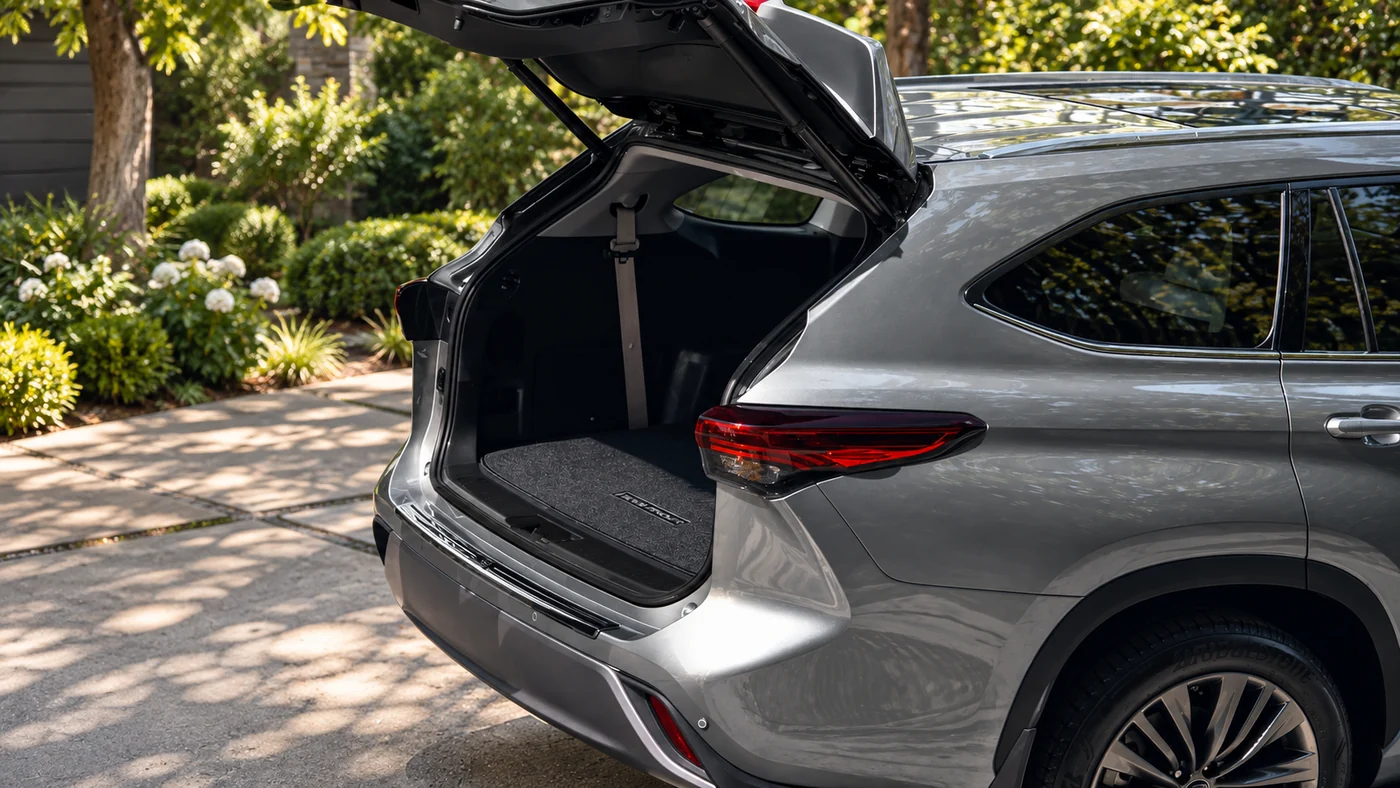
Check the hatch before deciding an item fits
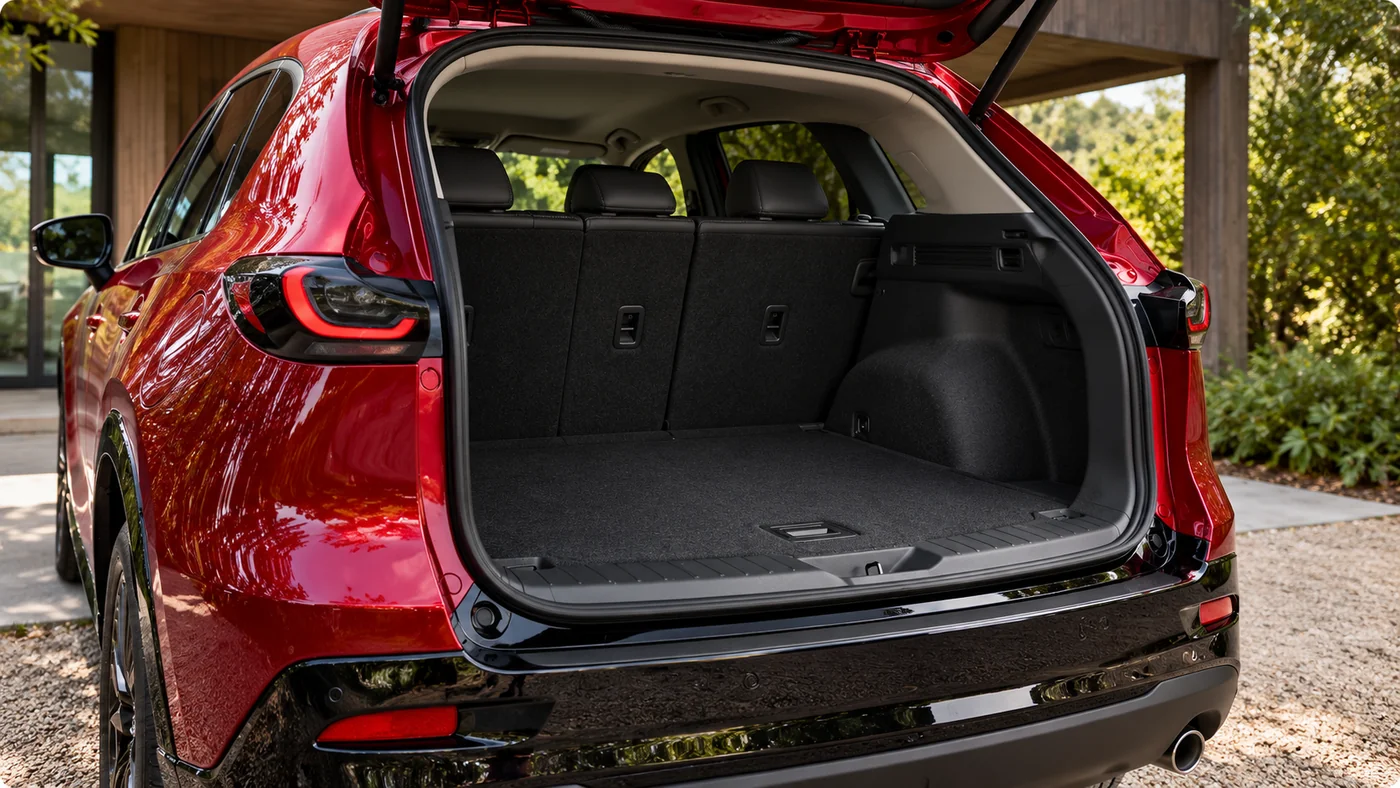
AI-generated 2026-reference detail illustrating where to inspect loading clearance. It doesn't show a measured opening or prove that an object fits.
Measure the outside of the item, including handles, wheels and hinges. For a stroller, use its locked folded shape and try it with the other bags you normally carry. If removing wheels is the only solution, decide whether you're willing to do that at every stop.
For a dog crate, allow room for its door to open and follow the crate maker's ventilation and securing instructions. For a mobility device, include the separate parts you carry after folding it. Leave the passenger seats you need usable during the trial.
A cardboard template is helpful when you can't bring a large object. Match its largest cross-section to check the opening, then measure the object's full length inside. A thin template won't reproduce the space a long object needs when turning through the hatch.
Close the liftgate gently and stop if it touches the load. Don't rely on a powered gate to push a bag inward. Once the object fits, check how you'll secure it using the vehicle's instructions and make sure its weight is within the vehicle's permitted load.
A five-minute check before a pickup or purchase
Bring your tape measure, the item's outside dimensions and a note of the seats you need. Record the year and floorboard position so the result makes sense later.
- Set the front seats for the actual driver and passenger. Leave required rear seats upright.
- Check the opening's usable width and height along the entry path, including curved trim.
- Measure the narrowest interior width and length at the height of the item.
- Try the actual load where possible, including the other luggage that must travel with it.
- Confirm that the liftgate closes freely and that you can secure the load without compromising passenger space.
Our Cargo Fit Check can organize comparisons where supported measurements exist. It doesn't replace a trial of an awkward shape or establish missing geometry. For alternative compact SUVs, the CR-V cargo guide and Forester cargo guide explain their own measurements and limits.
For daily family use, make the stroller-and-bags trial your first test. For an occasional furniture pickup, check that specific box afterward. That keeps the buying decision tied to the trips you'll make most often.
Frequently asked questions
What are the 2026 Mazda CX-5 trunk dimensions in inches?
Mazda lists 39.1 inches from the trunk end to the back of the second row, 41.3 inches between the rear wheel housings, and a tailgate opening 42.8 inches wide by 30.7 inches high. Check the measurement labels and the item's entry path before treating those as a fit guarantee.
How long is the CX-5 cargo area with the seats folded?
The 2026 sheet lists 75.0 inches behind the first row at the floor and 65.2 inches above the floor. The 2025 sheet separately lists 67.0 inches with the floorboard up and 66.3 inches with it down. Verify the front-seat positions and measuring points on the vehicle.
How wide is the 2019 Mazda CX-5 trunk opening?
Mazda's 2019 specification deck lists 44.3 inches for the tailgate-opening width. Its 41.3-inch width between the wheel housings is a separate measurement inside the cargo area.
Why do 2025 CX-5 cargo measurements differ between listings?
The upper and lower floorboard positions have different published measurements. Check that setting, the measuring points and any liner before comparing numbers.
Can I use these figures for a 2016 or 2020 CX-5?
This guide doesn't verify those years separately. Get the matching-year specifications and measure the actual car for a close fit.
Will a mattress fit in a Mazda CX-5?
We haven't verified a mattress fit. Compare its full shape with the opening, narrowest width, supported surface and length with the front seats set normally. Folded-seat volume alone can't answer that question.