Dimensions · Space · Buying guides
For a family using every seating row, cargo space behind the third row matters more than the biggest number in the brochure. Among the four U.S. 2026 SUVs compared here, the Chevrolet Traverse has the largest published seats-up capacity at 22.9 cubic feet. It also has the largest advertised maximum, rounded by Chevrolet to 98 cubic feet. That makes it a useful starting point, not a declaration that it wins every loading task or every comparison in the midsize market.
The Palisade, Explorer and Pathfinder offer different amounts of room and different passenger arrangements. Compare the configuration you will use, then try the complete load. SUVLook has not performed a side-by-side luggage test, and this is a bounded four-model comparison, not an exhaustive ranking of every midsize SUV. Sources were checked October 17, 2026.
Compare the same seating arrangement
| U.S. 2026 vehicle and scope | Behind upright third row | Behind second row, third folded | Maximum, both rear rows folded |
|---|---|---|---|
| Chevrolet Traverse | 22.9 cu ft | 56.6 cu ft | 98 cu ft, rounded as advertised |
| Hyundai Palisade | 19.1 cu ft | 46.3 cu ft | 86.7 cu ft |
| Ford Explorer Active 100A, Active and ST-Line | 16.3 cu ft | Not verified in the cited 2026 overview | 85.8 cu ft |
| Ford Explorer other models, overview scope | 16.3 cu ft | Not verified in the cited 2026 overview | 85.3 cu ft |
| Nissan Pathfinder | 16.6 cu ft | 45.0 cu ft | 80.5 cu ft |
Manufacturer definitions, rounding and loading boundaries can affect comparisons. The table is a shortlist aid, not proof that a rigid object or a particular number of suitcases fits. It deliberately does not combine a newer redesigned vehicle with an older model's measurements.
If every row is usually occupied
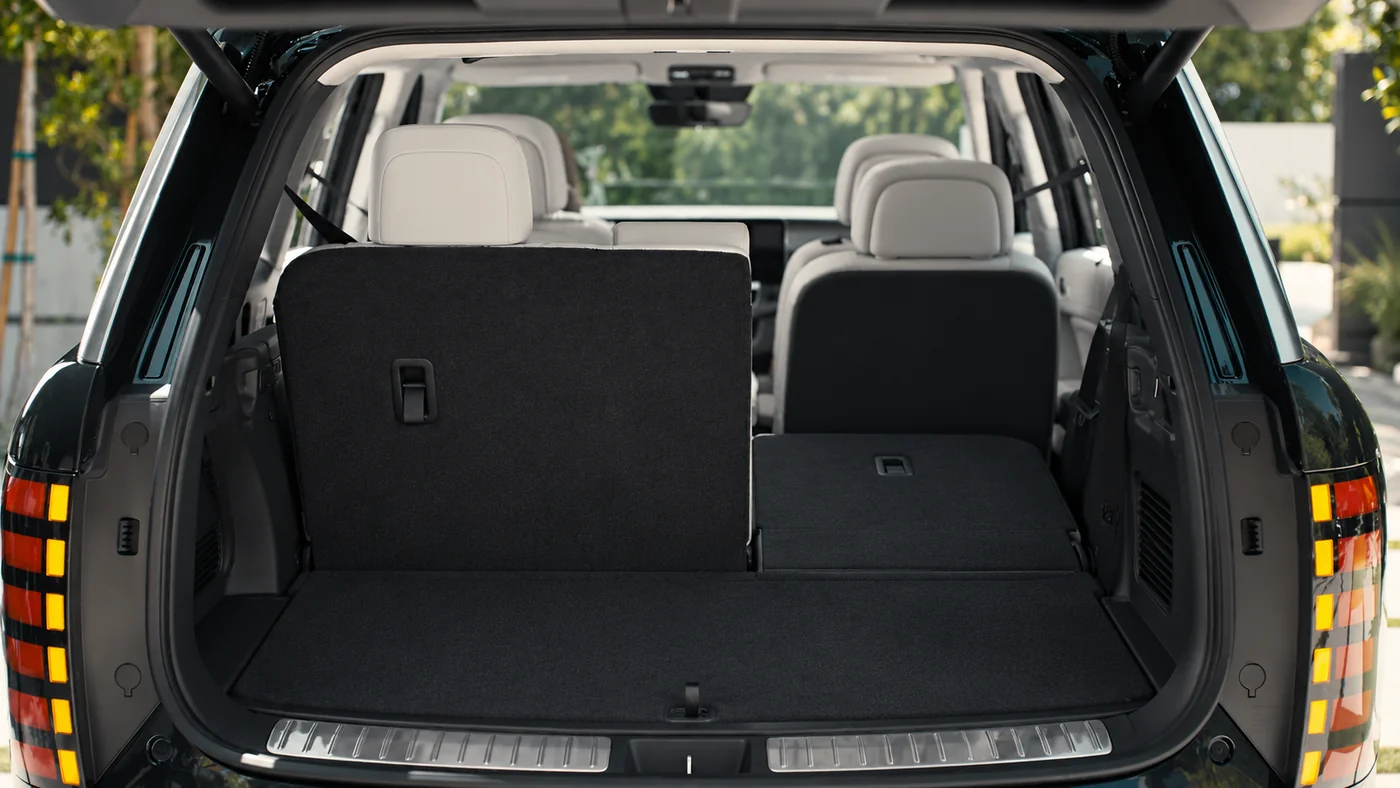
Start with Traverse if the main problem is luggage behind a full cabin. Its 22.9-cubic-foot figure leads this selection, but the actual stroller and suitcase shapes still need to work together. Try all of them at once, with the rear seatbacks set for passengers and the liftgate able to close normally.
Palisade follows at 19.1 cubic feet in this selection. That difference is worth a loading comparison, especially when a particular stroller folds into an awkward shape. A lower total volume does not prove your specific load fails; equally, a higher figure does not guarantee success.
Pathfinder and Explorer are close in published seats-up volume, at 16.6 and 16.3 cubic feet respectively. Do not claim that a three-tenths-cubic-foot difference proves a meaningful real-world advantage. Examine the opening, the floor, the seatback slope and how the bags arrange instead.
If the third row usually stays folded
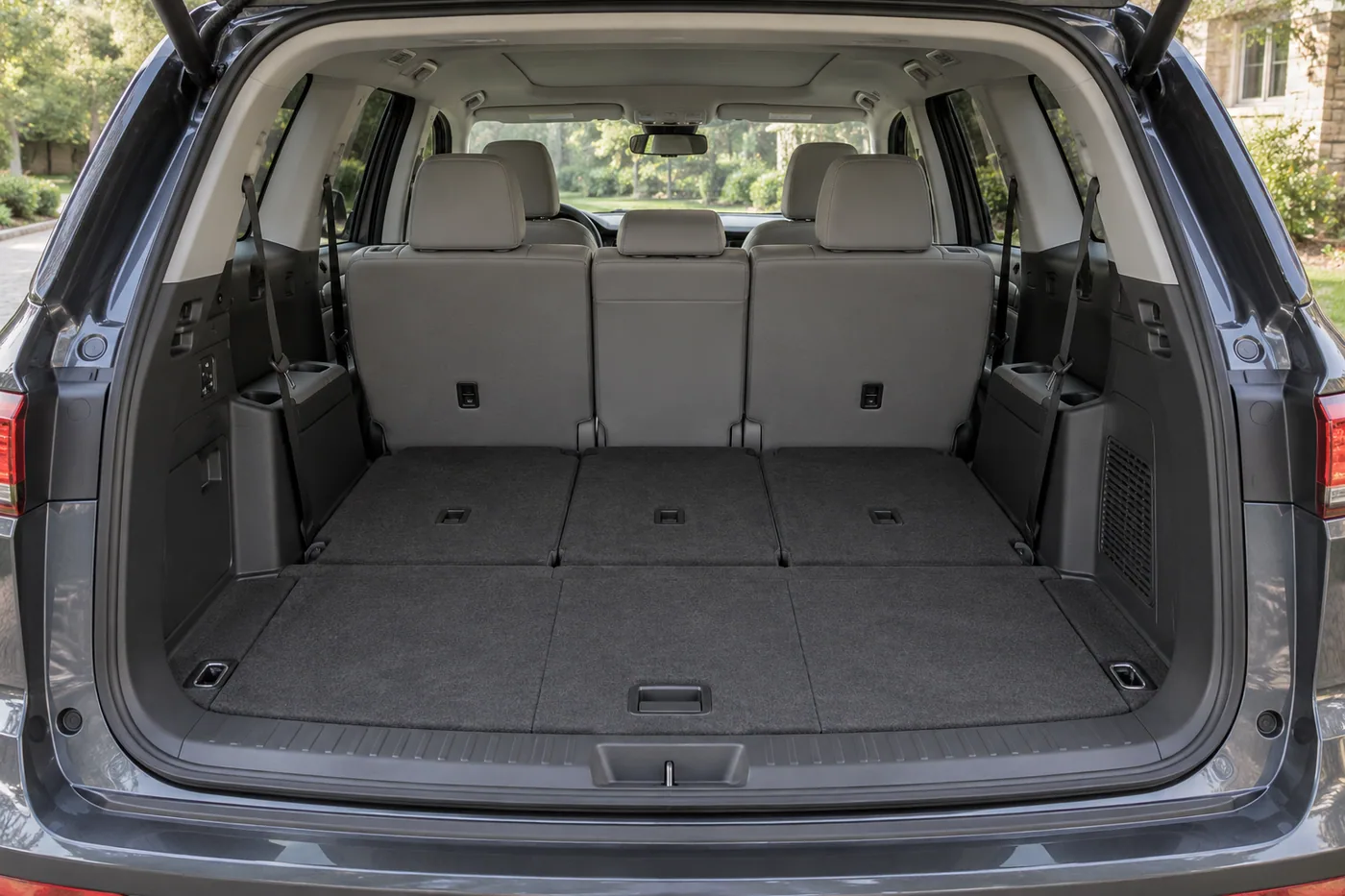
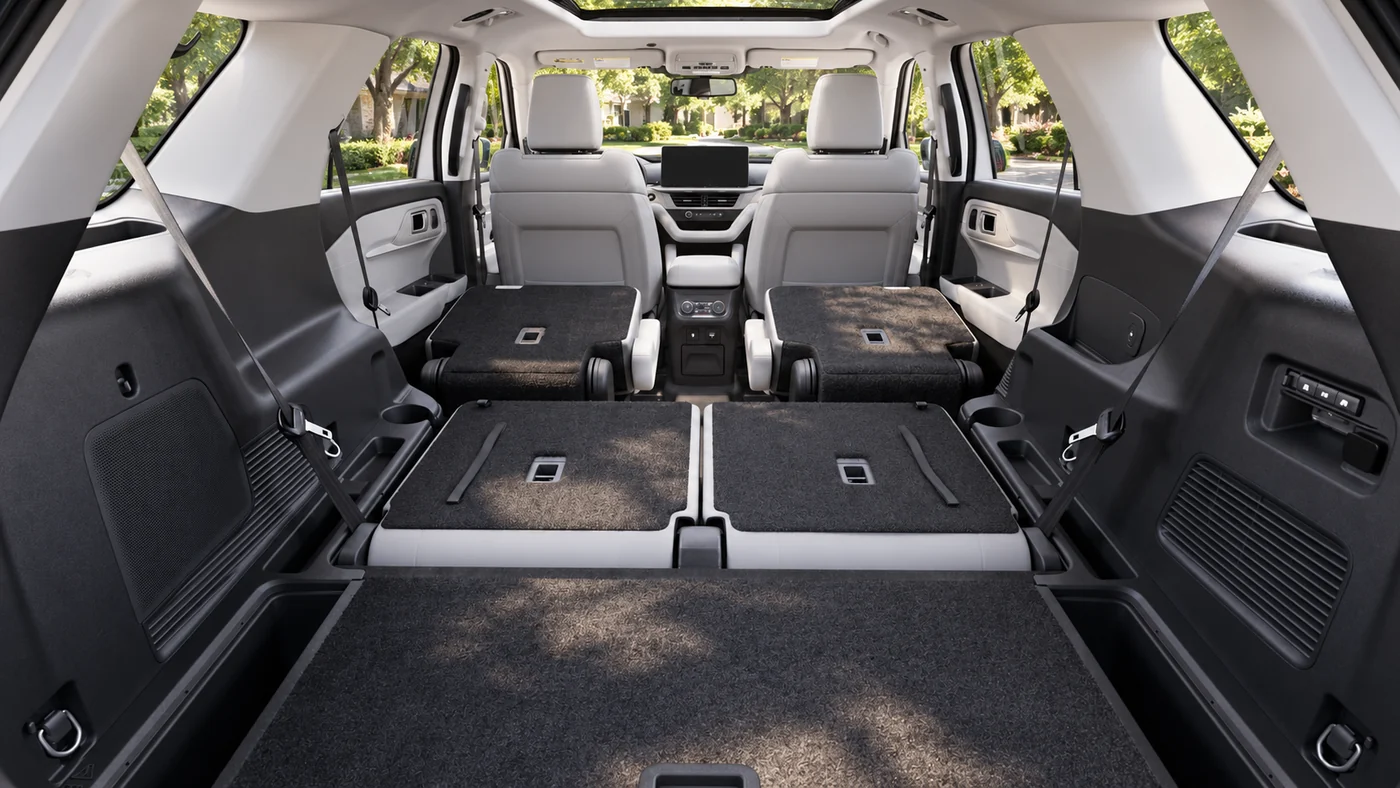
AI-generated configuration concept, not a named vehicle or measured cargo floor. The pictured space does not establish any listed model's capacity, seat-folding procedure or item fit.
Use the middle column when the rear row is mainly occasional seating. Traverse's published 56.6 cubic feet is above the Palisade's 46.3 and Pathfinder's 45.0 in the sources compared here. The Explorer entry remains unverified in this particular 2026 source set; an older Explorer number is not silently inserted to make the table look complete.
Set second-row seats for their usual occupants before loading. Sliding or reclining them to create a larger photograph can leave you with a configuration no one wants to travel in. If a mixed folded/upright arrangement is important, test that arrangement rather than assuming the fully folded figure describes it.
Ask whether you can reach the bag used during short stops without unloading everything. Practical access, not simply total capacity, can decide which arrangement is less frustrating on a family trip.
If you regularly carry large items with both rows folded
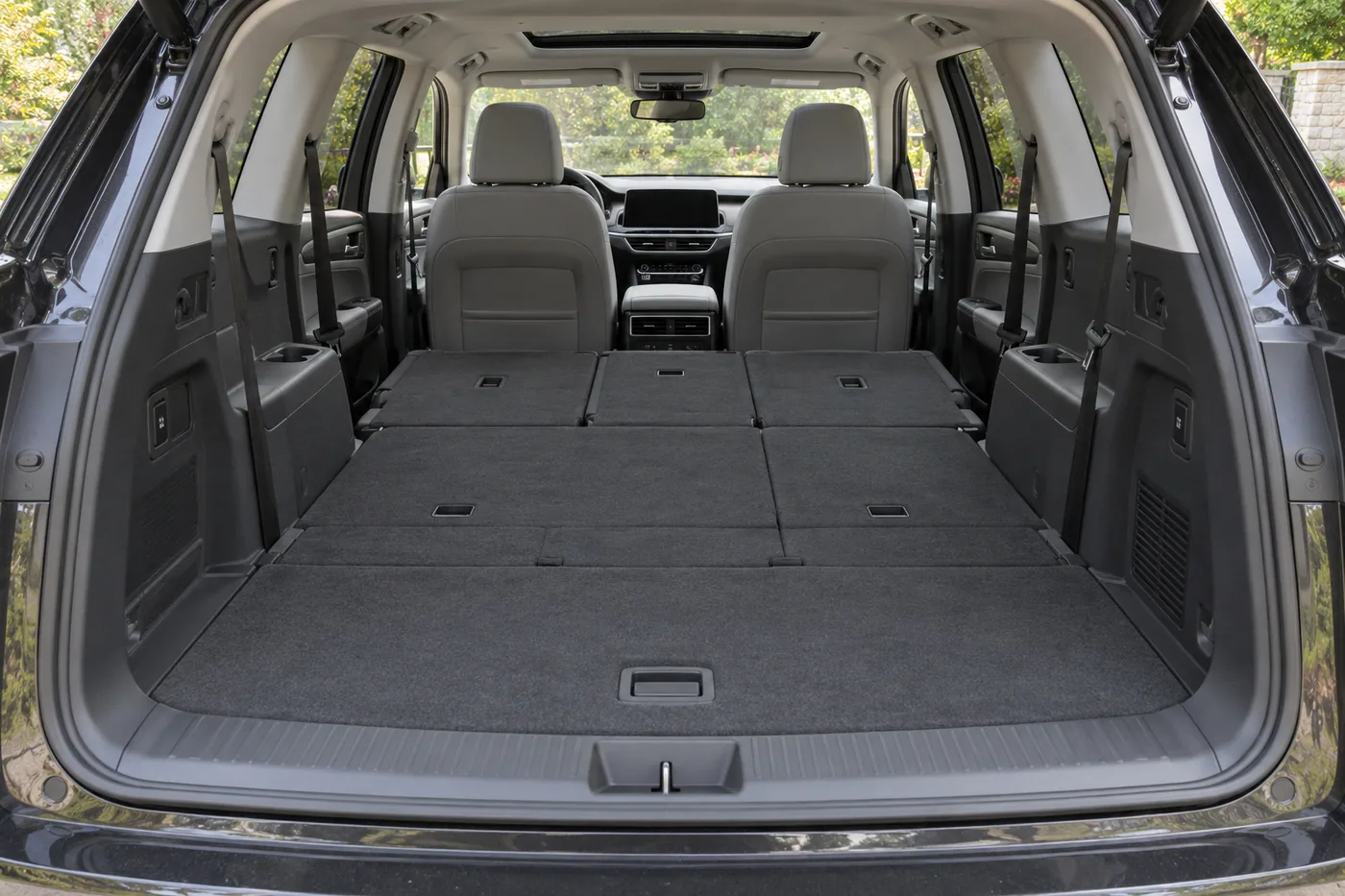
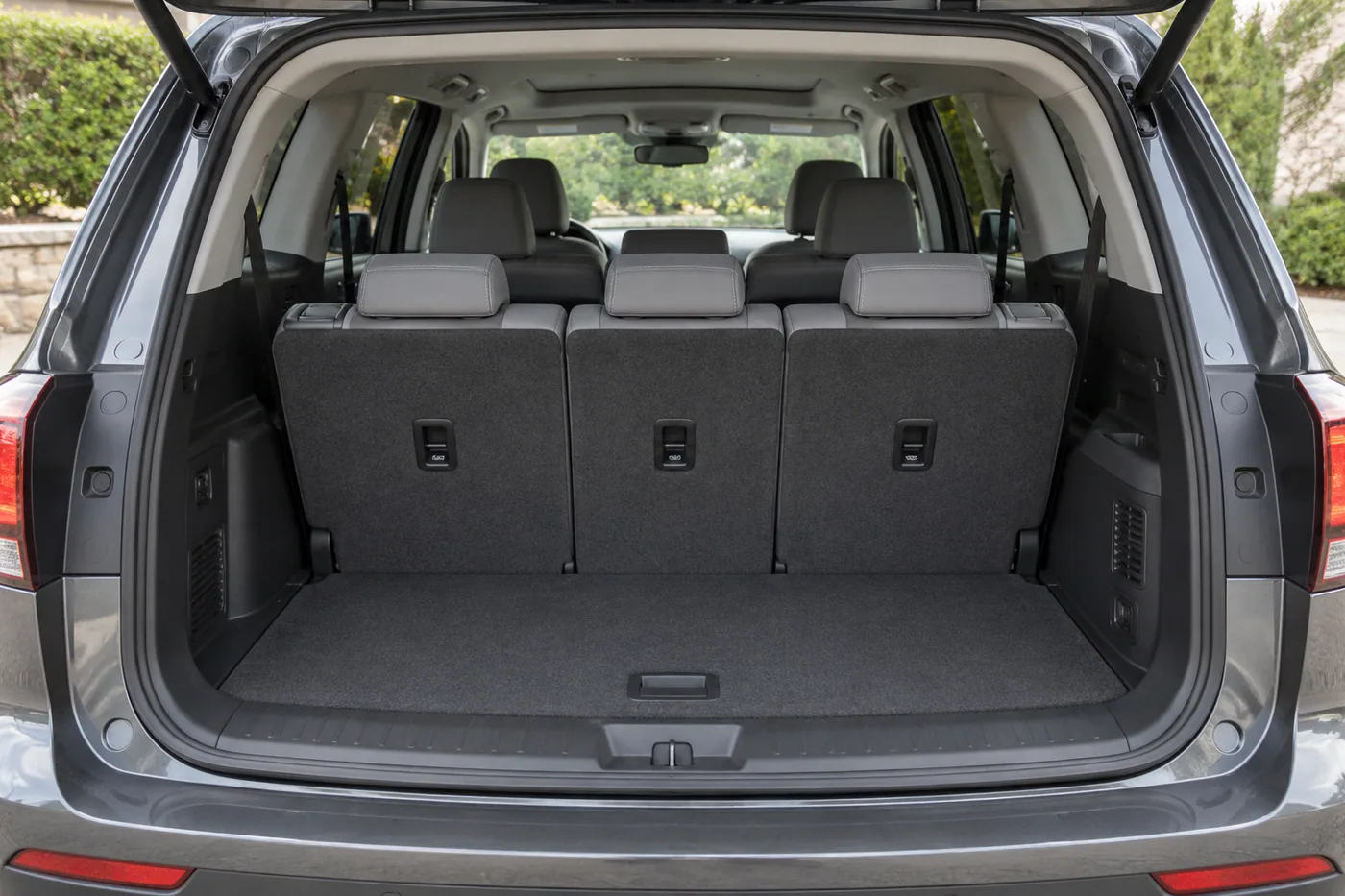
AI-generated folded-seat concept, not a measured load surface or a verified vehicle configuration. Floor length, slopes and hatch clearances must be checked on the actual vehicle.
The maximum column helps shortlist vehicles for bulky loads, but it cannot settle a furniture pickup. A tall cabinet must pass through the opening, turn into position if necessary and clear the closed liftgate. It may fail at one of those steps even when its calculated volume is much smaller than the vehicle's rating.
For an occasional pickup, measure the package rather than the object without its box. Include handles, wheels and projecting parts. Keep the front seats positioned for the people making the trip, and inspect the support surface where the item will rest.
Do not multiply an SUV's exterior dimensions to estimate its interior cargo box. Likewise, dividing cargo volume by an assumed height cannot recover a verified floor length. Ask for the specific measurement you need.
The inch measurements that make a cargo comparison useful
Write down the same measuring points for every candidate:
- Minimum hatch-opening width and usable opening height along the entry path.
- Floor depth behind the seating row you will keep upright.
- Narrowest interior width at the item's height, including wheel housings and projecting trim.
- Clearance above the load surface and beneath the closed liftgate.
- Space for the object to rotate during loading, where required.
Use a cardboard cross-section template if bringing the item is impractical, then check its full length separately. A thin template can clear the opening while the real object's length prevents it from turning inside.
Nissan publishes some first-row-to-back-door and wheelhouse measurements for the 2026 Pathfinder, while our Explorer cargo guide includes separately labeled 2025 linear measurements. Those remain tied to their specific vehicles and years; neither establishes the other SUVs' hatch geometry.
Seats, weight and daily use can change the choice
Count passengers before choosing captain's chairs or a bench. With two second-row chairs, only four people occupy the first two rows. A three-place second-row bench can accommodate a fifth person while leaving row three folded. Whether that layout is offered depends on the exact trim and year.
Cargo volume also says nothing about permitted carrying weight. Check the vehicle's labels and manual for your load, including passengers and equipment. A physically empty-looking cabin can still have weight limits that matter.
If you are considering a powered-seat Palisade, check its VIN for applicable recalls and completed remedies before a folding-seat demonstration. Our Palisade cargo guide explains the model-year and powered-seat evidence separately. Follow the vehicle's current instructions, not an old demonstration video.
Which should you shortlist first?
For this four-model group, begin with Traverse when published cargo volume is your main priority. Compare Palisade next if its passenger arrangement and equipment suit you. Keep Explorer or Pathfinder in the running when their overall fit works better, but bring your real load rather than dismissing or choosing them on a small numerical difference.
Other midsize SUVs may change the shortlist. This article does not establish a market-wide winner, and it does not answer a small-SUV or full-size-SUV ranking by relabeling these vehicles. Use the three-row SUV buying guide for a wider decision and the model-specific cargo guides for deeper fit checks.
Frequently asked questions
Which midsize SUV has the largest cargo space?
Among the four U.S. 2026 models compared here, Traverse has the largest published seats-up and maximum capacities. This limited comparison does not establish the largest vehicle across the entire midsize market.
Should I compare maximum cargo volume for a seven-person trip?
No. Start with the capacity behind the upright third row, then try the complete luggage set. The maximum requires folding seats your passengers may need.
Does a higher cubic-foot rating guarantee my stroller fits?
No. Check its folded outside dimensions, the hatch opening and the other bags carried alongside it. Close the gate without pressure on the load.