Dimensions · Space · Buying guides
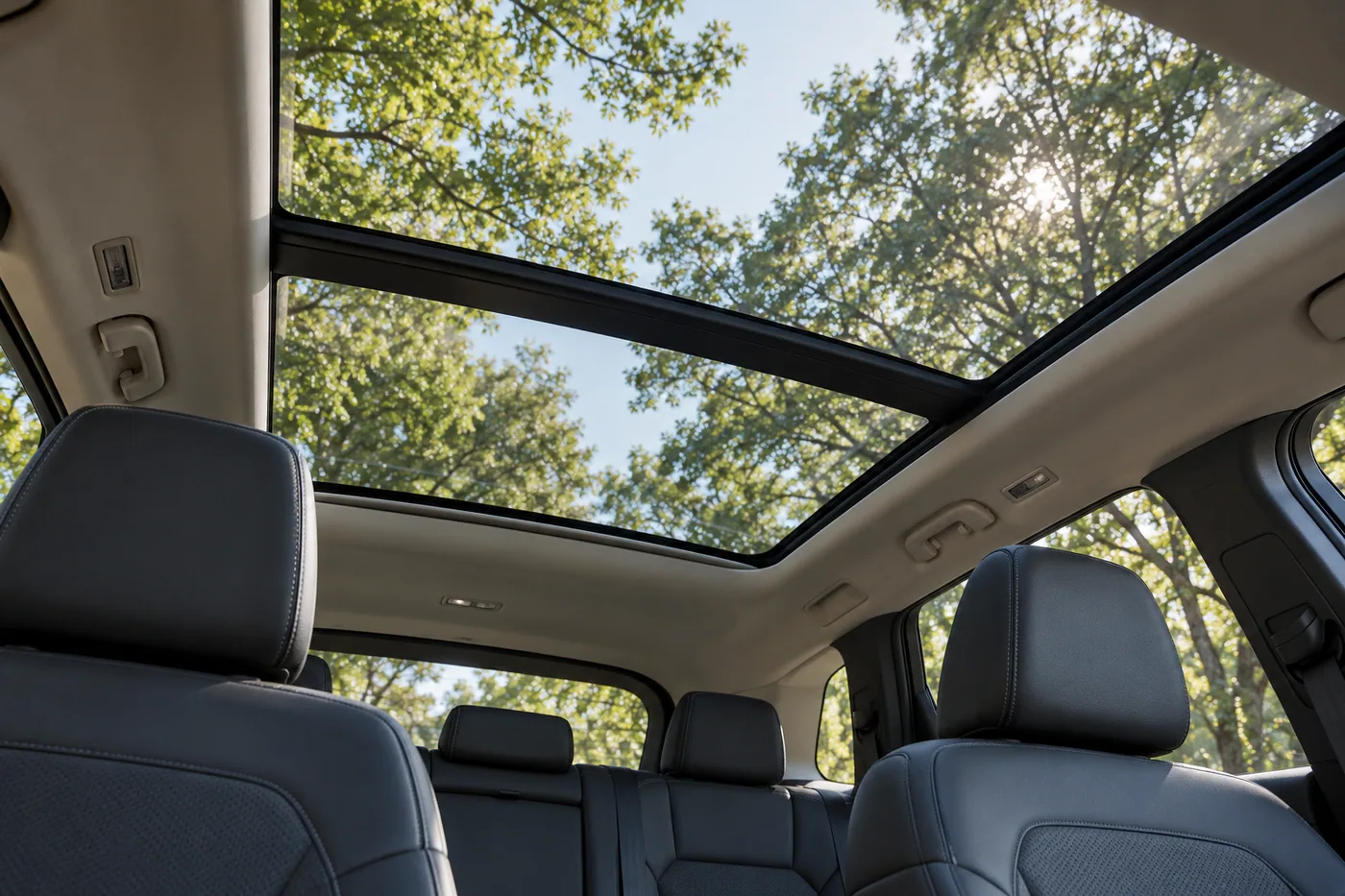
A panoramic roof is a broad glass roof area that brings a view of the sky into more of the cabin. It may be fixed, or it may combine opening and fixed sections. A listing that says “panoramic” does not tell you which glass moves, how much shade you get, or how well you will fit underneath it.
For an SUV shopper, those details matter more than the name. Decide whether you want daylight, fresh air, or both, then check the actual vehicle's controls, shade and seated headroom before paying for the feature.
What is a panoramic sunroof?
In shopping terms, a panoramic sunroof is a large glass-roof arrangement with an opening section. However, equipment names vary, so treat the label as a starting point and confirm its operation in the owner's manual. The view through the glass can be much larger than the opening to the outside.
These are the useful distinctions:
| Roof arrangement | What it gives you | What to verify |
|---|---|---|
| Fixed panoramic glass | A sky view through glass that stays in place | Shade provision and comfort in sunlight |
| Opening panoramic system | A sky view plus an opening glass section | Which panel moves, whether it tilts and how far it slides |
| Conventional sunroof or moonroof | A more localized roof opening or glass area | Actual coverage, opening functions and headroom |
For example, the U.S. 2026 Volvo XC60 owner's manual describes an opening front glass section and a fixed rear section. Rear passengers get a view through that rear glass, but it does not retract.
Fixed glass is a different proposition. Ford's 2026 Mustang Mach-E order guide lists an optional Panoramic Roof Package for the all-electric Premium trim containing fixed glass and a removable roof sunshade. It provides the roof view without an opening panel. Verify the package on the specific vehicle.
What is a panoramic moonroof?
A panoramic moonroof is another manufacturer label for a broad glass-roof feature. The word “moonroof” does not mean the panel must stay closed. Subaru, for instance, lists a power-sliding panoramic moonroof as standard on the U.S. 2026 gasoline Forester Premium.
Rather than choosing between “sunroof” and “moonroof” on wording alone, compare the hardware. Ask the seller to demonstrate the glass and shade separately while parked. Confirm whether the roof opens, whether it has a ventilation position, and which seats sit beneath the transparent area. Two similarly described SUVs may offer quite different experiences.
Check the shade and heat together
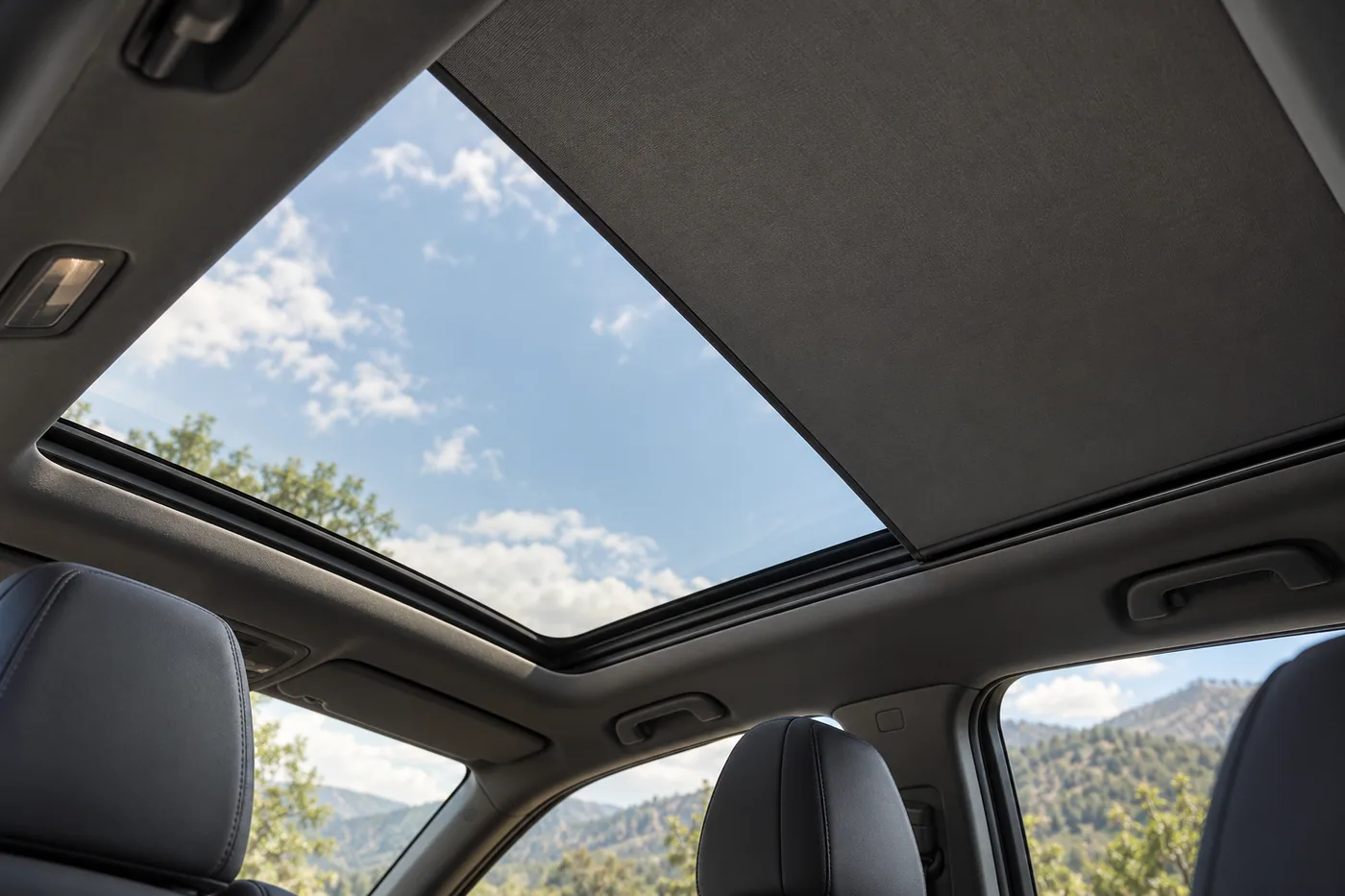
AI-generated roof-shade concept. It does not depict a verified manufacturer mechanism, operating sequence or heat-rejection result.
A shade deserves its own inspection. Determine whether it retracts electrically, moves by hand or must be removed and stored. In a used vehicle, make sure a removable shade is actually included. Close it completely and look from the front and rear seats to judge how much light remains.
Volvo's 2026 XC60 roof-operation manual describes a sun blind and an automatic warm-weather closing setting intended to help cabin comfort. That is useful operating guidance, not a temperature rating for every panoramic roof.
If sunlight bothers you, arrange a viewing in sunny conditions and sit where you normally travel. Try the shade open and closed with your usual climate settings. Dark-looking glass alone cannot tell you how comfortable that seat will feel. Ask for the exact roof's published glazing information if heat rejection is central to your decision.
A brighter cabin can still have less headroom
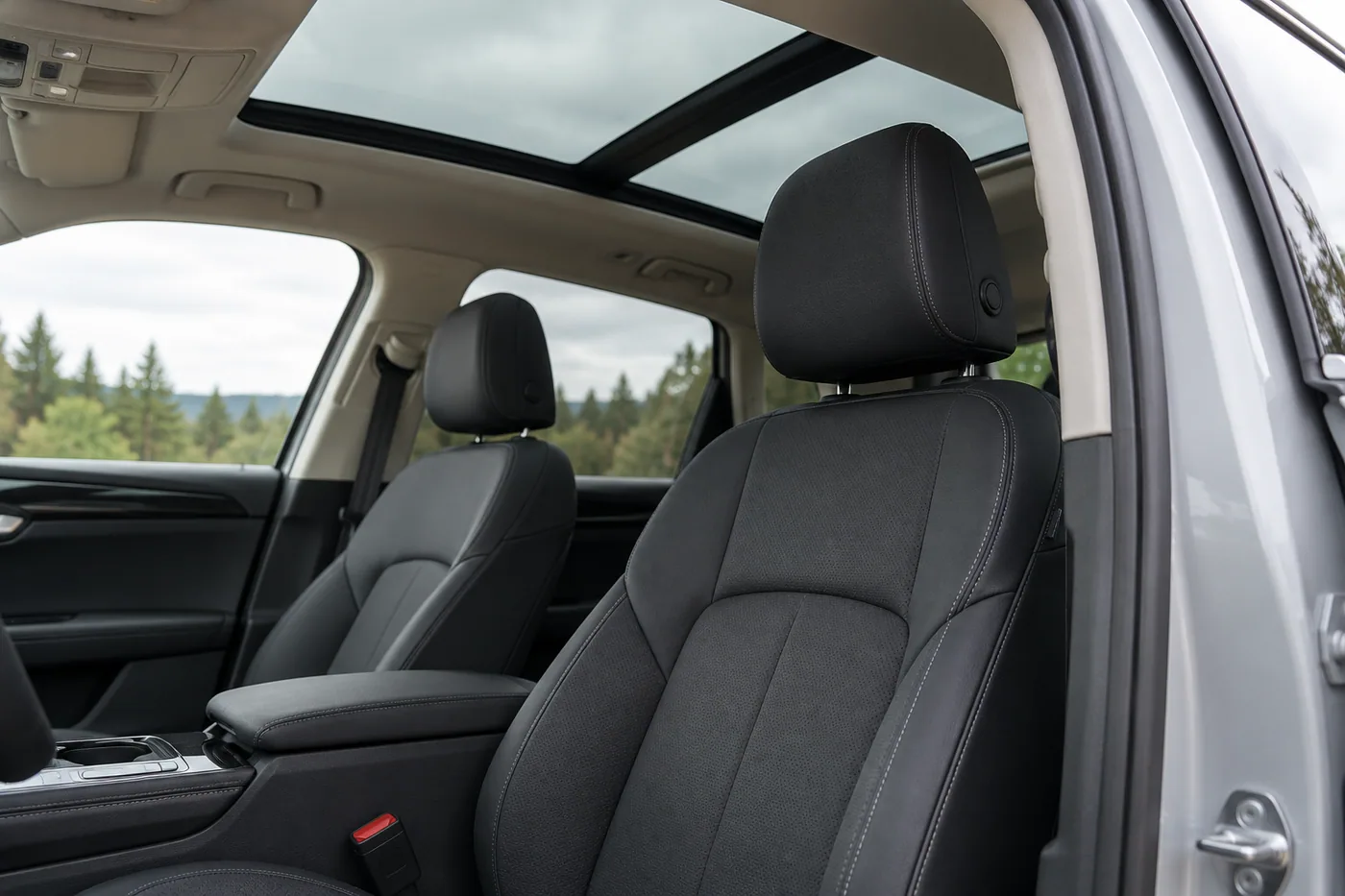
AI-generated generic seat-and-roof illustration. No occupant-height limit or head-clearance measurement is established by this image.
Do not confuse a feeling of openness with measured clearance. Compare the exact trim and roof configuration, then sit in it with the seat height and backrest set for normal driving.
A useful conventional-moonroof example comes from Honda's U.S. 2026 CR-V specifications. The gasoline LX, without the listed moonroof, has factory-published front headroom of 40.0 inches. The gasoline EX, with the moonroof, lists 38.2 inches. The calculated trim-to-trim difference is 1.8 inches; it is not a universal deduction for glass roofs or an independent measurement of the roof mechanism.
Our CR-V interior-dimensions guide adds configuration context. For other cabins, see the 2026 Tucson interior guide and the separately scoped 2027 Rogue interior guide. Tall shoppers can also use the small-SUV guide for tall drivers to plan their seating checks.
Inspect a used roof before agreeing to buy
A roof inspection should cover the glass, movement and surrounding cabin. These are viewing checks, not a substitute for a technician's diagnosis:
- Examine the visible glass and edges for chips, cracks or signs of previous work. Ask for replacement invoices if the seller reports a repair.
- Look for staining or dampness around the headliner and pillars, and ask about any water-entry history. A dry cabin on viewing day does not establish that it has never leaked.
- Operate the opening functions and shade according to the vehicle's manual. Note hesitation, scraping, uneven movement or incomplete closure for professional assessment.
- During the test drive, listen for roof-area rattles or wind noise. Record when they occur so a technician can investigate.
Avoid forcing a reluctant panel. The XC60 manual linked above specifically calls for removing snow and ice before opening and notes that freezing conditions can prevent operation. Follow the instructions for the vehicle you are inspecting rather than applying another model's control sequence or maintenance advice.
Verify repair scope and warranty coverage separately
If a roof has a problem, request a diagnosis before discussing a repair figure. Have the shop identify whether the concern involves the glass, seal, shade, opening mechanism or another component. Ask whether the proposed work repairs an individual part or replaces an assembly, and request a written scope covering applicable parts, labor and setup.
Do not assume a windshield chip-repair offer also applies to roof glass. Ask the repairer to assess the actual panel and damage using the manufacturer's requirements.
Warranty coverage needs a separate answer. Volvo's 2026 hybrid warranty booklet excludes glass breakage except when caused by material or workmanship defects. That example shows why “still under warranty” is insufficient to establish payment for a particular roof problem.
For the vehicle's VIN, confirm the applicable warranty, in-service date, remaining coverage and authorization requirements. If you expect insurance to pay, ask the insurer specifically about roof glass, the deductible and any exclusions. Obtain the answer before authorizing work.
Is the feature worth choosing?
Prioritize opening glass if fresh air is the attraction. If you mainly want a sky view, fixed glass may satisfy that preference; concentrate on shade convenience and seated comfort. If you would usually keep the shade closed, compare an otherwise suitable SUV without the glass-roof option before committing.
Match the roof to how you use the SUV
Think about the seat from which you will experience the feature. A driver may mainly notice the light entering beside the headliner, while someone in the second row may have a much broader view. Have the usual passenger sit in that position before deciding that a large roof is worth paying for. A photograph taken from the cargo area can make glass coverage look different from the view through a passenger's eyes.
For daylight without fresh air, fixed glass may be sufficient. Concentrate on the shade and the cabin environment you prefer. If you specifically want an opening, a large transparent panel that never moves will not meet that requirement. Ask for the manual's operation description before treating a panoramic-roof checkbox as confirmation.
If you expect to keep the shade closed most of the time, compare a suitable vehicle without the option. That does not mean glass roofs are universally unnecessary. It means your own preference should decide whether this feature belongs on the list of requirements or simply on the list of acceptable extras.
For rear passengers who rest on long trips, inspect the shade from their position. Check whether it is easy to operate using the permitted controls and whether the closed position produces the level of light they prefer. The salesperson's view from the front seat cannot settle that question for someone traveling in row two.
A parked demonstration in a useful order
Ask the seller to demonstrate the roof while the vehicle is stationary and the operating area is clear. Start with the manual or equipment description so you know which functions should exist. Do not repeatedly press switches to discover a sequence on an unfamiliar vehicle, especially if movement looks uneven or the mechanism hesitates.
First inspect the closed glass and the surrounding trim. Then have the seller operate the shade separately where the system permits it. Look at the view and head clearance with the shade open and closed from each seating row that matters to you. A passenger should be able to explain what feels different without having to agree with the driver's preference.
Next, demonstrate only the opening and ventilation functions specified for that vehicle. Note which section moves and where the panel rests. Finally, confirm that the roof and shade return to their normal closed positions. The purpose is to establish the offered function and visible condition, not to conduct an improvised stress test or diagnose an internal mechanism.
If you hear scraping, see uneven travel or notice incomplete closure, stop the demonstration and request professional assessment. A seller saying that a noise is normal is not a diagnosis, but neither should a buyer infer the cost or cause from one symptom. Have the issue identified before relying on the feature in the purchase decision.
Roof glass, a sunshade and privacy glass are different things
A shade is a component you can inspect and operate. The glass itself has its own specification, which may include properties described by the manufacturer. Do not assume that dark appearance establishes a particular level of heat rejection, privacy or protection. Ask for documentation if one of those properties is central to your decision.
Similarly, rear-window privacy glass is not a substitute for information about the roof. An equipment list can describe both without using the same material or treatment. Keep the exact question tied to the component: whether you can open the roof, block the overhead light, or obtain a documented glazing property.
This distinction is especially useful when comparing two trims. A seller may describe one as having a premium glass roof and another as having a power moonroof, but the names do not provide a directly comparable technical table. Compare opening functions, shade provision and cabin fit first. Request the relevant technical information only where it will affect the choice.
Do not add aftermarket film on the assumption that it is approved for every glass panel. Ask the manufacturer and installer about the exact roof and proposed product, including any warranty implications. This article does not prescribe a film, establish compatibility or promise a temperature reduction.
Compare the whole vehicle, not just the roof option
A panoramic roof may be packaged with other features. Obtain the actual equipment list and price for the configuration you would buy. If a package includes audio, seats or driver displays you would not otherwise choose, those items still belong in the purchase comparison. The apparent price of the roof is not necessarily a standalone factory option.
Keep the same model year and trim context visible. The Honda headroom example earlier in this guide is a comparison of named configurations, not a formula for deducting headroom from any SUV with glass. Sit in the candidate vehicle and verify its own factory specification rather than applying that difference elsewhere.
The same applies to roof-mounted equipment. If carrying a box, bicycle rack or other accessory is part of your plan, consult the vehicle and accessory instructions for the exact approved arrangement. Do not infer compatibility, opening clearance or permitted roof load from the panoramic-roof photograph. Confirm those requirements before purchasing either the vehicle or the accessory.
For a garage or parking space, inspect the vehicle's actual clearances and instructions rather than assuming every opening panel behaves the same way. An interior photograph will not establish how a particular mechanism moves above the roof. Keep an unresolved compatibility question separate from the feature's visual appeal.
Used-car records that are worth asking for
If the seller reports a roof repair, request the invoice and identify what was done. Glass replacement, shade repair and an investigation into water entry are different histories. Ask which parts were replaced, who performed the work and whether there is relevant follow-up documentation. Do not assume an invoice for one component resolves an unrelated symptom.
Check that any removable shade or supplied accessory is present. An item missing at handover can be easy to overlook when the demonstration focuses on the opening glass. If something will be supplied later, have it identified in writing rather than treating a verbal promise as part of the installed equipment.
If there are visible stains, odors or signs of previous work, explain the observation to the inspector without assigning a cause yourself. A pre-purchase inspection can investigate a concern; this article's visual checklist cannot establish whether the source is a roof seal, another opening or an unrelated issue.
Finally, keep repair expectations separate from warranty promises. Request written confirmation of any claimed coverage for the identified problem on that VIN. Whether a policy exists, whether it remains in force and whether it covers that particular diagnosis are separate questions. Do not authorize work on the assumption that a general warranty label settles all three.
Decide what would make you walk away
Set your non-negotiables before the viewing. If you need an opening panel, eliminate fixed-only arrangements. If head clearance is already marginal, assess the actual seat-and-roof configuration before getting attached to its appearance. If an unexplained fault remains, obtain the assessment you need rather than guessing a repair price to make the deal work.
For two otherwise suitable vehicles, choose based on the functions and cabin environment you will actually use. A clear sky view can be a genuine preference, and a solid roof can be one too. Neither choice needs to become a claim that every panoramic system is better, cooler, quieter or more reliable than every alternative.
The useful result of the comparison is specific: you know which glass moves, how the shade works, how each regular occupant fits and what condition or coverage questions remain. That is more valuable than selecting the longest feature name on the listing.
FAQs
Can I add tint to make the roof more comfortable?
Check with the vehicle manufacturer and installer about compatibility with that exact roof glass and applicable warranty terms. This guide does not establish an approved film or a heat-reduction result.
Can I keep the shade closed with the glass open?
Check the specific manual. Glass and shade movement can be linked, so a demonstration of the controls is more useful than assuming every roof allows the same combinations.