Dimensions · Space · Buying guides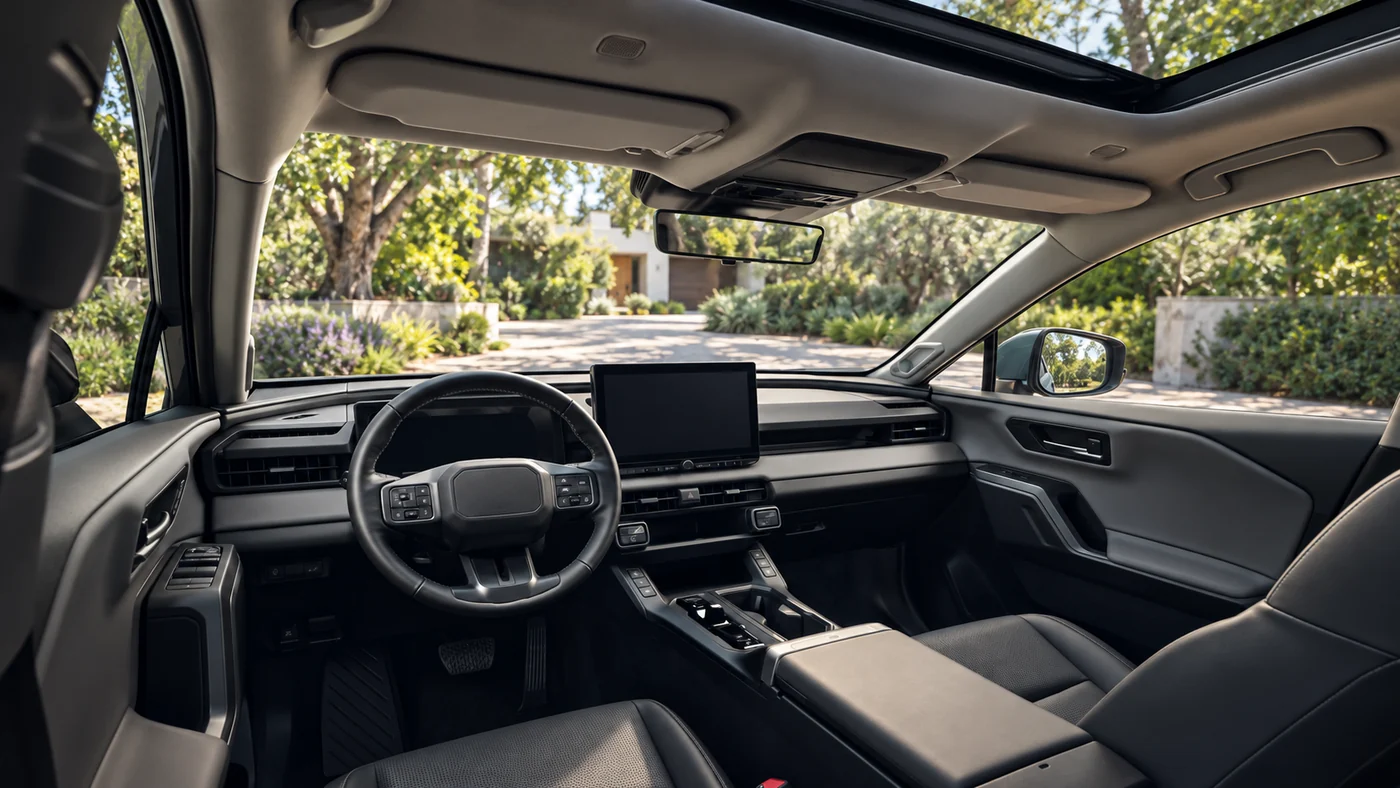
The 2026 Toyota RAV4 interior dimensions include 41.0 inches of front legroom and 37.8 inches in the rear. Toyota's published moonroof headroom figures are 37.9 inches in front and 39.5 inches behind. Use those figures to shortlist a cabin, not to promise that a particular driver and rear passenger will fit together. Toyota's 2026 sales consultant guide, page 4.
If someone will sit behind you regularly, adjust the front seat for your normal driving position before asking them to try the back. Check the roof too, especially if headroom is tight. The 2026 table and the limited 2025 lookup below are separate, so you can compare the right model year without assuming the cabins are identical.
2026 RAV4 interior dimensions in inches
| Manufacturer-published measurement | Front row | Rear row |
|---|---|---|
| Headroom, with moonroof | 37.9 in | 39.5 in |
| Legroom | 41.0 in | 37.8 in |
| Shoulder room | 57.0 in | 56.4 in |
| Hip room | 55.3 in | 49.6 in |
Each measurement answers a different question. Legroom helps identify vehicles worth trying when knee and foot space matter. Headroom is relevant to an upright seating position. Shoulder and hip room describe published cabin widths at their respective measuring locations; neither is the width of an individual seat cushion.
Do not divide rear hip room by the number of seating positions to estimate a person's usable seat width. Likewise, a shoulder-room figure cannot tell you the distance between the seat bolsters, the clearance beside an installed child seat, or the width available where your elbows naturally rest. Those are separate checks on the actual cabin.
For the rest of the vehicle's specifications, use our 2026 RAV4 profile. If your question is about a stroller, suitcase or rigid box rather than passengers, the RAV4 cargo dimensions guide is the more relevant starting point.
2025 versus 2026: keep the two cabins separate
Toyota identifies 2026 as the RAV4's sixth-generation debut. A redesign is a reason to check evidence again, even where individual published numbers happen to match. It is not safe to transfer an older cabin photograph, roof-specific dimension or physical measurement into the new model's table. Toyota USA's 2026 RAV4 overview.
For readers searching for 2025 Toyota RAV4 interior dimensions, Toyota's older comparison page provides the following limited lookup. Its underlying comparison data is credited to JATO, so these are Toyota-hosted comparison figures, not an independently checked 2025 factory specification sheet.
| Measurement shown for the 2025 RAV4 LE comparison | Front | Rear |
|---|---|---|
| Legroom | 41.0 in | 37.8 in |
| Shoulder room | 57.8 in | 56.4 in |
Evidence: Toyota's 2025 RAV4 versus CR-V comparison, Dimensions section and LE-specific shoulder-room text. That page also displays headroom, but does not clearly resolve the roof configuration needed for a useful LE-specific comparison. We therefore do not reproduce its headroom as a universal 2025 value. A complete, roof-qualified 2025 headroom and hip-room table remains unverified in this guide.
The decision is not simply which year has the largest number. If you are choosing between two actual vehicles, repeat the same seating-position routine in each. Use the same driver, rear passenger, footwear and child seat where applicable. Record the configuration and any contact points. A comfortable result in one vehicle is evidence about that setup, not the entire model year.
Older-year searches belong in a year-specific lookup, rather than in an average across generations. We do not extend either table to 2024, 2027, or a non-U.S. RAV4 without corresponding evidence. Our RAV4 model hub keeps vehicle pages separate from this passenger-fit guide.
Front-seat fit: check pedals, steering wheel and console together
Begin with the driver's position, not the rear passenger's knees. In a parked vehicle, adjust the seat and steering wheel to the manufacturer's guidance and your normal driving posture. Keep a position you could actually use; pushing the seat forward to make the rear row look generous defeats the purpose of the check.
Check whether you can operate the pedals without twisting your hips or reaching awkwardly. Next, inspect thigh support, the space below the steering wheel and the contact between your outside leg and the console or door. A large published legroom number does not isolate any of those relationships.
Pay particular attention to a contact point that only appears when your foot changes position. Take time with the controls while stationary rather than making a quick judgment with both feet resting on the floor. If a position feels cramped before a test drive begins, write down the specific issue: console contact, steering-wheel clearance, seat-cushion pressure or reach. That makes a comparison with another vehicle more useful than simply recording “small cabin.”
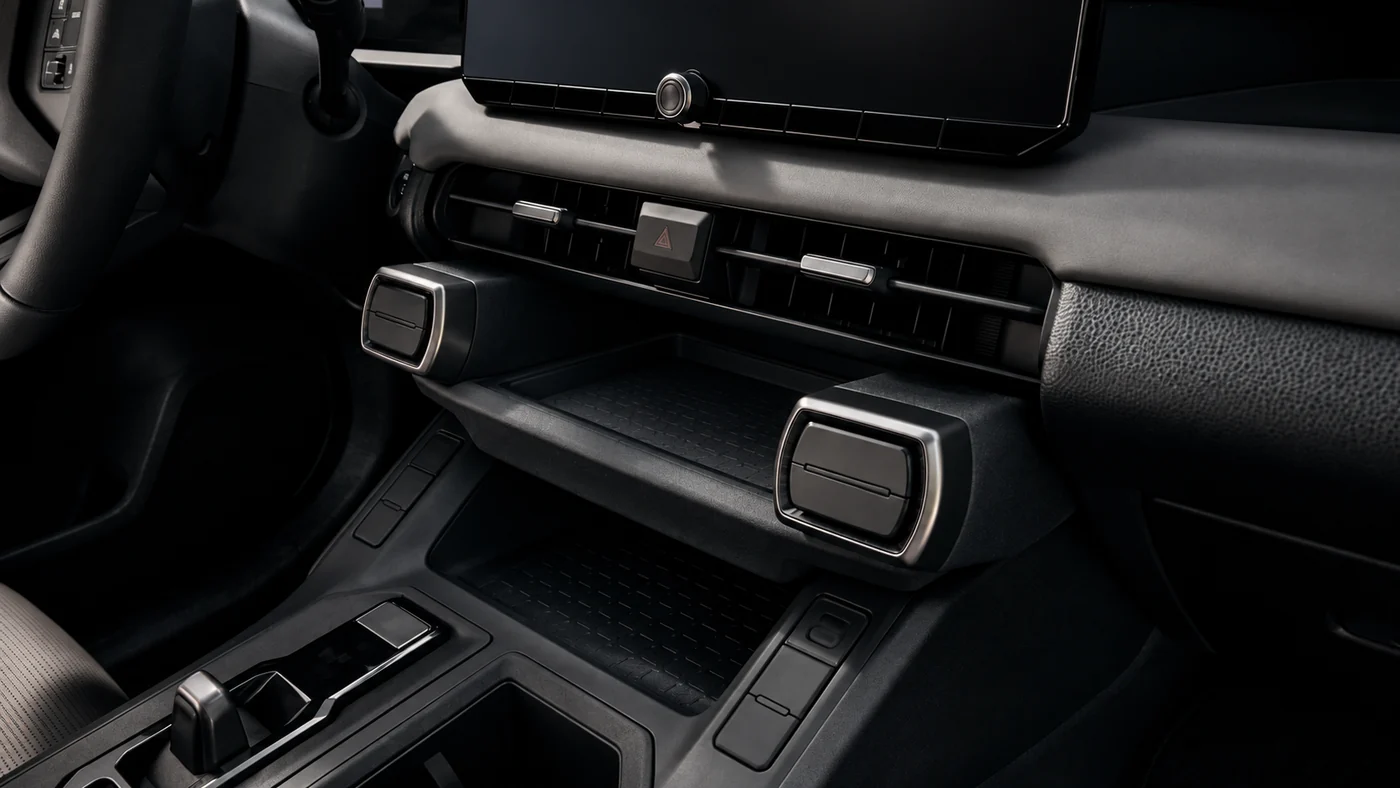
AI-generated editorial illustration of the console area, based on a Toyota gallery reference. It illustrates where to check contact and reach, not a measured knee-space clearance.
Adjustment equipment is also worth checking on the exact vehicle. Toyota lists a manual driver's seat for the 2026 LE and a power driver's seat for XLE Premium. Those are equipment distinctions, not proof that one trim accommodates a taller person. Toyota's 2026 sales consultant guide, page 6.
Have the front passenger do their own check. A driver's acceptable position does not settle passenger comfort, particularly when adjustment options or the area around the footwell differ. Neither occupant should use an unnatural recline merely to achieve an apparent headroom gain.
Headroom and roof configuration: inspect your actual sitting position
Headroom is not a maximum occupant-height rating. Two people with the same standing height can arrive at different results because their torso and leg proportions, seat preferences and posture differ. Do not convert the table into a claim that everyone below a particular height fits.
Check clearance in a normal upright position with the roof shade where you would ordinarily keep it. Look at the area over your head and the nearby roof edge, not only the open-looking center of the cabin. Check the rear seat separately; a front-row result says nothing about where a rear passenger's head sits relative to the headliner.
Toyota lists a panoramic glass roof for the 2026 Limited. That equipment description does not establish a separate headroom measurement; the general table is only labeled “with moonroof.” Toyota's 2026 sales consultant guide, pages 4 and 7.
When roof clearance is your deciding issue, inspect the specific roof option before choosing a trim. Ask for a roof-qualified specification if one is available, and do not assume a no-roof vehicle gains a particular number of inches. Our evidence does not support that calculation. Our Cabin Fit Check can help organize the questions, but it cannot replace sitting in the exact vehicle.
Rear-seat room behind the person who will drive
After setting the front seat, leave it in place and move to the rear. Check both knees, foot placement beneath the seat ahead, thigh support and your ability to sit without turning sideways. Do this on the side you expect to occupy most often. If the vehicle has two regular drivers, repeat it behind both of their normal positions.
The useful result is a pairing: this rear passenger behind this front occupant. Published front and rear legroom values are separate specifications, not a guarantee that the most generous front-seat setting preserves a particular clearance behind it. Adding the two values does not produce a usable cabin length or a shared space budget.
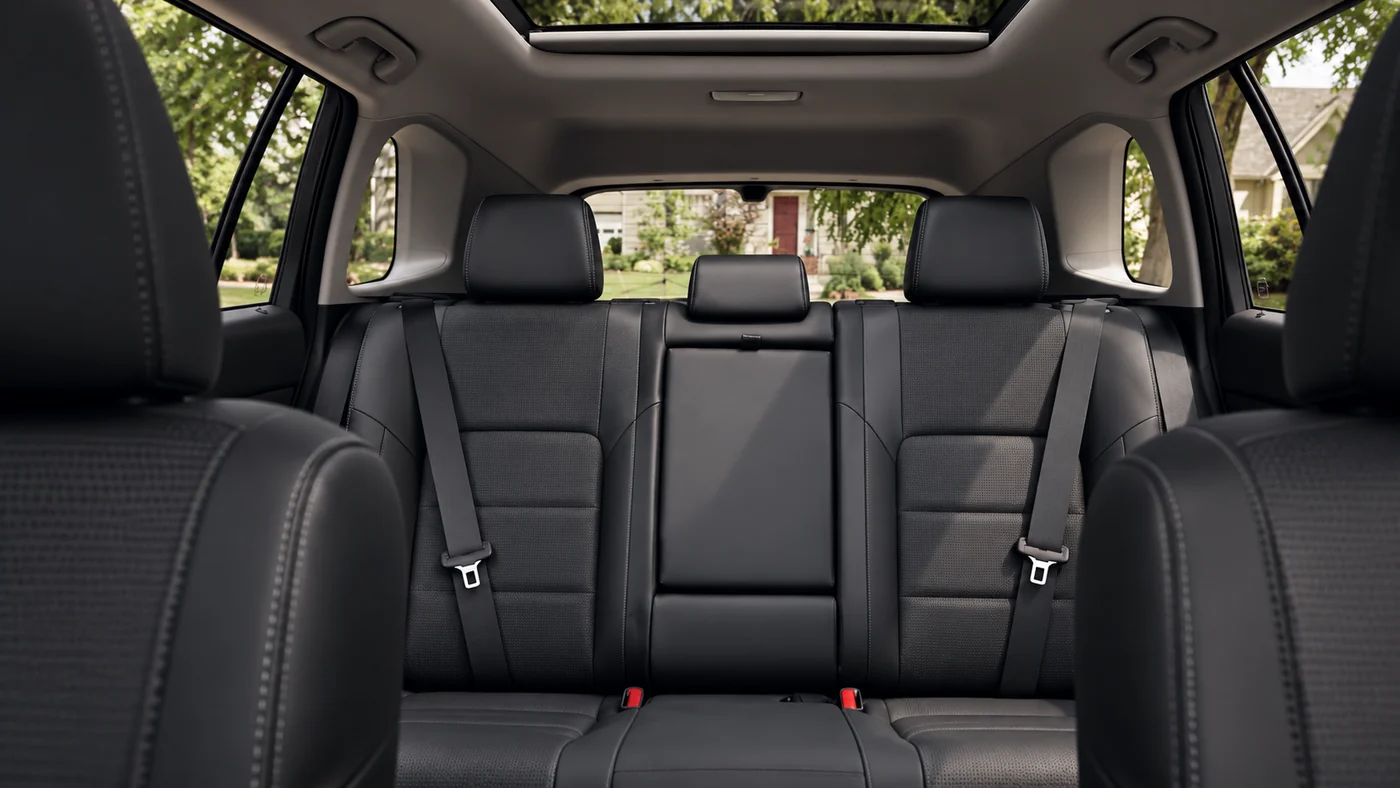
AI-generated editorial illustration based on a Toyota rear-cabin reference. It is not a child-seat installation, passenger-height demonstration or physical fit test.
If you regularly carry people side by side, check their seating positions together. Inspect access to the buckles and whether each person can use the seat without leaning into a neighbor. The rear shoulder-room figure cannot settle that question by itself. A brief solo sit in an empty rear bench is not an adequate substitute for the arrangement you plan to use.
For a child seat, bring the exact model and consult both its instructions and the vehicle owner's manual. Check the installation and its permitted relationship to the front seat; do not infer approval from a visible gap or an AI illustration. This guide does not verify any particular child-seat installation or three-across arrangement.
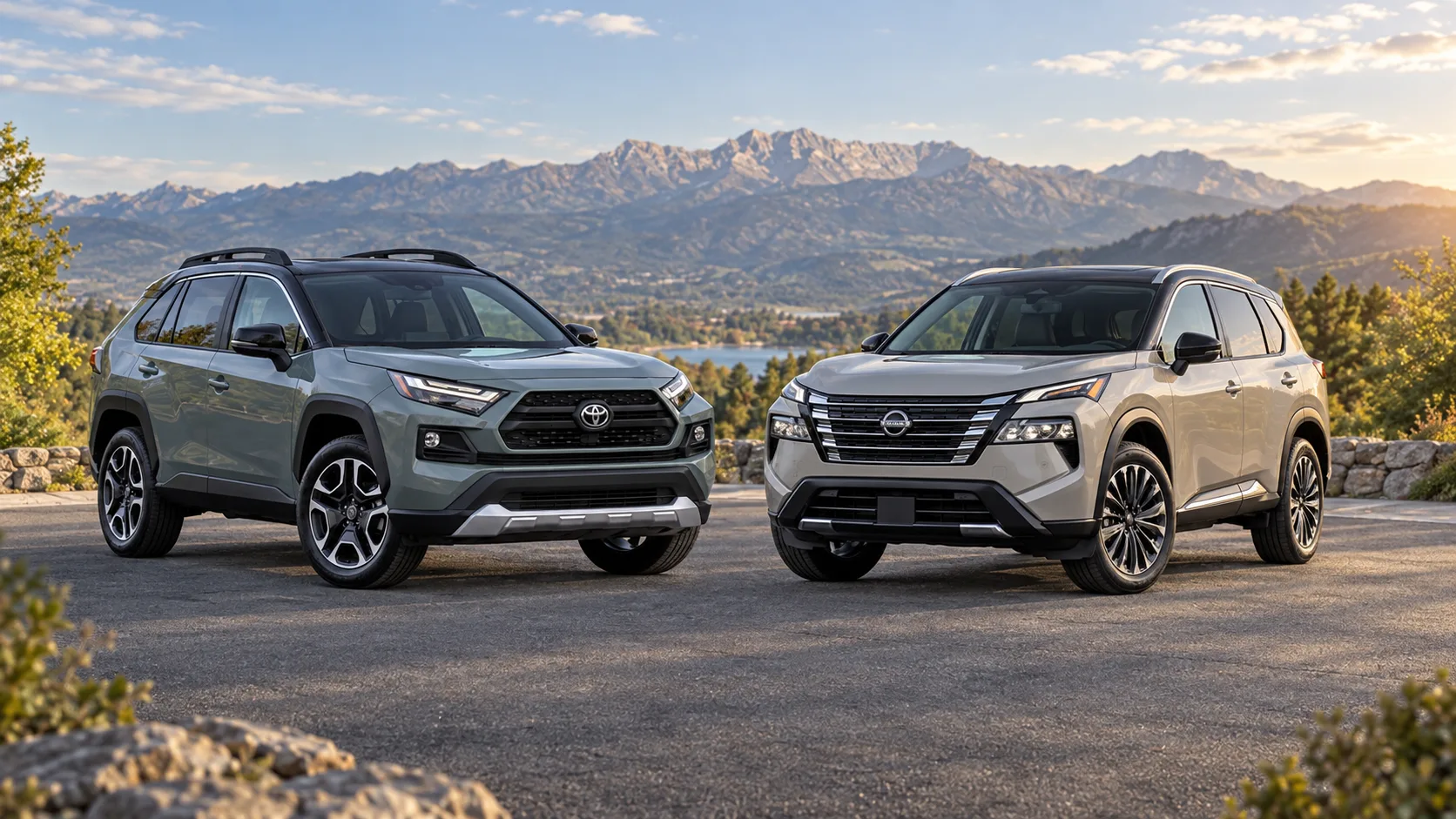
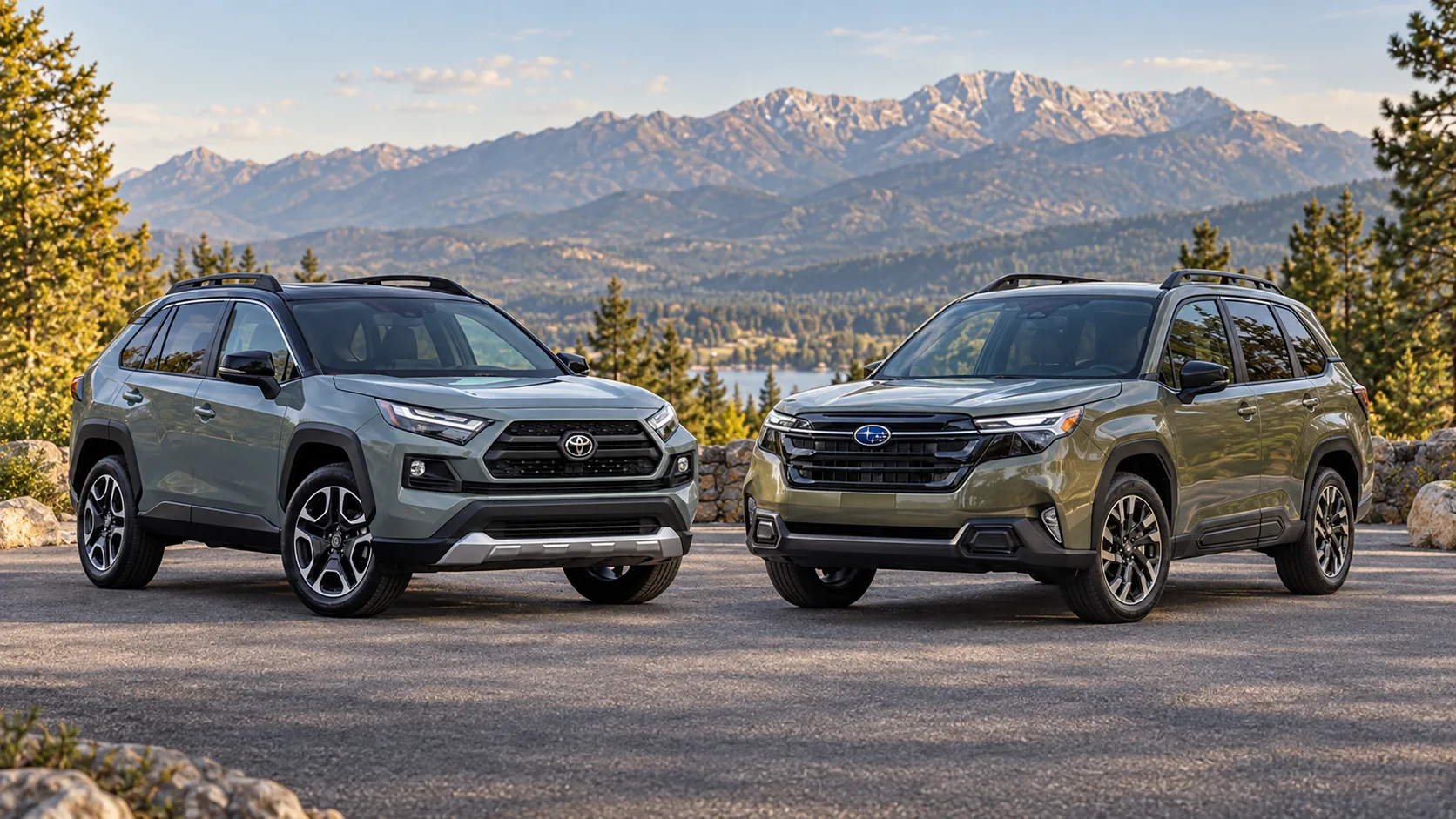
If rear-seat fit is your main reason to consider another compact SUV, use our RAV4 versus CR-V guide or RAV4 versus Forester guide to organize a shortlist. Then perform the same occupant-pairing check in each candidate.
RAV4 interior length: specify the endpoints first
“RAV4 interior length” can mean passenger space, the loading floor behind the rear seats, the floor with seats folded, or the length available for sleeping. These are not interchangeable measurements. Before accepting an answer, identify where the tape starts and stops and what happens to the seats between those points.
We have not verified a single factory passenger-compartment length in the sources checked for this guide. Exterior length, wheelbase and the sum of the legroom figures cannot supply that missing measurement. Cargo volume cannot do so either: cubic feet describes volume, not the uninterrupted length available to an object.
For a mattress or rigid load, start with the RAV4 cargo guide and its year and measurement labels. Then measure the actual loading arrangement if the fit is close. Record front-seat position, seatback position, floor setting where applicable, and whether the hatch must close. A measurement that requires moving the driver's seat out of a usable driving position needs that limitation attached to it.
See How we measure for the distinction between published figures and physical measurements. No image in this article supplies a measurement endpoint or proves an object will fit.
A repeatable RAV4 passenger-fit checklist
Use a short written record instead of relying on how open the cabin looks in a photograph. This is an editorial inspection routine, not a scored laboratory test.
- Identify the vehicle. Record U.S. model year, trim, powertrain and roof option. Keep these details with any notes or measurements.
- Set the driver first. Establish a normal, manufacturer-guided driving position and check pedal operation, steering-wheel clearance and console contact.
- Check the front passenger independently. Adjust their seat without assuming the driver's result transfers across the cabin.
- Check the rear pairing. Leave the front seat in the position just established, then inspect knee space, feet, posture and entry behind it.
- Repeat your real arrangement. Include the regular passengers and, where relevant, the exact child seat under its installation instructions.
- Record the limiting issue. Write down what prevented a satisfactory result, rather than replacing it with an unsupported maximum-height claim.
When comparing vehicles, keep the routine consistent. Avoid testing one with its front seat far forward and another with the driver fully settled. Do not declare a winner by adding unrelated headroom, legroom and width figures. A vehicle that solves a console-contact problem might still fail your rear-seat arrangement; both observations matter.
Frequently asked questions
How much rear legroom does the 2026 RAV4 have?
Toyota publishes 37.8 inches in its 2026 interior table. That specification does not establish the knee clearance behind your particular driver's seat position. Check the actual front-and-rear occupant pairing. Toyota's sales consultant guide, page 4.
Are 2025 and 2026 RAV4 interior dimensions interchangeable?
No. Toyota identifies 2026 as a new generation. Matching individual numbers do not establish the same cabin geometry, roof clearance or seating experience. Keep year-specific evidence attached to the vehicle it describes. Toyota's 2026 model overview.
Does the RAV4 fit tall drivers?
There is no verified maximum driver height in this guide. Standing height alone does not determine seated fit. Inspect roof clearance, pedal reach, steering-wheel space and console contact in the exact trim, then check the person who normally sits behind the driver.
What is the RAV4's total interior length?
We have not verified one factory passenger-compartment length in the sources checked. Define whether you mean the passenger cabin, cargo floor or a sleeping arrangement. Do not add front and rear legroom to create a measurement that Toyota has not published here.
Evidence scope and limitations
Source check: October 6, 2026. The table uses Toyota's 2026 sales guide. The limited 2025 lookup uses a Toyota-hosted, JATO-powered comparison page and is explicitly labeled that way. Toyota's 2026 brochure was previously inspected on October 3; it did not supply the roof-qualified dimension matrix needed to fill the gaps above.
SUVLook has not performed a hands-on passenger measurement or child-seat test for this article. The fit routine is editorial guidance. The reference-guided AI illustrations explain cabin areas, not measured clearances. If your decision depends on a small margin, inspect the exact vehicle rather than treating a published specification or illustration as a fit guarantee.